
Kangra Airport Launches Initiatives to Enhance Passenger Experience and Cleanliness
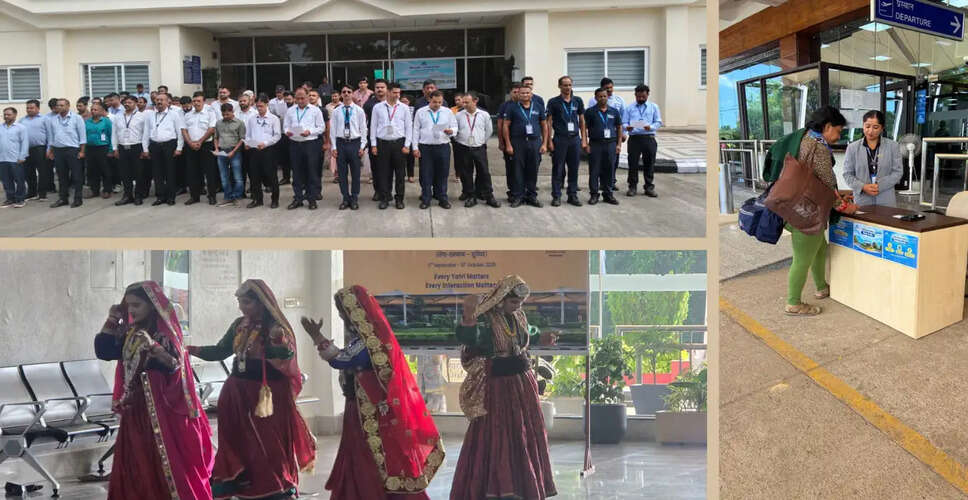

Kangra Airport's New Initiatives
RajKumar Choudhary
Gaggal
Kangra Airport has initiated two significant campaigns aimed at improving the experience for travelers and promoting cleanliness. The Passenger Service Campaign and Swachhta Hi Seva–2026 were launched on Thursday, with the cleanliness initiative set to continue until October 2, while the passenger service campaign will last until October 10.
These efforts demonstrate the administration's dedication to enhancing facilities for travelers, ensuring strong security measures, and creating a clean and inviting atmosphere that showcases the cultural heritage of Himachal Pradesh.
Passenger Service Campaign: Enhancing Comfort and Cultural Experience
The Passenger Service Campaign aims to improve the travel experience for all passengers, especially first-time flyers, seniors, individuals with disabilities, and families.
- Cultural Welcome: Upon arrival at Kangra Airport, travelers will be welcomed with performances of Himachali folk dances and traditional music, providing a taste of the region's rich culture.
- Enhanced Facilities: The campaign focuses on maintaining cleanliness and organization throughout the airport, including drop-off areas, parking lots, and waiting zones.
- Priority Assistance: Special provisions are being made to offer priority support to elderly passengers, those with disabilities, and individuals with specific requirements.
- Safe Environment: Enhanced safety measures will ensure a secure and comfortable travel experience for women, children, and families.
Airport officials have also announced improvements in logistics, such as the availability of trolleys, efficient baggage handling, and better queue management at security checkpoints. Collaborations with security forces will enhance passenger safety, and helpdesk facilities will be introduced to assist travelers.
Basic Amenities and Guidance for Passengers
Acknowledging the significance of essential amenities, the administration is installing clean drinking water systems and reverse osmosis (RO) facilities. Passengers will also benefit from improved complaint and suggestion mechanisms, including QR codes, the Airsewa app, and dedicated helpdesks.
Guidance services will be available for first-time air travelers and non-Hindi speaking passengers to facilitate smooth navigation through airport processes. This initiative aims to alleviate confusion and anxiety for new flyers, making air travel more accessible.
Promoting Local Identity Through Culture and Products
The campaign also aims to promote the unique identity of Himachal Pradesh by incorporating cultural elements into the passenger experience. The airport will feature One District One Product (ODOP) initiatives, encouraging travelers to engage with and purchase local handicrafts, foods, and cultural items. This not only enriches the travel experience but also supports local artisans and entrepreneurs.
Swachhta Hi Seva–2026: Emphasizing Cleanliness
Running alongside the passenger service campaign, the Swachhta Hi Seva–2026 initiative highlights the importance of cleanliness and waste management.
- Waste Management & Segregation: The campaign will promote awareness about proper waste segregation, encouraging responsible disposal practices among passengers and staff.
- Community Outreach: Cleanliness drives will extend beyond the airport to nearby Common Transport Units (CTUs) and Gram Vikas Panchayats (GVPs), ensuring that surrounding public spaces also benefit from the initiative.
- Respect for Sanitation Workers: Under the Swachhta Hi Samman program, health check-ups and recognition events will be organized for sanitation workers and their families, acknowledging their crucial role in maintaining hygiene standards.
Collective Efforts for Cleanliness
On October 1, the airport will host the Ek Din, Ek Ghanta, Ek Saath program, where airport staff, security personnel, airline representatives, and other stakeholders will participate in a collective cleanliness drive. This act of unity aims to inspire broader community involvement in maintaining clean surroundings.
The following day, October 2 — coinciding with Gandhi Jayanti — special cleanliness activities, tree plantation drives, and a review meeting will take place. These events will reinforce the message of sustainability and environmental responsibility.
Recognition and Long-Term Sustainability
Airport Director Amit Saklani emphasized that these campaigns are not just temporary measures but part of a long-term vision. At the conclusion of the initiatives, employees and stakeholders who show exceptional contributions will be recognized. Additionally, a permanent plan will be developed to ensure ongoing improvements in cleanliness and passenger services.
Saklani urged passengers, local residents, and all stakeholders to actively support the campaigns, highlighting that collective participation is vital for their success.
Broader Implications of the Campaigns
The dual initiatives at Kangra Airport symbolize a broader movement across India to merge passenger comfort with civic responsibility. By integrating cultural promotion, service enhancements, and cleanliness drives, the airport is positioning itself as a community-focused institution.
For Himachal Pradesh, where tourism is crucial to the economy, such initiatives hold significant importance. A clean, efficient, and culturally vibrant airport experience can leave lasting impressions on visitors, encouraging repeat travel and positive word-of-mouth.
Conclusion
The Passenger Service Campaign and Swachhta Hi Seva–2026 embody a comprehensive approach to airport management that prioritizes passenger satisfaction, cultural identity, and environmental responsibility. Over the coming weeks, Kangra Airport will serve as a model for how infrastructure, community, and culture can converge to enhance the travel experience.
As these campaigns progress, the administration's focus on inclusivity, sustainability, and collective action is likely to resonate beyond the airport, inspiring similar initiatives in other regions. For travelers, the message is clear: Kangra Airport is not just a gateway to Himachal Pradesh but also a beacon of service, cleanliness, and cultural pride.