
Kalyan Chaubey Discusses the Evolution and Challenges of Indian Football
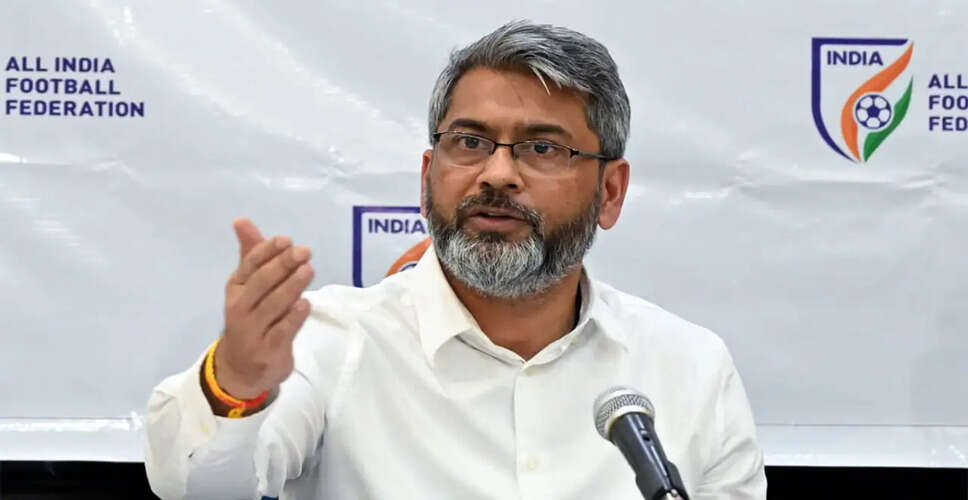

Kalyan Chaubey's Insights on Indian Football
Kolkata (West Bengal) [India], November 23: As the All India Football Federation (AIFF) elections approach on December 20, Kalyan Chaubey, the current president, has emphasized the historical significance of football in India and the need for a comprehensive evaluation of its current state and future direction.
In a detailed post on X titled 'Facts about Indian Football', Chaubey recounted the sport's origins in India, noting that the Indian Football Association (IFA) was founded in Kolkata in 1893, predating FIFA's establishment in 1904 by 11 years. He also mentioned the formation of the AIFF in Shimla in 1937 and the Asian Football Confederation (AFC) in 1954, underscoring India's early involvement in organized football. Chaubey stated, "It is reasonable to believe that India was among the early football-playing nations when the international game was still developing."
Chaubey highlighted several key historical milestones: 1. The IFA was established in 1893. 2. FIFA was founded in 1904. 3. The AIFF was created in 1937. 4. The AFC was formed in 1954. He pointed out that India participated in the Olympic Games in 1948, 1952, 1956, and 1960, and won gold medals in football at the Asian Games in 1951 and 1962. However, he lamented that India has struggled to maintain its competitive edge in international football since those early successes.
The landscape of Asian football has evolved significantly, with 47 member associations now competing under the AFC umbrella. Chaubey reflected on the drastic changes in world football over the past 40 years, noting that the 1986 FIFA World Cup featured 24 teams and generated around $100 million in revenue, while the upcoming 2026 World Cup will include 48 teams and is projected to bring in approximately $15 billion.
Chaubey also compared India's historical performance with its current standing, recalling a 10-1 defeat to Yugoslavia at the 1952 Olympics and a 9-1 loss to Kuwait in 2010. He pointed out India's disappointing results in recent Asian Cup tournaments, including losses to Australia, Syria, and Uzbekistan in 2023, and a bottom-table finish in 2019. India's FIFA ranking has fluctuated, peaking at 94th in 1996 and dropping to 173rd in 2015, with the current ranking at 141st.
Despite winning 10 out of 11 SAFF Championships in the last three decades, Chaubey questioned the quality of India's international friendlies, which often feature weaker opponents. He emphasized the need to evaluate the competitive standards of domestic leagues and the performance of Indian clubs in continental competitions.
Chaubey's remarks come amid rising concerns regarding the state of Indian football as the AIFF elections draw near. He has called for former office-bearers to provide reports on their tenures, aiming for transparency and accountability. Former AIFF president Praful Patel, who led the federation from 2009 to 2022, has also voiced concerns about the challenges facing Indian football, despite the increasing interest and passion for the sport.