
Justice Ujjal Bhuyan Advocates for Freedom of Expression in Universities

Justice Bhuyan's Convocation Address Highlights Importance of Dissent
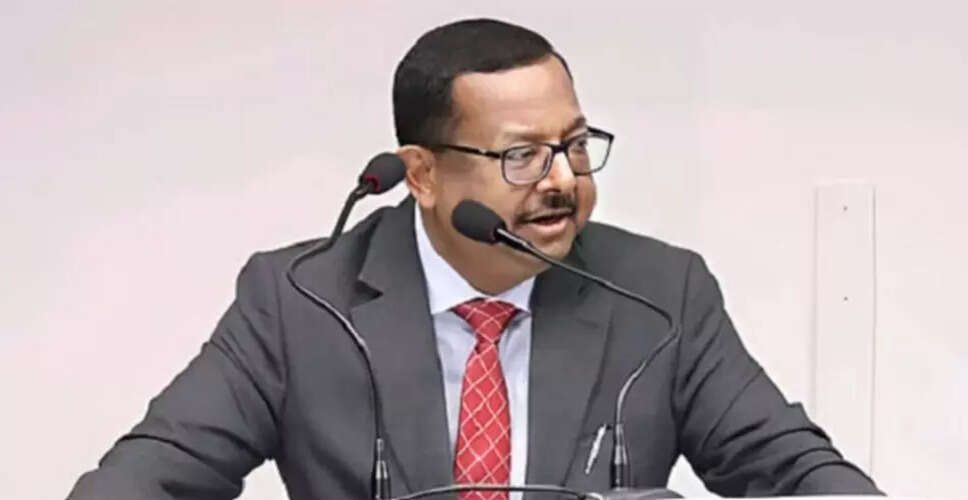
A file image of Justice Ujjal Bhuyan. (Photo:X)
New Delhi, Aug 30: During a recent convocation ceremony at the National Law University in Delhi, Supreme Court Justice Ujjal Bhuyan emphasized that students should not face punitive measures for expressing differing opinions or raising questions, labeling such actions as unconstitutional and an abuse of authority.
Justice Bhuyan articulated that universities ought to serve as environments where established beliefs can be scrutinized and debated, and where disagreements should be approached with reason rather than hostility.
He asserted that educational institutions should foster an atmosphere conducive to free thought, encouraging students to pose challenging inquiries. He stressed that questioning should not be viewed as defiance, but rather as an essential aspect of academic discourse, warning that an intolerant mindset contradicts the principles enshrined in the Indian Constitution.
"When students voice alternative perspectives or seek clarification, they must not be subjected to threats of punitive action. Such behavior is unconstitutional and represents a misuse of power," Justice Bhuyan stated.
He further elaborated that universities are spaces where individuals confront diverse ideas, allowing for the examination of established views and the resolution of disagreements through rational dialogue. He noted that for a democratic society to thrive, it is crucial that this culture of open discourse begins within academic institutions.
In his address, Justice Bhuyan highlighted that the Indian Constitution acknowledges the existence of varied opinions and beliefs in a free society, asserting that meaningful participation in public life necessitates an environment that accommodates dissent.
"A democracy is truly vibrant not when uniformity of thought prevails, but when a multitude of voices can coexist, be acknowledged, and treated with respect," he remarked.
He underscored that tolerance is a fundamental constitutional principle, and as a nation rooted in the teachings of Buddha and Gandhi, India must reject any form of intolerance, which he described as a type of violence.
Justice Bhuyan concluded by affirming that the Constitution safeguards the rights to free speech, thought, and belief. He warned that intolerance threatens to erode this framework when dissent is viewed as something to be silenced or punished. The capacity to coexist with differing opinions is not merely a social virtue; it is the cornerstone of a liberal constitutional democracy.
He urged legal professionals and scholars to uphold the constitutional values of liberty, equality, dignity, and justice, even in times of dissent.