
Judge Jitendra Pratap Singh: A Look at His Notable Rulings in High-Profile Cases
Overview of Recent Developments in the Excise Policy Case
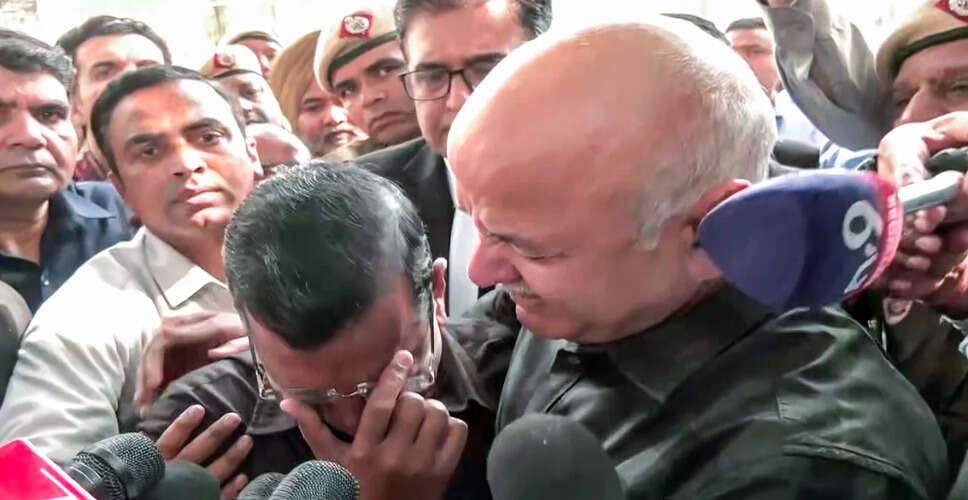
On Friday, former Delhi Chief Minister Arvind Kejriwal, along with Aam Aadmi Party (AAP) leader Manish Sisodia and 21 others, were acquitted by Special Judge Jitendra Pratap Singh. This judge has presided over several significant cases in the past, including the reopening of a case involving Congress leader Bhawan Jitendra Singh and a painting by M.F. Husain. The judge annulled a magistrate's order that had dismissed a complaint seeking prosecution against the former Union Minister.
Significant Past Decisions: When the Hammer Fell on Congress and BJP Leaders
Judge Singh's judicial history reflects a commitment to fairness and a rigorous adherence to facts. Some of his notable cases include:
The Case of Congress Leader Bhawan Jitendra Singh and M.F. Husain's Painting
Recently, Judge Singh ordered the reopening of a case against Congress leader and former Union Minister Bhawan Jitendra Singh concerning a valuable painting by M.F. Husain. The allegation was that Singh borrowed the painting, valued at over ₹1 crore, from former MP Dr. Prabha Thakur but failed to return it. The judge overturned a previous magistrate's order that had dismissed the complaint, clarifying that it prima facie constituted a 'Criminal Breach of Trust'.
Strict Remarks on Kapil Mishra's Communal Statements
In a case involving BJP leader Kapil Mishra, Judge Singh maintained a firm stance. He dismissed Mishra's petitions related to controversial statements made during elections, stating that the use of terms like 'Pakistan' was cleverly designed to incite communal polarization and spread hatred, which is unacceptable.
Relief for Amanatullah Khan
In a money laundering case linked to the Waqf Board, Judge Singh ordered the release of AAP MLA Amanatullah Khan, citing insufficient grounds against him in the charge sheet filed by the Enforcement Directorate (ED).
Judicial Style: Emphasis on 'Procedure and Facts'
In judicial circles, Jitendra Pratap Singh is recognized as a judge who prioritizes solid evidence and legal procedures over heavy charge sheets. In the Kejriwal case, he criticized the CBI in his extensive 600-page ruling, stating that 'no one should be compelled to face trial based solely on witness statements and unsubstantiated narratives.' Judge Singh believes that implicating an individual, especially someone in a constitutional position, without substantial evidence contradicts the rule of law.
Who is Jitendra Pratap Singh?
Currently serving as a Special Judge at the Rouse Avenue Court, Jitendra Pratap Singh is a senior judicial officer in the Delhi Judicial Service. He has presided over corruption cases investigated by federal agencies like the Central Bureau of Investigation (CBI). Singh, who holds a law degree from Delhi University, was appointed as an Additional Sessions Judge in October 2024. His expertise in handling corruption cases has earned him recognition, and he has previously dismissed petitions related to communal statements made during elections, including those involving BJP leader Kapil Mishra.