
Journalists Face Detention Amid Protests in Delhi: A Call for Press Freedom

Protests and Press Freedom Under Threat
New Delhi: A coalition of four journalist organizations, including the Press Club of India (PCI) and the Indian Women’s Press Corps (IWPC), has voiced strong opposition to the recent detention and harassment of journalists who were covering protests in the capital, where demonstrators were calling for the resignation of Chief Election Commissioner Gyanesh Kumar.
In a collective statement, these organizations condemned the actions of the police, who detained multiple journalists despite their identification as press members and confiscated some of their equipment and phones.
The statement was released by the PCI, IWPC, Delhi Union of Journalists (DUJ), and the Kerala Union of Working Journalists (Delhi unit).
On Saturday, the Delhi Police apprehended hundreds of protesters demanding Kumar's resignation, and journalists documenting the police's response were also taken into custody and transported to detention facilities, including Chhatrasal Stadium and Chanakyapuri police station.
Among those detained were reporters from various media outlets, including The Quint, The Wire, Scroll, Reporter TV, Navbharat Times, Newslaundry, and veteran journalist Paranjoy Guha Thakurta.
The detained journalists reported that they were apprehended while filming the detentions, despite clearly displaying their press credentials.
The statement highlighted that police dismissed the journalists' claims of being press members, with some officers allegedly stating, 'Everybody claims to be a journalist these days.'
Additionally, complaints were received regarding the confiscation of official reporting devices belonging to the detained journalists.
Describing these detentions as a 'blatant attack on press freedom,' the organizations criticized the Delhi Police's previous assertion that only journalists accredited by the Press Information Bureau (PIB) would be permitted to cover the protests.
'Press freedom in India cannot hinge on PIB accreditation. Many digital and independent media outlets do not possess PIB cards, yet they are legally recognized as press,' the statement emphasized.
The organizations had previously submitted a joint memorandum to the Delhi Police commissioner outlining their concerns, which they claim were ignored.
They are demanding the immediate and unconditional release of all detained journalists, the return of confiscated equipment, and a public apology from the Delhi Police.
Furthermore, they are calling for an investigation into the actions of senior police officials who allegedly ordered the detentions despite being shown press identification.
A clear commitment is also sought to ensure that journalists are not obstructed from covering protests.
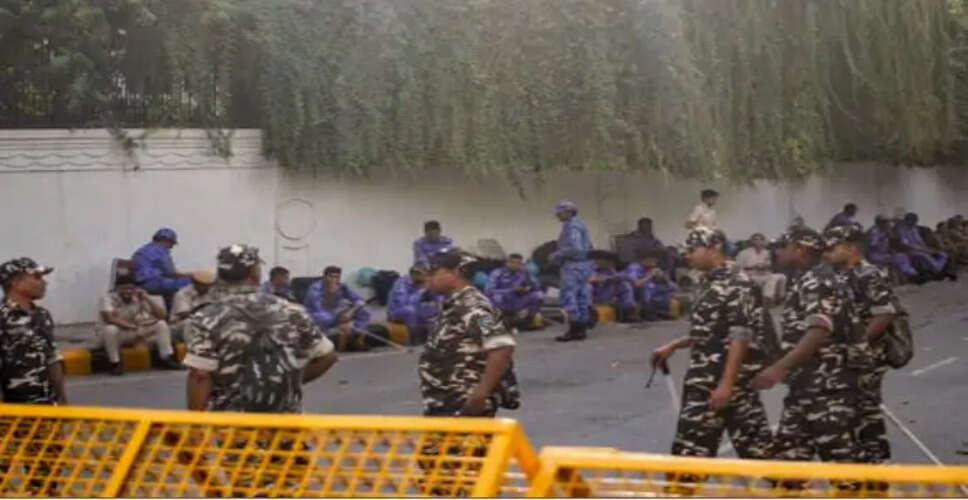
The statement criticized the heavy security measures in the capital, alleging that 22,000 police and paramilitary personnel were deployed, metro stations were closed, and internet services were suspended to thwart protests.
'Preventing journalists from performing their duties, detaining them without justification, and creating a fortress-like environment in the capital with 22,000 police and paramilitary personnel, closed metro stations, and unprecedented internet shutdowns to suppress peaceful questioning of institutions resembles a fascist state,' the organizations stated.
Expressing solidarity with the detained journalists, the four organizations affirmed that reporters must be allowed to fulfill their professional responsibilities without fear or interference.