
Jorhat's Historic Ronga Bhawan Set for Transition as District Office Moves

A New Chapter for Jorhat's Ronga Bhawan
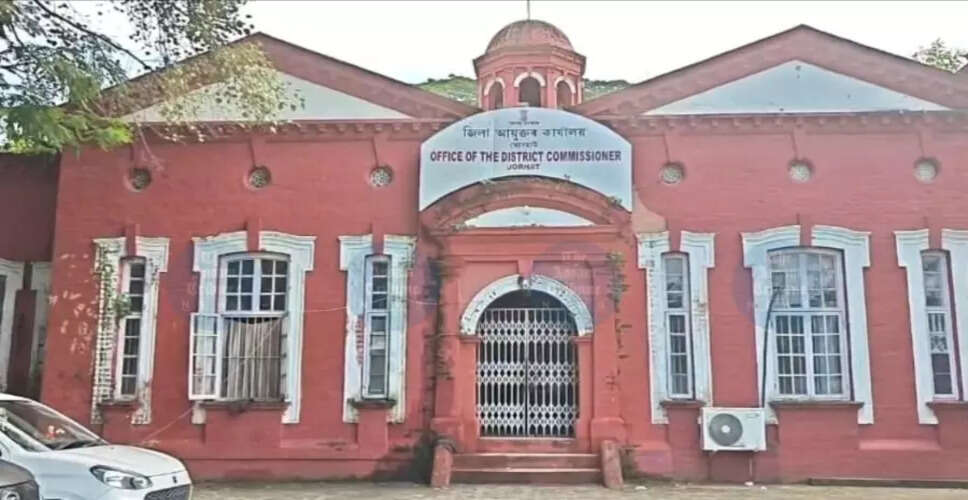
The historic 112 years old "Ranga Ghar" housing DC office in Jorhat (Photo: AT)
Jorhat, Sept 8: The iconic red-brick structure known as 'Ronga Bhawan' has been a silent observer of history for over a century, witnessing everything from colonial governance to the struggles of independence and various political and social transformations.
As the district administration prepares to relocate, this historic site will soon cease to function as the District Commissioner's office.
District Commissioner Jay Shivani finds himself in a unique position, being the last official to operate from this historic site while also being the first to transition to the new integrated District Commissioner’s office located at Cinnamara.
Shivani expressed his pride in this coincidence, recognizing the strong emotional ties the community has with the building.
The new office at Cinnamara is nearing completion, with plans to commence operations by the end of September.
Although a specific inauguration date has not been set, the process of moving is already in progress.
"All historical records from the various branches have been transferred, and daily operations are still being managed from the old office," the DC noted.
This transition is not merely about relocating furniture and documents; it involves careful handling of records that date back nearly two centuries, necessitating a meticulous and responsible approach to ensure nothing is lost.
Shivani emphasized the importance of this process, stating, "This heritage building contains records that are nearly 200 years old. We must ensure a careful and scientific approach to avoid any misplacement of documents."
The building's history traces back to 1911 when Jorhat was designated as the administrative center of the undivided Sivasagar district.
The headquarters moved from Rangpur to Jorhat in 1912 under Major A. Playfair, with the British completing the construction of the current Victorian-style building in 1914.
Commonly referred to as Ronga Bhawan or Ranga Ghar, this red-brick edifice has been a pivotal administrative hub in Upper Assam, deeply intertwined with Jorhat’s civic identity.
Following Jorhat's designation as a separate district on July 1, 1983, the building became the District Commissioner's office.
Advocate Dhubrajyoti Baruah highlighted the emotional significance of the structure for the local populace, stating, "Our sentiments are linked to the historic Victorian-style building known as 'Ranga Ghar', established by the British in 1914. Administrative functions for Upper Assam essentially began here," adding that its proximity to the DC Court made it particularly advantageous.
Despite the emotional attachment, he noted that the community respects the government's decision to relocate the office to Cinnamara.
Shivani mentioned that options like preserving the building as a heritage site or transforming it into a district museum could be considered, although the final decision will be made by the government.
Previously, Chief Minister Himanta Biswa Sarma indicated during a visit to Jorhat that the building might be converted into a museum, but formal directives regarding its future use have yet to be issued.
As Jorhat embarks on a new journey, the red-brick structure may be leaving its administrative role, but its historical significance remains intact.