
Jorhat Flood Aftermath: Communities Face Long Road to Recovery
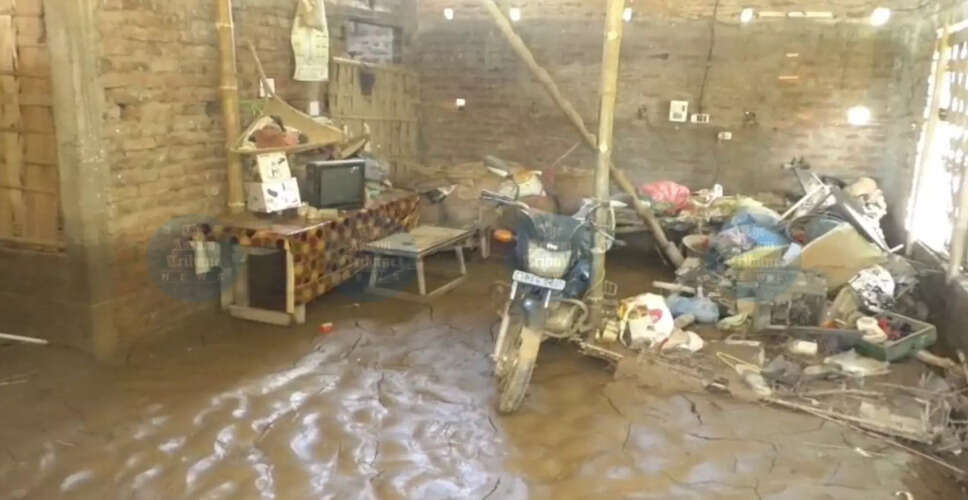

Devastation in Jorhat
A house damaged by the devastating floods in upper Assam
Jorhat, July 30: Although the floodwaters have receded, the challenges for numerous families in Jorhat's affected villages are just beginning.
Along the banks of the Jaji river, once vibrant villages now lie in ruins, with collapsed homes, broken embankments, and scattered belongings, forcing residents to start anew.
The destruction spans across Bonai, Dhantola, Ouguri, Kawaimari, Gosaibari, and other villages in the Teok-Mariani area.
Upon returning home after days in relief camps, many residents were overwhelmed by the devastation they encountered. The sight of their destroyed homes brought many to tears.
One survivor recounted, "At around 2 am, the floodwaters surged into our village. We managed to escape with just a few items. Our house has collapsed, the verandah is gone, and the flood swept away our gas cylinder, kitchen utensils, and everything we owned. We are still searching for our cows and goats, living in the only part of the house that remains intact."
Another villager lamented the loss of everything their family had worked for over the years.
"We clung to our children and somehow reached the embankment. We could only save a few items. Local officials visited to assess the damage, but we now need assistance to rebuild our lives," shared Pinky Sarma, a flood-affected resident.
The impact of the disaster extends beyond homes; schools, anganwadi centers, and places of worship have also suffered significant damage.
"Our village is located about 5 km from Teok. The ring bund has collapsed, isolating us. The primary school is severely damaged, the model anganwadi center is destroyed, and even the Shiva temple has been impacted. We urge the government to restore the embankment and help us rebuild our village as soon as possible," a local resident stated.
For many farming families, the loss of their food supply has compounded the crisis. Granaries filled with paddy for the year have been flooded, rendering the grain soaked and sprouting.
Despite the rice being unfit for consumption, families are attempting to dry it in the sun, hoping to salvage what they can.
"We know the rice is no longer edible, but we still spread it out to dry. It's heartbreaking to see a whole year's worth of food ruined. We do this because we can't bear to throw it away," a resident expressed.
The emotional impact of the disaster is palpable throughout the affected villages. Elderly residents report never having witnessed such devastation.
"I am over 80 years old and have never seen a flood like this. Everything is destroyed. We will have to start our lives from scratch," another resident remarked.
According to locals, rivers like the Jaji and Puthi rose rapidly during the floods, inundating villages such as Tengabari, Hatimuria, Dulia, Lukhurakhan, Panigaon, Panitola, Leferagaon, Halowapathar, and Kowargaon.
Official estimates suggest that approximately 258 villages in Jorhat district have been impacted by the floods. While water levels are receding in many areas, large sections remain covered in mud, damaged infrastructure, and debris.
Broken embankments continue to pose risks, and damaged roads have disrupted transportation and access to essential services.
For the residents of these villages, the floods have not only destroyed homes and crops but have also washed away years of hard work, savings, and dreams.