
Jharkhand CM Hemant Soren Highlights Adivasi Issues in Assam Election Rallies
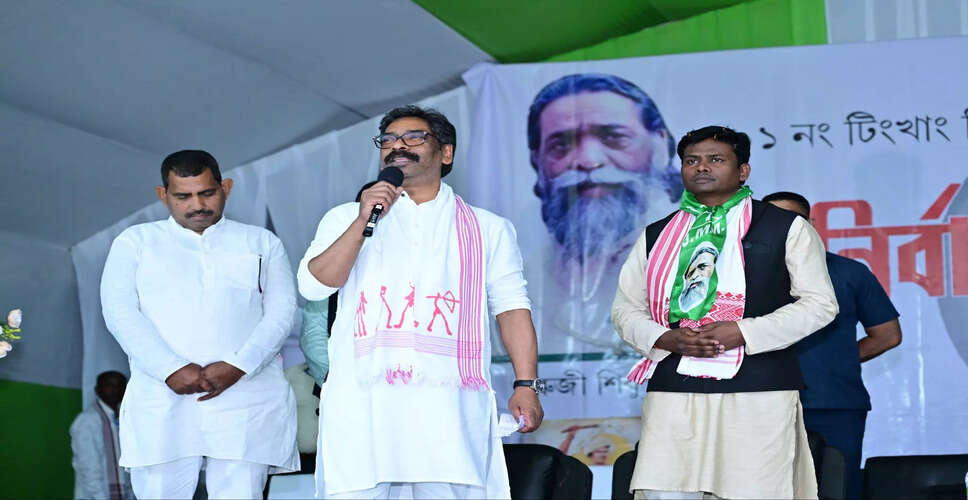

Soren's Campaign in Assam
DIBRUGARH, March 30: On Sunday, Hemant Soren, the Chief Minister of Jharkhand, conducted two significant election rallies in Assam, specifically at Sonari in Charaideo and the Rajgarh tea estate playground. His speeches focused on the persistent socio-economic issues faced by the Adivasi and tea garden communities in the region as he campaigned for his party's candidates.
The initial rally supported JMM candidate Baldev Teli in Sonari, followed by another at Rajgarh advocating for Mahavir Baske.
During his addresses to the enthusiastic crowds, Soren acknowledged the vital role of Adivasi communities in the development of Assam’s tea industry. He remarked, “Your forebears turned this area into flourishing tea gardens through their hard work, significantly boosting Assam’s economy.” However, he raised concerns about whether these communities have been granted dignity, fair wages, adequate housing, and access to clean drinking water in return for their contributions.
Soren accused previous governments and political entities of exploiting tea garden workers for electoral benefits without ensuring their upliftment. “You have been politically manipulated and denied the recognition, fair wages, and brighter futures that you deserve,” he stated.
He pointed out that despite years of labor, Adivasi communities still experience marginalization. Soren urged for increased political awareness and accountability, encouraging individuals to question if the current system truly offers them opportunities for advancement.
Expressing his party's stance, Soren mentioned that the Jharkhand Mukti Morcha (JMM), in collaboration with the Jai Bharat Party and the All Adivasi Students Association Assam, seeks to challenge the existing political landscape. “Many will come with promises, but we are dedicated to not just showing you the way but also guiding you to the destination,” he emphasized.
He further asserted that rights and entitlements are seldom granted voluntarily and must be actively pursued. Soren criticized the growing corporate influence in governance, claiming that elites systematically exploit underprivileged communities.
Addressing concerns about structural inequality, he questioned whether genuine social mobility is being facilitated. “If your children become professionals like doctors and engineers, who will continue the labor in tea gardens?” he asked, implying that systemic barriers are intentionally upheld to keep certain communities economically and socially disadvantaged.
Soren also challenged the narrative of the “double engine government,” arguing that the rising prices of essential goods post-elections exacerbate the plight of ordinary citizens. He cautioned against political fragmentation within communities, alleging that vested interests intentionally create divisions to undermine collective strength.
In closing, he called for solidarity among Adivasi communities, stating, “If you unite under one banner, no force can divide you,” and urged voters to back JMM candidates in the forthcoming elections. The meeting was chaired by Sanjay Sangha, president of the Jai Bharat Party in Dibrugarh district.