
Jazz Legend Sonny Rollins Passes Away at 95, Leaving a Lasting Impact
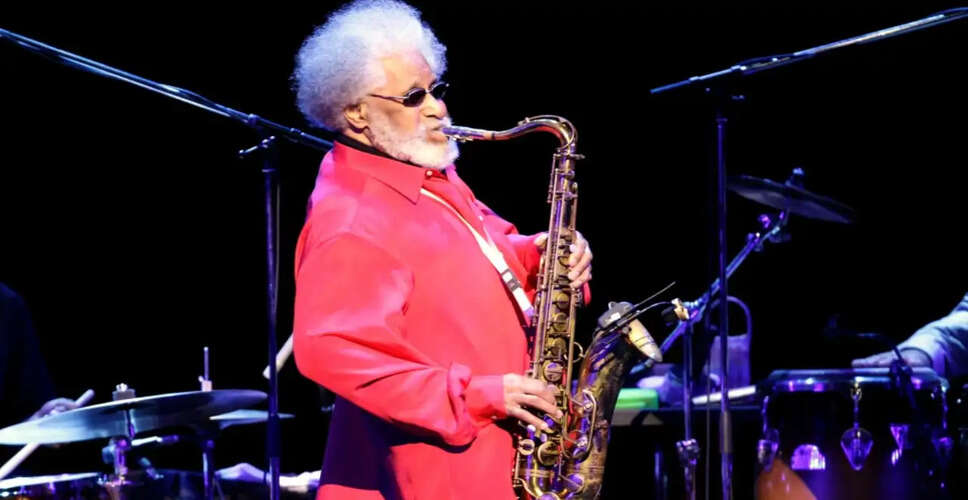

Sonny Rollins: A Jazz Icon's Departure
Sonny Rollins, a pivotal figure in jazz music and celebrated for his improvisational genius, has passed away at the age of 95. The announcement was made on Monday via a statement on Rollins’ official website, which was later corroborated by his publicist, Terri Hinte. According to the statement, the renowned saxophonist died peacefully at his residence in Woodstock, New York, although no specific cause of death was disclosed. The statement reflected Rollins’ profound spiritual perspective on life, emphasizing his belief that creativity transcends physical existence.
For countless musicians and fans, Rollins embodied a unique blend of technical skill and bold innovation. Over a prolific career that spanned more than 60 albums, he redefined jazz performance, seamlessly transitioning between various styles such as bebop, hard bop, and experimental jazz, all while maintaining his signature melodic style. His influence reached far beyond the jazz community, garnering respect from fellow artists, political figures, and cultural icons alike.
It is with deep sorrow and profound love that we announce the passing of Sonny Rollins. The Saxophone Colossus died this afternoon at his home in Woodstock, NY at the age of 95. 1/2 https://t.co/6AGmFrB7x4 pic.twitter.com/OA0PzpPfGR
— Sonny Rollins (@sonnyrollins) May 26, 2026
From Harlem Prodigy to Jazz Revolutionary
Born Walter Theodore Rollins in Harlem in 1930, he was immersed in the vibrant musical landscape of New York City from a young age. Influenced by family and jazz legends like Louis Jordan and Fats Waller, he took up the saxophone as a child and quickly became part of a remarkable cohort of musicians who reshaped American music post-World War II. Rollins entered the professional jazz scene as a teenager, sharing the stage with future icons of the genre.
His reputation soared during the 1950s as he collaborated with jazz luminaries such as Miles Davis, Thelonious Monk, Dizzy Gillespie, Max Roach, and John Coltrane. Even in a time filled with exceptional talent, Rollins was recognized as a distinctly original voice, with improvisations that continually expanded the boundaries of jazz. His landmark recordings, including Saxophone Colossus, Way Out West, and Freedom Suite, are considered essential listening for jazz enthusiasts. The calypso-influenced piece St Thomas became one of his hallmark compositions, while Freedom Suite echoed the social and political movements of the civil rights era.
The Bridge, Comebacks, and Enduring Legacy
A pivotal moment in Rollins’ career occurred in 1959 when he chose to withdraw from public performances at the peak of his fame. In pursuit of artistic development, he dedicated years to practicing alone on the Williamsburg Bridge in New York, often for hours each day. This self-imposed hiatus became legendary in jazz lore and inspired his celebrated comeback album, The Bridge, released in 1962.
After receiving a Lifetime Achievement Grammy in 2004, Rollins continued to perform until pulmonary fibrosis led to his retirement in 2014. Despite the illness that ultimately curtailed his ability to play, he remained contemplative about a life dedicated to music. Even in retirement, he rejected nostalgia, asserting that the journey of artistic growth is never truly over. His passing marks the end of an era in jazz history.