
Jay Shah Advocates for Strategic Planning in Indian Sports Ahead of Major Events
Strategic Vision for Future Sports
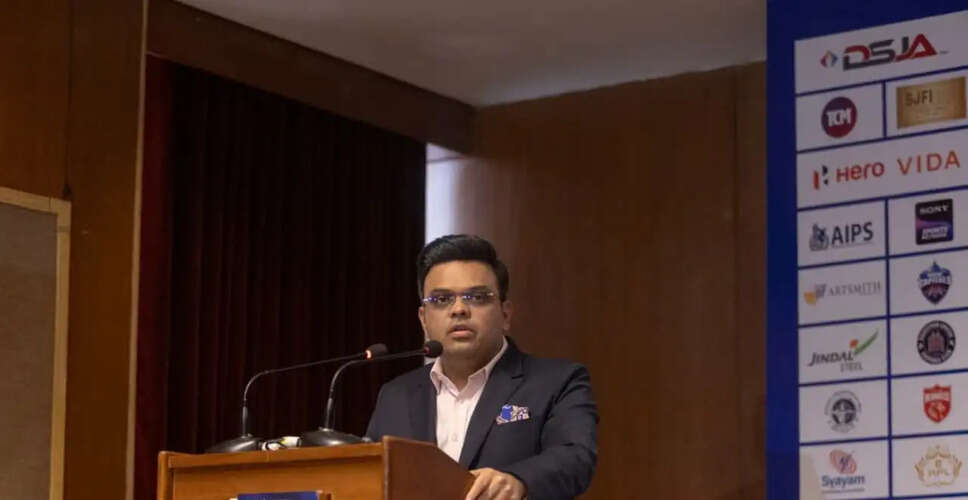
During a recent address at the Grand Sports Conclave, ICC Chairman Jay Shah emphasized the necessity for long-term planning in Indian sports. He urged all stakeholders to start preparing for the global sporting cycle from 2030 to 2036, highlighting the need for collaborative efforts among federations, corporations, athletes, and the media. This event was part of the Golden Jubilee celebrations of the Sports Journalists Federation of India (SJFI) National Convention held at the India Habitat Centre, organized by the Delhi Sports Journalist Association.
Celebrating Recent Achievements
Reflecting on the successes of Indian cricket, Shah referred to the period from 2019 to 2026 as a remarkable era for the sport. He noted, 'This phase has seen significant achievements across various formats and age groups, from U19 tournaments to major ICC events.' He also hailed India's T20 World Cup victory as a historic milestone, acknowledging the sports media's role in capturing these moments for fans.
The Need for Unified Efforts
Shah stressed the importance of a unified approach to enhance India's sports ecosystem. He stated, 'The advancement of sports relies on collaboration among all stakeholders. Federations, corporations, athletes, and the media must unite to create a robust framework that supports Indian sports at every level.'
Corporate Contributions Beyond Sponsorship
Sanjay Bhan, Executive Vice President of Hero MotoCorp, discussed the evolving role of corporations in the Indian sports landscape. He remarked, 'In the last decade, we've seen a significant transformation in Indian sports. While cricket remains at the forefront, other sports like football, hockey, and golf are gaining international acclaim.' Bhan pointed out that corporate involvement now extends beyond traditional sponsorship, with many companies investing in leagues, grassroots talent, and professional platforms for athletes.
Media's Impact on Sports Success
Neville Bastawalla, Head of Marketing and On-Air Promotions at Sony Sports Network, highlighted the influential role of media campaigns in shaping sporting success. He recalled the 'Mission 100' campaign prior to the Asian Games, which aimed to inspire belief in achieving 100 medals. 'The media's support was crucial, and ultimately, India secured 107 medals,' he noted, emphasizing how media narratives can engage fans and athletes alike.
Governance as a Catalyst for Investment
Remus D'Cruz, Global Head of Brand Strategy at Apollo Tyres, underscored the importance of strong governance in sports organizations to attract corporate investment. He stated, 'Sports media should hold federations accountable, as this transparency is vital for the growth of sports.' D'Cruz advocated for improved governance at local and state levels to encourage corporate support for sports development.
Conclusion of the Grand Sports Conclave
The Grand Sports Conclave served as a significant event on Day 3 of the SJFI Golden Jubilee National Convention, uniting administrators, corporate leaders, broadcasters, and sports media members to discuss the future of Indian sports.