
Jan Suraaj Party Challenges Bihar Elections in Supreme Court Over Cash Transfer Scheme
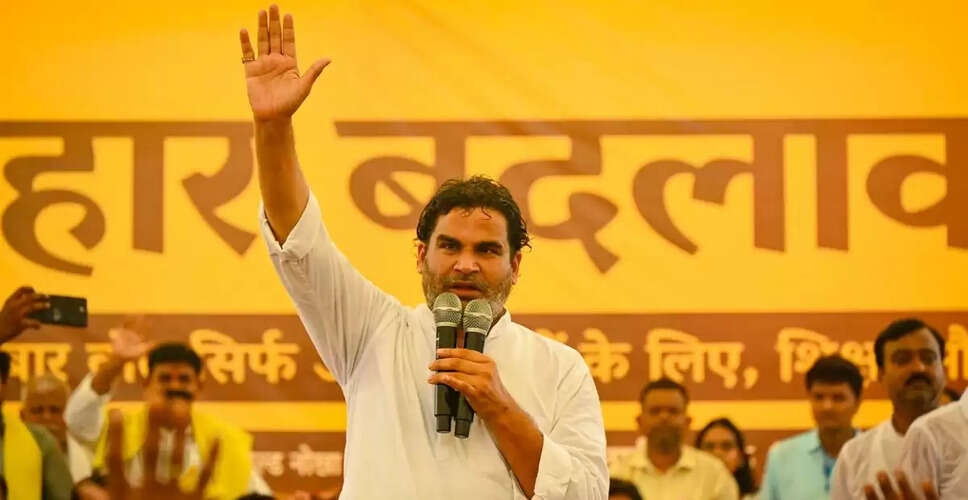
Legal Challenge Against Bihar Elections
The Jan Suraaj party, led by former political strategist Prashant Kishor, has filed a petition with the Supreme Court contesting the conduct of the upcoming 2025 Bihar Assembly elections. The party alleges that the state government is misusing a cash transfer initiative to sway voters, as reported by a news outlet.
This legal action seeks to annul the elections and is expected to be reviewed by a bench comprising Chief Justice Surya Kant and Justice Joymalya Bagchi.
In the recent elections, the National Democratic Alliance secured 202 out of 243 Assembly seats, while the Opposition coalition, Mahagathbandhan, managed to win only 35 seats. Despite fielding candidates in 238 constituencies, Jan Suraaj did not win any seats.
Prior to the elections, on October 3, the state government initiated a cash transfer of Rs 10,000 to women under the Mukhyamantri Mahila Rojgar Yojana, aimed at empowering women to start small businesses.
Chief Minister Nitish Kumar announced that additional payments would be made to other women by October 8, as part of a series of welfare initiatives leading up to the elections.
This cash transfer occurred after the Election Commission had already set the election schedule on October 6, which activated the Model Code of Conduct—a set of guidelines that govern political activities during elections.
In its petition, Jan Suraaj claims that the cash transfer scheme was improperly linked to the JEEVIKA network, which supports women's self-help groups. They argue that while approximately one crore women were part of this network before the election code was enforced, around 1.5 crore women received the payments afterward, suggesting an attempt to manipulate voter sentiment.
The party contends that this practice constitutes corruption aimed at influencing voters and has requested the Election Commission to take action under Article 324 of the Constitution and Section 123 of the Representation of People Act.
Article 324 grants the Election Commission authority over the conduct of elections in India, while Section 123 outlines various corrupt practices, including bribery and misuse of official resources.
Furthermore, Jan Suraaj alleges that the scheme was approved without legislative backing and that the funding was sourced from the state’s contingency fund, violating Article 267 of the Constitution.
Article 267 stipulates that contingency funds should only be used for urgent and unforeseen expenses, such as disaster relief.
The petition also calls for the court to mandate the Election Commission to establish a minimum timeframe—ideally six months—before implementing any schemes that could affect the integrity of elections.