
Jammu and Kashmir CM Critiques US Role in Middle East Tensions
Concerns Over Middle East Developments
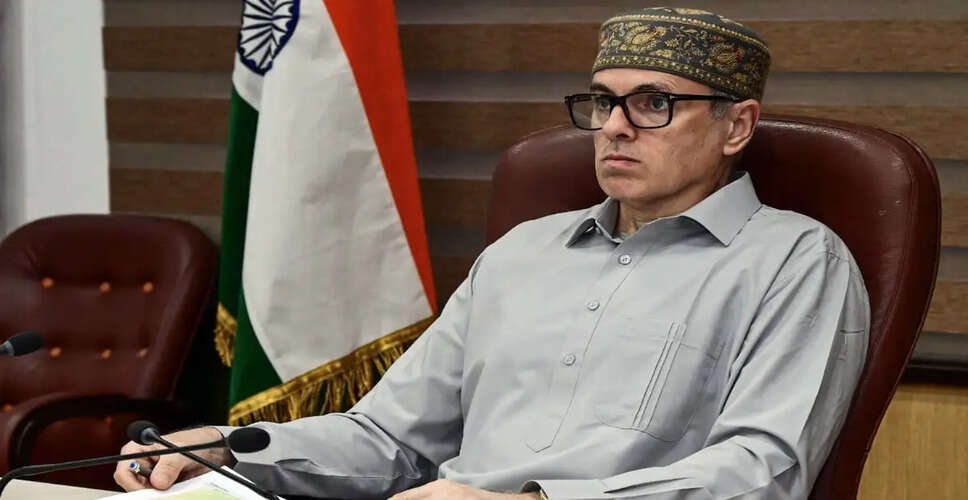
On Wednesday, Jammu and Kashmir's Chief Minister Omar Abdullah expressed his discontent regarding the situation in the Middle East, particularly following Iran's agreement to reopen the Strait of Hormuz. He pointed out that this route was already accessible to all and questioned the United States' involvement in the conflict's outcomes. Abdullah took to social media to ask whether a ceasefire now permits the reopening of a strait that was previously open and freely available before the conflict began. He pondered what the U.S. has gained from this 39-day war.
Trump's Announcement on Iran
Earlier today, U.S. President Donald Trump announced a temporary halt to bombing and attacks on Iran, proposing a two-week bilateral ceasefire. He also indicated that Iran's ten-point proposal is 'viable,' suggesting a potential improvement in diplomatic relations between the two long-time rivals. Trump stated that this day is significant for global peace as the U.S.-Iran conflict moves towards a ceasefire, and he pledged assistance in facilitating traffic through the Strait of Hormuz.
A New Era for the Middle East?
In a post on Truth Social, Trump declared it a monumental day for world peace, asserting that Iran desires this change and can no longer endure the current situation. He emphasized that the U.S. would help increase traffic in the Strait of Hormuz, leading to numerous positive developments and economic opportunities. Trump expressed confidence that this could herald a golden age for the Middle East, stating that the U.S. would ensure everything runs smoothly during this transition.
Geopolitical Implications
This development comes amid rising tensions in the region, which pose risks to global energy markets and economic stability. The Strait of Hormuz, a crucial maritime route for global oil shipments, remains a focal point of geopolitical concerns due to its strategic importance and vulnerability during conflicts.