
Jagiroad Semiconductor Plant Set to Begin Production This Financial Year
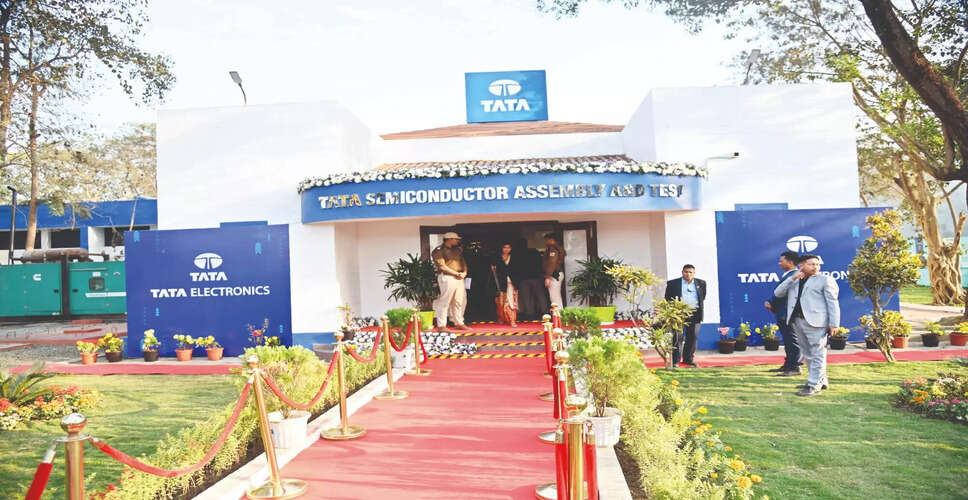

Semiconductor Manufacturing Plant in Jagiroad
A file image of TATA semiconductor assembly and test facility factory (Photo: AT)
New Delhi, May 31: The semiconductor manufacturing facility being established in Jagiroad, Assam, is anticipated to start its production within the current financial year.
Union Electronics and Information Technology Minister Ashwini Vaishnaw took to social media to announce his meeting with Assam Chief Minister Himanta Biswa Sarma, where they discussed the advancements regarding the semiconductor plant.
Vaishnaw highlighted that the National Institute of Electronics & Information Technology (NIELIT), aimed at training youth in semiconductor manufacturing, is also making significant progress.
The Tata Semiconductor Assembly and Test Pvt Ltd (TSAT) facility, which is being developed with an investment of approximately Rs 27,000 crore, is poised to become a key semiconductor manufacturing hub in India.
This plant is expected to produce up to 48 million semiconductor chips daily, utilizing cutting-edge packaging technologies like flip-chip and Integrated System in Package (ISIP).
It will serve crucial industries such as automotive, electric vehicles, telecommunications, and consumer electronics.
In addition to bolstering India's semiconductor landscape, the initiative is projected to create around 15,000 direct jobs and between 11,000 to 13,000 indirect employment opportunities, significantly benefiting Assam's economy and the broader Northeast region.
As a high-capacity manufacturing unit, the facility's output is set to cater to both domestic and international markets, thereby enhancing India's role in the global semiconductor supply chain.
In a separate discussion, Sarma and Vaishnaw, in his role as Railway Minister, addressed various railway infrastructure projects aimed at improving connectivity throughout Assam.
The Chief Minister mentioned that they deliberated on expanding the railway network and modernizing the rail infrastructure within the state.
“We discussed the expansion of the railway network and infrastructure in Assam, which includes ongoing work on over 1,300 km of track expansion and more than 50 Amrit Bharat stations,” Sarma stated.
Officials reported that the meeting reviewed the progress of railway expansion efforts, including the laying and upgrading of over 1,300 km of tracks and the redevelopment of more than 50 stations under the Amrit Bharat Station Scheme.
The discussions also emphasized enhancing rail connectivity, improving passenger facilities, and strengthening freight movement to foster economic growth in Assam and the Northeast.
With inputs from agencies