
ISRO's PSLV-C62 Mission Faces Setback: Analyzing the Failure
Challenging Start for India's Space Program in 2026
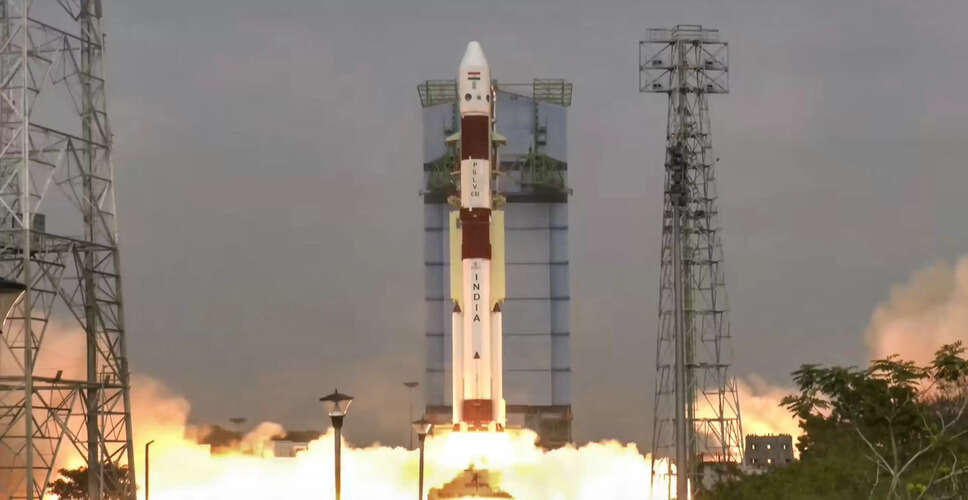
The year 2026 has begun with a significant challenge for India's space endeavors. On January 12, 2026, the Indian Space Research Organisation (ISRO) launched the PSLV-C62 rocket, which unfortunately did not succeed. This mission marked the first space attempt of the year, but it failed due to a technical issue encountered during the third stage (PS3).
Details of the Mission Failure
The PSLV-C62 lifted off from the Satish Dhawan Space Centre in Sriharikota at 10:18 AM. While the first and second stages operated normally, a disturbance in the roll rate and deviation in the flight path were observed at the end of the third stage (solid fuel motor PS3). ISRO Chairman V. Narayanan explained that irregular performance at the end of the third stage prevented the vehicle from reaching its intended orbit. Consequently, all 16 satellites, including the primary payload EOS-N1, could not be placed in their designated orbits and are now considered lost.
Key Payloads Involved in the Mission
The mission included significant payloads such as:
- DRDO's Strategic Earth Observation Satellite (critical for national security through hyperspectral imaging).
- 14-15 co-passenger satellites, including CubeSats from Indian startups, Nepal, Spain, and technology demonstrators (such as refueling tests and the KID re-entry capsule).
Comparison with Previous Failures
This marks the second consecutive failure for the PSLV. The previous mission, PSLV-C61, also failed in May 2025 during the third stage, where the EOS-09 satellite could not be deployed into orbit due to a sudden drop in chamber pressure. Although ISRO has not released the failure analysis report, the chairman attributed the issue to the pressure drop. The PSLV-C62 failure appears to be linked to similar PS3 problems, potentially involving flex nozzle issues, propellant defects, or casing problems.
Reasons Behind Consecutive Failures
The PSLV, known as ISRO's 'workhorse,' has experienced only four failures in over 30 years across 64 flights (the first in 1993, followed by incidents in 2017, 2025, and now 2026). However, two consecutive PS3 failures raise concerns. Possible reasons include:
- Issues with the solid fuel motor — including nozzle erosion, propellant quality, casing integrity, or leaks in the pressure chamber.
- Quality control and testing — improvements made after the 2025 failure were insufficient.
- Schedule pressure — with several critical missions planned for 2026 (uncrewed tests, expansions, and over 100 satellite launches), there may be a rush to complete them.
- Lack of transparency — the absence of public reports on previous failures raises questions.
Impact on India's Commercial Space Sector
This failure could affect India's commercial space sector (NSIL rideshare mission), as it may undermine trust among international clients. Additionally, competition from private players like SpaceX is intensifying.
ISRO has initiated a detailed analysis and will soon identify the root cause. Experts believe that improvements can be made quickly due to the modular design of the PSLV, but the speed of recovery will be crucial. There is confidence in ISRO's resilience, as it has historically bounced back stronger from setbacks.