
ISRO to Launch 6,500 KG US Communication Satellite Soon
ISRO's Upcoming Satellite Launch
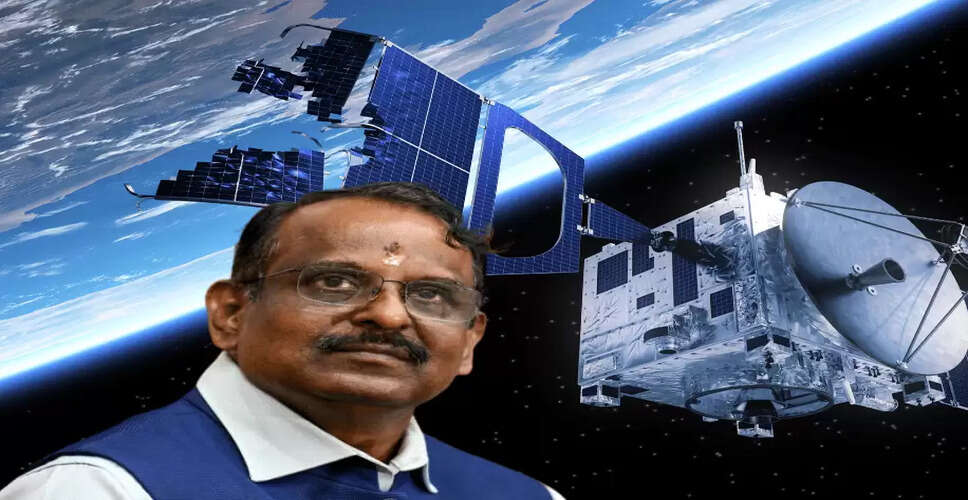
The Indian Space Research Organisation (ISRO) is preparing to launch a 6,500-kilogram communication satellite from the United States in the coming months. This announcement was made by ISRO Chairman V. Narayanan on Sunday. This launch marks a new collaboration between ISRO and NASA, following the recent deployment of the NISAR satellite.
ISRO's Launch History
To date, ISRO has successfully launched 433 satellites from 34 different countries using its launch vehicles. Currently, the organization operates 56 satellites in orbit, with plans to triple this number within the next 2-3 years. The journey began in 1975 when the SITE project enabled the installation of 2,400 television sets across 2,400 villages in six states, utilizing satellite data provided by the United States.
Details on the Upcoming Launch
Chairman V. Narayanan confirmed that the satellite will be launched using the GSLV-F16 rocket. This follows the successful launch of the NASA-ISRO Synthetic Aperture Radar (NISAR) satellite on July 30, 2025, which utilized dual-band radar technology, a first for any satellite. The collaboration on this project began nearly a decade ago between India and the United States.
ISRO's Contributions to National Security
ISRO is currently contributing to the nation through 55 applications, including television broadcasting, telecommunications, weather forecasting, disaster warning, navigation, and food and water security. During Operation Sindoor, ISRO utilized its satellite technology to ensure the safety of citizens. Notably, Chandrayaan-1 discovered water on the moon, while Chandrayaan-3 made history with a soft landing at the lunar south pole.
Future Plans for ISRO
ISRO aims to increase its satellite count in orbit to three times the current number within the next few years. The Gaganyaan program is set to send humans into space, with a goal of establishing an Indian space station by 2035. By 2040, India aspires to be on par with developed nations in space technology.