
Israel's Ongoing Manhunt for October 7 Attackers: A Comprehensive Operation

Israel's Methodical Pursuit of Attackers
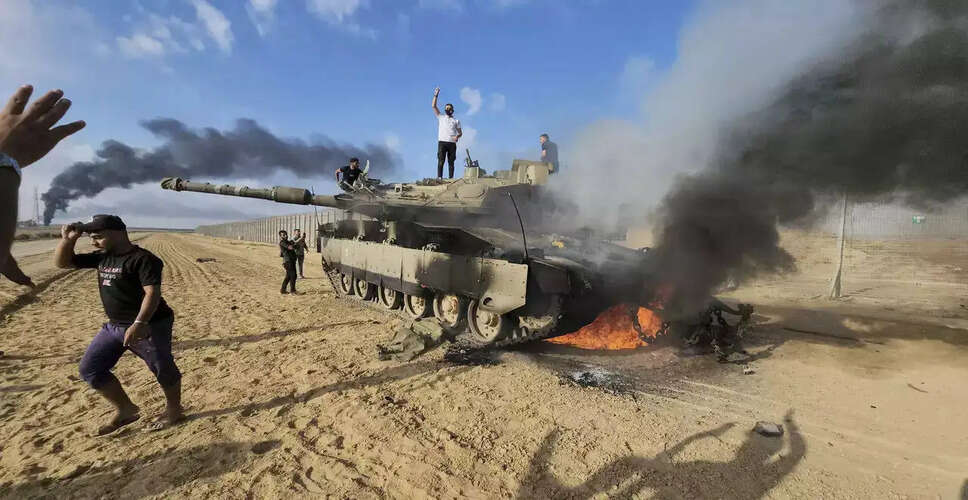
Almost two years following the most devastating assault on Jews since the Holocaust, Israel has initiated a highly organized and technologically sophisticated manhunt. This operation is focused on identifying, locating, and neutralizing every individual involved in the October 7, 2023, attack on southern Israel. The initiative, led by a specialized task force that includes military intelligence, Shin Bet (Israel’s internal security agency), and the Israel Defense Forces, has already resulted in the deaths of numerous militants, ranging from low-ranking gunmen to high-ranking Hamas leaders. Israeli authorities assert that this campaign will persist until all participants are accounted for, irrespective of the ongoing ceasefire in Gaza.
A Comprehensive List of Suspects
Shortly after the attack commenced, Israeli intelligence began compiling an extensive list of thousands of names. This list encompasses not only the planners and senior commanders but also the foot soldiers who participated in the massacre that resulted in 1,200 fatalities and approximately 250 hostages taken. The operation has been unyielding, with Israeli officials stating that they utilize various intelligence sources:
- Videos shared by militants on social media or captured on personal devices.
- Facial recognition technology to identify individuals in the footage.
- Intercepted communications and phone calls.
- Location data obtained from cell towers.
- Interrogations of captured individuals from Gaza.
A security official indicated that Shin Bet requires at least two independent pieces of evidence before marking an individual for elimination.
Elimination of Key Figures
Recently, Israel eliminated Ezzedin al-Haddad, one of the last senior Hamas military leaders involved in orchestrating the October 7 attacks. Haddad had assumed the role of Hamas’s top military commander in Gaza in 2025 following the deaths of Yahya and Mohammed Sinwar. The strike in Gaza City also resulted in the deaths of his wife, daughter, and several others, according to Palestinian sources. Israeli officials noted that Haddad was actively working to restore Hamas’s military capabilities despite the ceasefire. Other notable targets recently taken out include:
- Ali Sami Mohammad Shakra, a Hamas platoon commander accused of participating in the attack on the Nova music festival and aiding in the kidnapping of four hostages, including American-Israeli Hersh Goldberg-Polin.
- Abd al-Rahman Ammar Hassan Khudari, an Islamic Jihad militant associated with the assault on Kibbutz Nir Oz.
Even individuals with seemingly minor roles have not been spared; one man who drove a tractor through the border fence on October 7 was later identified and killed in an airstrike while walking in Gaza.
Personal Stories of Hostages
One of the most memorable images from October 7 was the video of Noa Argamani, then 25, being taken hostage on a motorcycle from the Nova music festival. After 245 days in captivity, she was rescued in a daring Israeli operation. Two men seen restraining her boyfriend in that video were later tracked down and killed in separate strikes. Following her release, Argamani’s father, Yacov, expressed that his only wish was for her to see her terminally ill mother one last time, a wish that was fulfilled. Noa and her mother spent three weeks together before her mother passed away. While some freed hostages celebrated the deaths of figures like Haddad, others expressed mixed feelings. Aviva Siegal, who was held for 51 days, stated her opposition to further killings despite her own suffering, saying, “I’m alive, and that’s enough for me.”
Legal and Ethical Considerations
This campaign has sparked discussions regarding the fine line between lawful wartime targeting and extrajudicial killings. International law permits militaries to target enemy combatants, even during a ceasefire, if they pose an ongoing threat. However, targeting civilians suspected of involvement in hostilities is legally more complex. Rachel VanLandingham, a former U.S. Air Force judge advocate and expert in national security law, noted that while the law allows for the killing of active combatants, it mandates due process for civilians suspected of crimes. Israeli officials assert that everyone on their list directly participated in hostilities on October 7 and continues to pose a threat.
A Long-Term Commitment
The task force, initially named NILI (an acronym meaning “The Eternal One of Israel Doesn’t Lie”), was established shortly after the attack with the explicit aim of ensuring that no perpetrator escapes justice. This initiative draws parallels to Israel’s response to the 1972 Munich Olympics massacre, where agents pursued those responsible over many years. Although the ongoing conflict with Iran has necessitated resource allocation, the hunt for the October 7 attackers has not ceased. Officials report that names continue to be added and removed from the list. For many Israelis, particularly the families of victims and hostages, this campaign is viewed as a crucial pursuit of justice. Conversely, Palestinians perceive it as collective punishment and part of a longstanding pattern of targeted killings. Regardless of perspective, this operation exemplifies Israel’s unwavering resolve to hold accountable those responsible for the deadliest day in its history.