
Israeli Soldiers Reveal Ongoing Violence in Gaza Despite Ceasefire
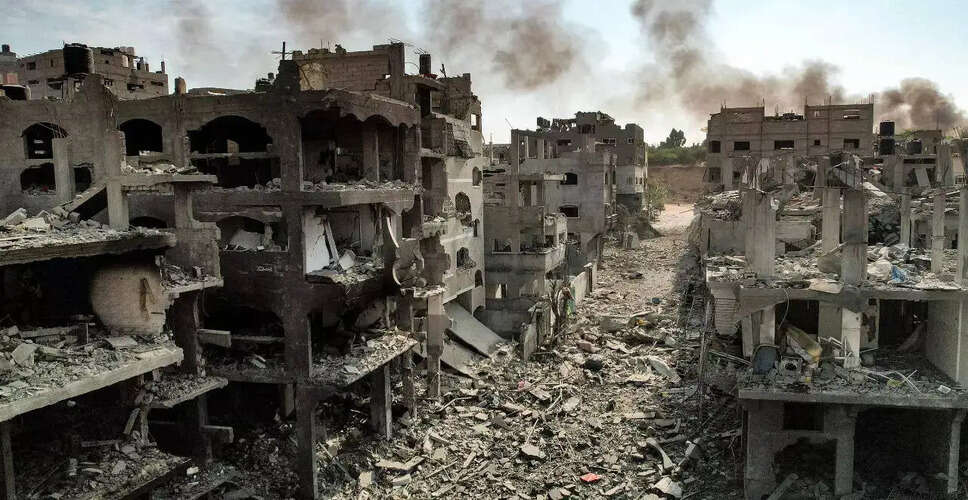

Alarming Accounts from Israeli Soldiers
Israeli military personnel have shared unsettling testimonies regarding operations in Gaza, indicating that violent incidents persist even after a ceasefire was established in October. These accounts, provided to a news agency, raise significant concerns about the enforcement of the truce and the engagement protocols near the boundary separating Israeli and Palestinian territories.
One reservist recounted an incident where soldiers celebrated after a vehicle carrying Palestinians was hit near the so-called 'yellow line,' resulting in fatalities. This soldier, who served in Gaza post-ceasefire, mentioned that troops were ordered to shoot anyone crossing this boundary. 'It was chaotic,' he stated. 'After the ceasefire, the directive was clear: shoot if someone crosses the line.'
Three Israeli soldiers who were deployed in Gaza from October to January expressed confusion regarding the ceasefire's stipulations and the military's engagement rules. They noted that while some commanders publicly endorsed the truce, they privately supported ongoing military actions. Speaking anonymously due to concerns about repercussions, these soldiers felt compelled to share their experiences due to the troubling nature of what they observed.
The ceasefire mandated that Israeli forces retreat to a buffer zone marked by the yellow line, which left Israel in control of slightly over half of Gaza. However, discussions for a more extensive withdrawal have stalled, and Israel has since increased its territorial control.
Israeli soldiers share rare accounts from Gaza, describing ongoing killings despite the ceasefire. pic.twitter.com/bXk1XSC5ky
— The Associated Press (@AP) June 1, 2026
A significant concern raised by the soldiers is the unclear demarcation of the yellow line. In certain locations, it is marked by barriers or painted indicators, while in others, it is challenging to identify. This lack of clarity has led to fatal incidents involving civilians.
According to the Health Ministry in Gaza, over 900 individuals have died in the region since the ceasefire began, with many casualties occurring near or across the yellow line. The ministry does not differentiate between civilians and militants in its reported figures.
The Israeli military asserts that the area adjacent to the line is a sensitive security zone and claims that civilians are cautioned against approaching it. They maintain that their forces do not target civilians merely for being near the boundary and that engagement rules necessitate warnings before any force is applied, except in cases of immediate threats.
However, soldiers interviewed indicated that determining who is crossing the line can be problematic. One soldier mentioned that troops often relied on incomplete information or visual assessments when seeking approval for strikes. The organization Breaking the Silence, which gathers testimonies from Israeli soldiers, stated that the engagement rules in many areas effectively create a 'shoot-to-kill' policy for anyone crossing the boundary. Nadav Weiman, the group's executive director, argued that military policies have fostered conditions where civilians can be killed for crossing poorly defined or invisible lines.
Another soldier who served in Gaza after the ceasefire described a prevailing culture where territorial control was prioritized over civilian safety. He noted that commanders frequently emphasized the importance of defending positions and expected Palestinians to be aware of the yellow line's location, even when markers were absent.
The soldiers also expressed a widespread belief among troops that Israel aims to maintain a long-term military presence in Gaza rather than executing a complete withdrawal as envisioned in the ceasefire agreement.
An internal report shared among humanitarian organizations and reviewed by a news agency indicated that Israeli military operations have become increasingly aggressive in recent months. Data from a US-based monitoring group revealed that April was the deadliest month in Gaza for the year, with a rise in fatalities near the yellow line compared to previous months.
Israeli Prime Minister Benjamin Netanyahu recently stated that Israel currently controls approximately 60% of Gaza and plans to increase that figure to 70%. For the soldiers who came forward, the situation on the ground starkly contrasts with the notion of a ceasefire. 'We need to stop using this term,' one soldier remarked. 'It’s not helping those who want to end the conflict.'