
Israeli Officials Warn of Violence Against Iranian Protesters Amid Ongoing Tensions
Warnings from Israeli Officials
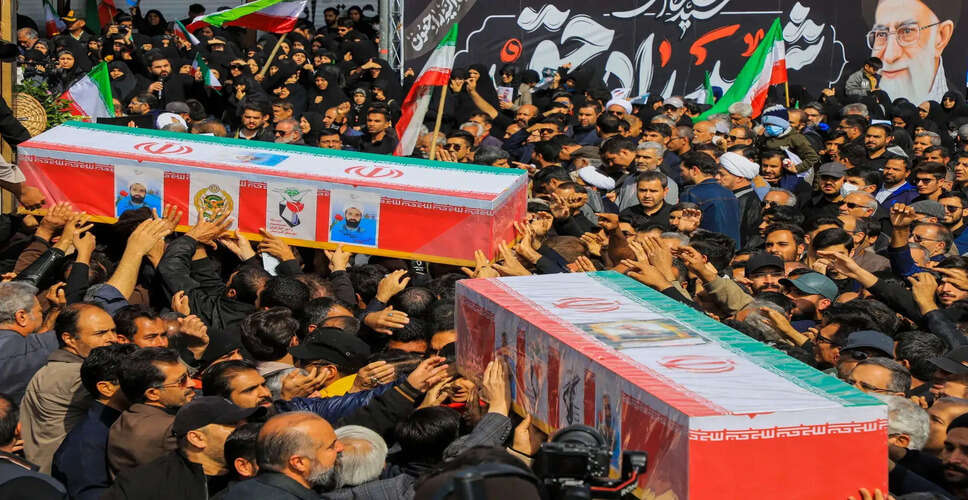
High-ranking officials from Israel have privately alerted US diplomats that Iranian citizens protesting against their government could face severe repercussions, including potential violence. This warning comes even as Israel publicly supports such demonstrations, as detailed in a State Department cable obtained by a major news outlet. The communication, dispatched from the US Embassy in Jerusalem, indicates that Israeli leaders believe the Iranian regime remains steadfast and prepared to resist any challenges, despite the reported death of Ali Khamenei on February 28 and the ongoing military actions by US and Israeli forces.
The cable also highlights that the Islamic Revolutionary Guard Corps is currently in a dominant position, raising concerns that if widespread protests occur, ordinary Iranians might suffer the most from any ensuing violence.
Encouragement for Protests Despite Risks
Encouragement for Protests Despite Risks
In spite of these warnings, Israeli officials have expressed optimism that protests will materialize. They have urged the US to be prepared to support demonstrators in case of a violent crackdown. This cable summarizes discussions that took place earlier in the week between US representatives and senior members of Israel’s National Security Council, Ministry of Defence, and Ministry of Foreign Affairs.
These developments coincide with calls from Iran’s exiled crown prince, Reza Pahlavi, for citizens to protest during Chaharshanbe Suri, a traditional Persian festival. Israel has publicly stated that its main objective is to undermine Iran’s leadership and military strength.
In a statement, the Israeli Embassy in Washington emphasized its commitment to diminishing the regime’s military capabilities for the benefit of all. They noted that Iranians have repeatedly risked their lives to protest, including recent demonstrations in January. The embassy also mentioned that various opposition groups have been working independently for years to challenge the regime.
Israeli Prime Minister Benjamin Netanyahu has consistently voiced support for regime change, asserting in a televised address that Israel will take decisive action against the regime to enable the Iranian populace to liberate themselves from oppressive rule.
US Response to Iranian Protests
US Response to Iranian Protests
The stance of the Trump administration regarding the dangers faced by Iranian protesters has shifted over time. Initially, President Trump encouraged Iranians to take control of their government but later recognized the threats posed by Iran’s security forces. He remarked in an interview that armed forces are actively targeting protesters, creating significant obstacles for unarmed citizens.
A White House official, who requested anonymity, noted that Trump is sensitive to suffering globally, including in Iran, where the regime has been suppressing protests even prior to US involvement and is now targeting civilians across the region. US officials have also indicated that Washington is no longer focused on the overthrow of Iran’s clerical and military leadership.
Despite the extensive damage inflicted by US-Israeli strikes, Iran’s leadership has shown remarkable resilience, which Israeli officials seem to have miscalculated. They anticipated that the death of the supreme leader would lead to increased chaos within the regime. However, the Iranian government has continued to demonstrate operational strength, including the ability to launch ballistic missiles and drones at will.
Even with reports of successor Mojtaba Khamenei being injured in an airstrike, Israeli officials maintain that he remains in control and is more aligned with hardliners in the Revolutionary Guard than his predecessor. They concluded that while changes in leadership may influence the regime’s trajectory, it remains obstinate and ultimately needs to be dismantled from within.