
Israeli Drone Strike Allegedly Targets Journalist in Southern Lebanon

Incident Involving Journalist Reporting from Lebanon
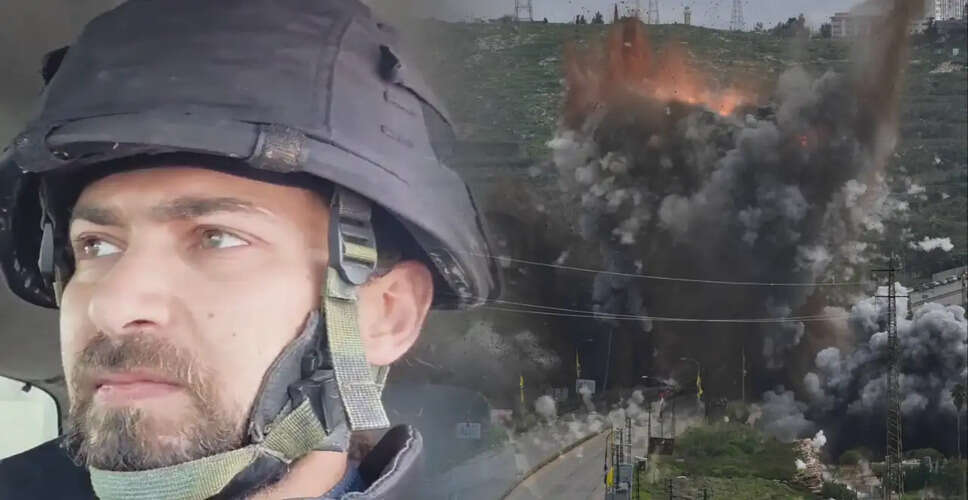
A journalist affiliated with Iran's Press TV has claimed that he was the target of an Israeli drone strike while covering events in southern Lebanon. The correspondent, Hadi Hoteit, shared video footage that reportedly captures the moment an explosion occurred near him. He stated that the incident took place in an open area near the Israel-Lebanon border, a region currently experiencing heightened military tensions involving Israel, Hezbollah, and Iran-supported factions.
Hoteit emphasized that he was easily recognizable as a member of the press at the time, as his vehicle bore clear press markings and his protective gear, including a vest and helmet, also displayed media identification. "I was in an open area," he asserted, insisting that there should have been no ambiguity regarding his role as a journalist.
These allegations arise amid ongoing international scrutiny of military actions and security developments along Israel's northern border, where cross-border exchanges and drone operations have escalated recently.
Claims of Intentional Targeting by Israeli Forces
Hoteit has accused Israeli military forces of intentionally striking his location, despite the visible press identifiers. He reported suffering injuries from six shrapnel pieces during the explosion, labeling the event a "war crime" and demanding accountability for what he claims was a targeted attack on a journalist.
The video circulating online shows Hoteit speaking on camera just moments before the explosion occurs nearby, capturing the immediate shock of the blast. However, the precise details surrounding the incident remain uncertain.
Currently, there has been no independent verification of the video's authenticity or the claims regarding the intended target of the drone strike. It is also unclear if any military objectives were present in the area at the time of the explosion. Media watchdogs and international organizations have consistently pointed out the risks journalists face in active conflict zones, especially where drone strikes and artillery fire can happen unexpectedly.
Lack of Response from Israeli Authorities
As of now, Israeli officials have not publicly addressed Hoteit's allegations. The Israel Defense Forces (IDF) have not confirmed whether a drone operation occurred in the area mentioned by the journalist, nor have they responded to claims that a reporter was deliberately targeted.
This incident unfolds against a backdrop of ongoing instability along the Israel-Lebanon border, where military engagements between the IDF and Hezbollah frequently jeopardize the safety of civilians and media personnel. Journalists in this region often find themselves in areas vulnerable to cross-border shelling, drone surveillance, and airstrikes.
Without an official investigation or independent verification, many critical questions remain unanswered. It is still unknown what specific target, if any, was being pursued at the time of the explosion, whether the journalist's position was intentionally struck, or if the blast was connected to broader military operations in the vicinity. For now, the footage has intensified the controversy surrounding this already volatile border, likely increasing calls for clarity regarding the incident and the safety of journalists in conflict zones.