
Israel Intensifies Airstrikes on Hezbollah Amid Ongoing Tensions

Escalation of Conflict in Lebanon
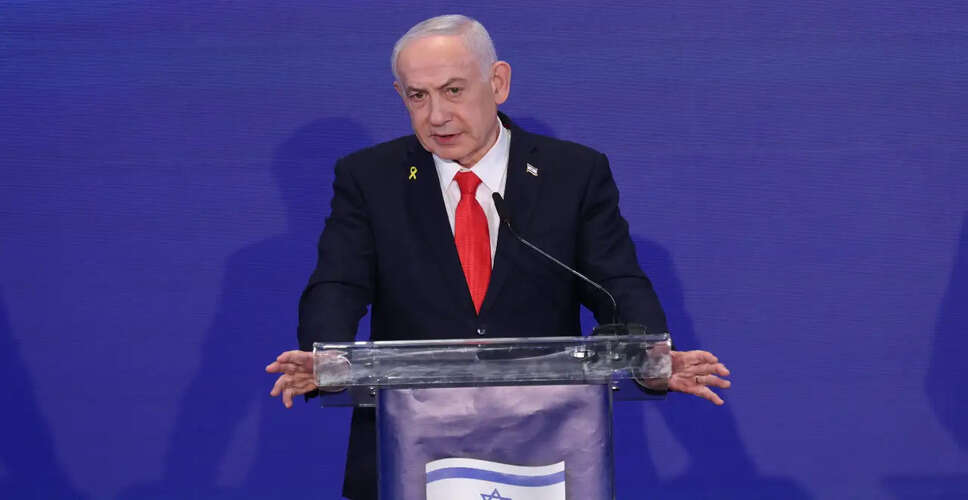
BEIRUT — The Israeli air force has launched strikes against Hezbollah positions in Lebanon, particularly targeting the eastern Bekaa Valley late Monday. This action follows a declaration from Israeli Prime Minister Benjamin Netanyahu, who pledged to escalate military operations against the militant group. Netanyahu's remarks came in response to Hezbollah's recent use of fiber optic drones, a tactic reminiscent of warfare seen in Ukraine, aimed at Israeli forces in both southern Lebanon and northern Israel.
In a social media video, Netanyahu stated, “We will strike back. They are deploying drones against us, and we have a specialized team addressing this issue. Our response must be to intensify our attacks.” He emphasized the need for increased military pressure, declaring, “We will smite them hip and thigh.” Following his announcement, reports indicated that some residents began evacuating southern suburbs of Beirut, where Hezbollah maintains a significant presence. The Lebanese National News Agency reported multiple airstrikes on the town of Mashghara in the Bekaa region on the same night.
Hezbollah, for its part, claimed responsibility for eight attacks earlier that day, including a drone strike targeting Israeli troops in Misgav Am, located in northern Israel. The ongoing exchanges of fire between Israel and Hezbollah have persisted despite a ceasefire brokered by the U.S. that has been in effect since April 17.
A U.S. State Department representative noted that Hezbollah has disregarded numerous requests to cease its attacks on Israel, including a recent ultimatum. The official, who spoke on the condition of anonymity, asserted that Israel cannot be expected to passively endure assaults on its military and civilian populations. Since the ceasefire was established, Hezbollah has launched over a thousand drones and more than 700 rockets, aiming to disrupt negotiations between Lebanon and Israel. The official remarked that the current situation is unsustainable.
Last month marked the beginning of direct negotiations between Lebanon and Israel for the first time in over thirty years, with discussions taking place in Washington. Military officials from both nations are scheduled to reconvene on Friday at the Pentagon to further address the ceasefire. Both Israel and the U.S. are advocating for the disarmament of Hezbollah.
The State Department representative indicated that the ongoing talks and the prospect of significant U.S. support for Lebanon pose a threat to Hezbollah, challenging its narrative of resistance against Israel. “A successful ceasefire led by the Lebanese government would undermine Hezbollah's power and its narrative,” the official stated.
Earlier on Monday, an Israeli airstrike in the southern village of Kfar Rumman resulted in four fatalities and three injuries, according to the Lebanese National News Agency. Additional drone strikes in the southern region, including one near Kfar Rumman, claimed three more lives. The Israeli military reported that it targeted over 70 Hezbollah infrastructure sites throughout the day.
The current conflict between Israel and Hezbollah reignited on March 2, following Hezbollah's rocket fire into northern Israel, just two days after coordinated attacks by the U.S. and Israel against Iran. The Lebanese Health Ministry has reported over 3,000 casualties in Lebanon due to the ongoing violence, while Israeli casualties include 22 soldiers and a defense contractor, along with two civilian deaths in northern Israel, as confirmed by Netanyahu's office.