
Israel Escalates Military Actions in Lebanon Amid Stalled US-Iran Peace Talks

Intensified Military Campaign
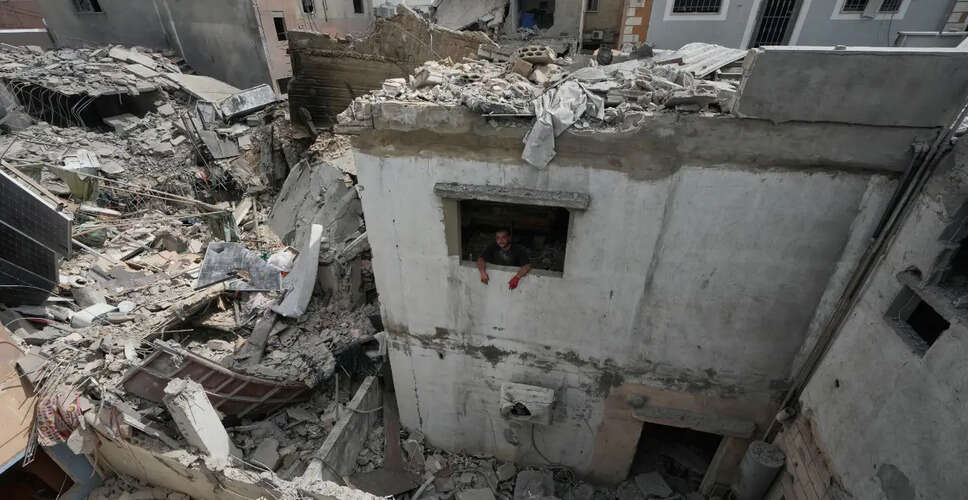
On Tuesday, Israel ramped up its military operations in Lebanon, executing over 120 airstrikes and extending ground activities beyond a self-imposed security zone in southern Lebanon. This surge in military action coincides with the apparent stagnation of efforts to broker a broader peace agreement between the US and Iran. According to Lebanese security sources, the recent bombardment marks one of the most intense periods of fighting in recent weeks, targeting various locations throughout southern and eastern Lebanon. This escalation occurred despite a ceasefire declared on April 16, which aimed to halt hostilities between Israel and Hezbollah, the Iran-supported militant group.
Israeli Prime Minister Benjamin Netanyahu stated that the military is intensifying its operations in Lebanon, asserting that they are 'capturing and controlling areas' to fortify a security buffer along the border. 'The IDF is deploying substantial forces on the ground and seizing strategic locations,' Netanyahu remarked following discussions with top military and defense leaders.
Expansion of Ground Operations
Reports indicate that Israeli forces have advanced beyond the so-called Yellow Line, a designated buffer zone that extends several kilometers into southern Lebanon. Israeli troops have been demolishing homes in villages where residents had been previously advised against returning. An Israeli military spokesperson noted that these operations beyond the forward defense line are intended to eliminate 'direct threats' to both Israeli citizens and soldiers.
Heavy bombardments have struck various towns and villages across Lebanon, including Burj al-Shamali in the south, where Lebanon’s National News Agency reported at least 10 fatalities, including women and children. Another strike in the eastern village of Mashghara resulted in the deaths of 12 individuals, several of whom were from the same family. Some attacks have also targeted historic and strategic locations, such as the nearly 900-year-old Beaufort Castle and areas surrounding the Qaraoun Dam, Lebanon’s largest water reservoir.
Hezbollah's Response and Ongoing Conflict
In retaliation, Hezbollah has launched explosive drones, rockets, and artillery at Israeli forces and tanks advancing near the Litani River and the towns of Yohmor al-Shaqif and Zawtar al-Sharqieh. The group claims to have targeted Israeli troops mobilizing in these regions. The Litani River has effectively become a frontline in the ongoing conflict, with Israeli forces controlling significant areas south of the river, despite the existing ceasefire agreement.
Lebanon’s Health Ministry has reported that at least 3,213 individuals have died and 9,737 have been injured due to Israeli attacks since March 2. The World Health Organization has indicated that at least 608 people have lost their lives since the ceasefire was implemented. Israel contends that Hezbollah’s persistent drone and rocket assaults pose a threat to residents in northern Israeli communities. Netanyahu has pledged to escalate military operations further, asserting that Israel will 'increase the blows' against Hezbollah. This renewed violence complicates broader diplomatic efforts related to the ongoing US-Iran conflict, with Tehran insisting that any comprehensive agreement must include a cessation of Israeli military actions in Lebanon.