
Islamabad Under Lockdown for US-Iran Ceasefire Negotiations
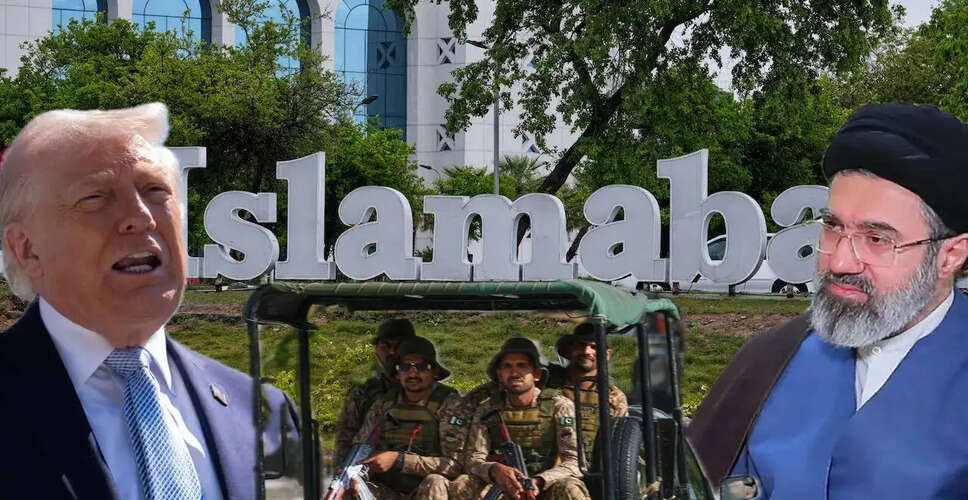

Ceasefire Talks in Islamabad
Islamabad, the capital of Pakistan, has been placed under strict lockdown as it prepares to host ceasefire discussions between the United States and Iran. These talks aim to establish a long-term peace agreement in the Middle East, following a fragile two-week truce that came after over a month of intense conflict. The hostilities began when a joint operation by the US and Israel targeted Iran on February 28, resulting in the death of Supreme Leader Ayatollah Ali Khamenei and several key figures.
In response to the attacks, Iran has retaliated against Gulf nations, including the UAE and Saudi Arabia, as part of its strategy to pressure the US to halt military actions. The recent truce was reached just before a deadline set by former President Trump, who warned Iran of severe consequences if it did not reopen the strategically vital Strait of Hormuz.
Despite Trump's threats, Iran continued its defiance, leading to last-minute negotiations that resulted in a temporary cessation of hostilities. This paved the way for the current ceasefire talks in Islamabad.
Preparations for High-Stakes Negotiations
How Pakistan is Preparing Islamabad For Ceasefire Talks
- In anticipation of the high-stakes negotiations, Pakistan has heightened security measures. The talks are set to commence on Friday, April 10, amid concerns raised by Iranian officials regarding Israeli strikes on Lebanon, which they claim undermine the ceasefire.
- Iranian President Masoud Pezeshkian condemned the Israeli attacks, stating they violate the ceasefire agreement and jeopardize the negotiations.
- He emphasized that Iran remains committed to supporting its allies in Lebanon, following a recent Israeli offensive that resulted in significant casualties.
- Pakistan's Army Chief, Field Marshal Asim Munir, met with Prime Minister Shehbaz Sharif to discuss the country's mediation efforts aimed at achieving lasting peace in the region.
- Both leaders expressed their commitment to assist the US and Iran in reaching a peaceful resolution.
- White House Press Secretary Karoline Leavitt announced that President Trump is sending a negotiating team led by Vice President JD Vance to Pakistan for the talks.
- While the exact arrival time of the delegation remains undisclosed, it is reported that Vance will be accompanied by key advisors.
- Interior Minister Mohsin Naqvi assured the US Chargé d'affaires of comprehensive security arrangements for all foreign dignitaries attending the talks.
- A 30-member advance team from the US has already arrived in Islamabad to assess security protocols.
- Discussions are expected to cover a broad framework for a long-term peace agreement, including sanctions relief and regional security, as well as Iran's nuclear and missile programs.
- Tehran has indicated that its proposed 10-point plan will be a basis for negotiations, which includes demands for lifting sanctions and security guarantees.
Ongoing Trust Issues Between US and Iran
Deep Trust Issues Persist Between US-Iran Ahead of Talks
- Despite a mutual interest in peace, significant mistrust remains between the US and Iran, exacerbated by recent ceasefire violations in Lebanon.
- Iran is particularly cautious, recalling that it was engaged in negotiations when the US and Israel launched their attack in February.
- The upcoming talks are being closely monitored worldwide, as their outcome could significantly impact Middle Eastern security, global energy markets, and international relations.
Local Holiday and Security Measures in Islamabad
Pakistan Announces Two-day Holiday in Islamabad
- To facilitate the smooth arrival of delegates, authorities have declared a two-day local holiday in Islamabad.
- The Islamabad Police have announced special security measures to ensure the safety of the city during this period.
- Traffic diversions will be implemented on the Express Highway due to the movement of foreign delegations, and citizens are advised to avoid unnecessary travel in the Red Zone.
- The Red Zone, which contains key government buildings and foreign missions, will be restricted to official vehicles only.
- All emergency services and hospitals have been placed on high alert to ensure readiness during the talks.
- Prime Minister Shehbaz also reached out to his Lebanese counterpart to discuss the escalating violence in the region.