
Is Trump’s Tariff Strategy Backfiring Ahead of the Midterms?
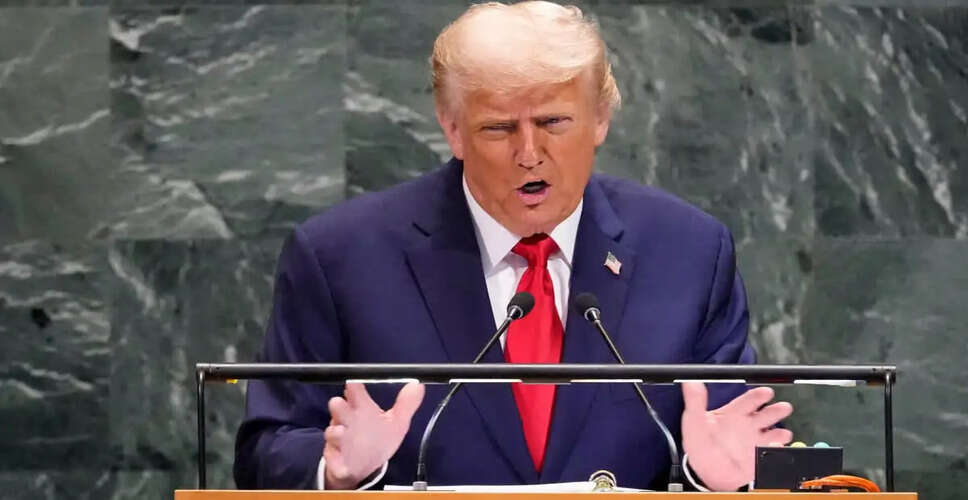

Trump's Tariff Beliefs Under Scrutiny
New York: President Donald Trump appears to have a strong affinity for tariffs, believing them to be a beneficial strategy despite rising costs and widespread criticism.
With the midterm elections approaching on November 3, a recent survey indicates that many Americans disapprove of his trade policies, with over 64% feeling he has overstepped with his latest tariff increases, a rise from 58% earlier this year.
This article examines the political, legal, and economic hurdles facing the Republican president's trade tactics.
Current Status of Trump's Tariff Policies
The United States has imposed import taxes on goods from various countries, generally in the low double digits, although these rates fluctuate due to legal challenges and Trump's unpredictable adjustments.
Last year, he introduced what he termed reciprocal tariffs on numerous nations, invoking a 1977 law that he claimed permitted him to act without Congress during an economic emergency.
Following a Supreme Court ruling against this approach in February, Trump has since relied on different trade laws to pursue his objectives.
Currently, he is utilizing Section 301 of the Trade Act of 1974, which allows him to impose tariffs on nations he believes are engaging in unfair trade practices, such as insufficient enforcement against forced labor. The new tariffs range from 10% to 12.5% on imports from 60 countries, including major trading partners like the European Union, India, Japan, Canada, and Mexico.
Concerns from Trade Experts
Critics argue that Trump's aggressive tariff policies are damaging a previously open global trading system that has significantly benefited the U.S. economy, fostering growth, maintaining low prices, and enhancing the competitiveness of American businesses.
As the second-largest exporter globally, the U.S. exported $3.4 trillion in goods and services last year, far surpassing Germany's $2.3 trillion.
While Trump asserts that foreign exporters bear the cost of tariffs, studies from institutions like the New York Fed and Harvard indicate that American consumers are primarily shouldering these expenses, as foreign companies have not significantly reduced their prices to counteract the tariffs imposed on U.S. businesses.
Debate Over Trade Practices
In the four years following China's accession to the World Trade Organization in 2001, the U.S. lost nearly 3 million manufacturing jobs, highlighting the challenges faced by American companies in competing against cheaper imports.
While some countries do impose higher tariffs and manipulate their currencies to make their exports more competitive, tariffs among major U.S. trading partners are often comparable to or lower than U.S. rates.
Before the trade conflict, the average U.S. tariff rate on goods from the European Union was 1.47%, slightly above the EU's 1.35% rate on American products. Notably, about 30% of European imports come from U.S.-owned firms.
The trade relationship with Canada, another key partner, was similarly balanced prior to recent trade negotiations breaking down, with Canada's effective tariff on U.S. imports at about 2.4%, significantly lower than the 5% U.S. tariff on Canadian goods. Currently, both nations are engaged in escalating tariff disputes.