
Is the India-South Korea Trade Agreement Favorable for India? Piyush Goyal Weighs In
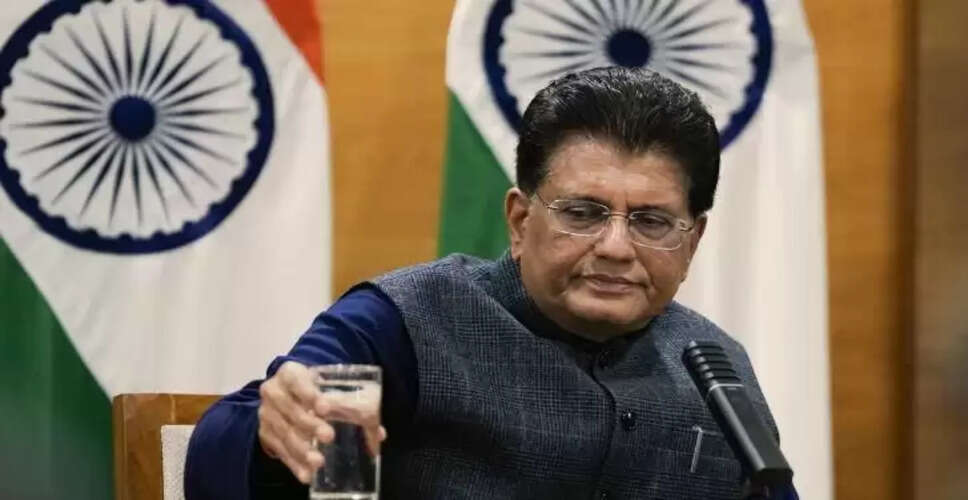

Concerns Over the India-South Korea Free Trade Agreement
New Delhi: Piyush Goyal, the Minister of Commerce and Industry, expressed concerns on Thursday regarding the India-South Korea free trade agreement (FTA) that was signed in 2009 and implemented in 2010 during the Congress-led UPA II administration. He described it as a poorly negotiated deal that is skewed against India.
Goyal highlighted that since the agreement's inception, bilateral trade has surged by 92.7%, with India's imports from South Korea increasing by 103.7%. This imbalance has resulted in a widening trade deficit, despite overall trade growth, as noted in his post on the social media platform X.
In 2015, an agreement was reached between Prime Minister Narendra Modi and the President of South Korea to initiate discussions aimed at amending the India-Korea Comprehensive Economic Partnership Agreement (CEPA). The goal was to foster both qualitative and quantitative trade growth through a mutually agreed roadmap.
Subsequently, during a ministerial meeting of the joint committee under the India-Korea CEPA, the ministers announced the commencement of renegotiations, which included eleven rounds of discussions and the establishment of an Early Harvest Package.
The two nations are now committed to enhancing their partnership by focusing on key sectors of mutual interest, addressing non-tariff barriers, and refining rules of origin. The renegotiation process is anticipated to conclude by the end of 2026 or mid-2027 at the latest.
Moreover, efforts to boost localization and decrease the import dependency of Korean firms in India are beginning to show positive outcomes, leading to genuine indigenization and improved reciprocity, Goyal explained.
During the recent visit of the South Korean President to India, it was revealed that JSW Steel and POSCO from South Korea have established a 50:50 joint venture to create a 6 MTPA greenfield integrated steel plant in Odisha, with an investment of approximately Rs 35,000 crore. This investment model differs from previous wholly-owned subsidiaries by Korean companies, as pointed out by Goyal.
Additionally, several Memorandums of Understanding (MoUs) have been signed between the two countries to bolster economic relations across various sectors, including trade, industry, strategic resources, and clean energy. These agreements aim to enhance technical cooperation, facilitate business matchmaking, focus on the MSME sector, and improve supply chain resilience and industrial co-production.
Goyal emphasized that the Modi government's strategy is clear: to ensure equitable trade, achieve balanced outcomes, and consistently promote domestic manufacturing while protecting national interests, making this partnership beneficial for both sides.