
Is the Great Nicobar Island Project Threatening Its Unique Ecosystem? Jairam Ramesh Raises Alarm!

Concerns Over Great Nicobar Island Development
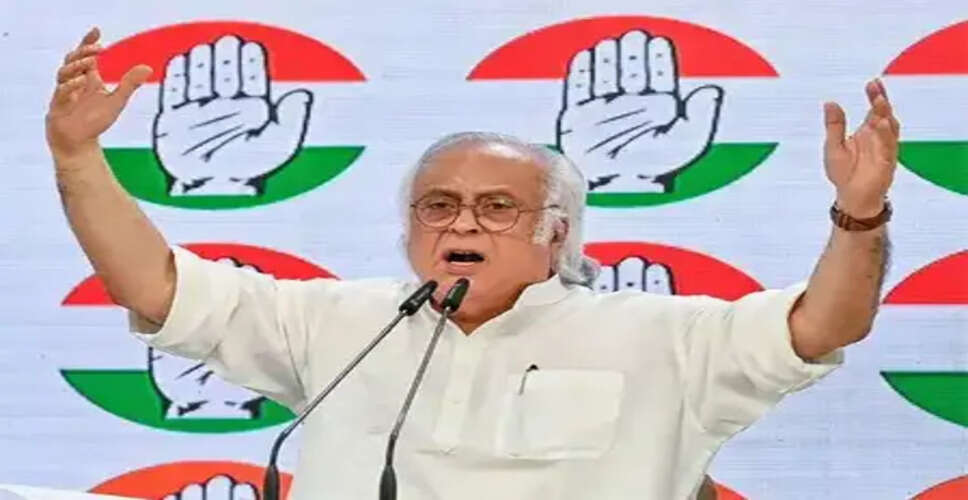
New Delhi: Jairam Ramesh, a prominent Congress figure, has reached out to Environment Minister Bhupender Yadav, expressing serious concerns regarding the Great Nicobar Island development initiative. He argues that the project poses a significant threat to the island's distinctive ecosystem and is urging a reconsideration of its current plans.
In his correspondence, Ramesh criticized the environmental assessments that led to the project's clearance, labeling them as 'grossly inadequate' and suggesting that they undermine the Environmental Impact Assessment (EIA) process.
He pointed out that security experts have indicated that the nation’s security requirements can be fulfilled without causing such 'ecological harm'.
Ramesh emphasized the global uniqueness of Great Nicobar Island's biodiversity, warning that the ongoing development could lead to irreversible damage.
He dismissed the notion of compensatory afforestation as misleading, asserting that the minister is aware of its shortcomings.
The Congress leader reiterated his call for a pause and a thorough review of the project, highlighting that the studies used for environmental clearance were not even rapid EIAs but rather based on minimal data collection over short periods.
He described these reports as an affront to scientific integrity and a mockery of the EIA process, noting his unsuccessful attempts to find comprehensive studies that were supposed to support the project.
Ramesh referenced the government's FAQs published on May 1, 2026, which claimed that the ecological impacts had been thoroughly assessed and managed through a robust EIA process.
He mentioned his previous detailed responses to these FAQs and added that he wanted to address further points following earlier written exchanges on this critical issue.
He reminded the minister that legal requirements dictate that port projects, particularly in the Andaman and Nicobar Islands, must undergo extensive EIA studies.
Given the island's unique ecological characteristics, Ramesh argued that a thorough baseline study should span at least three seasons to adequately capture seasonal variations.
He also pointed out that the sector-specific EIA Manual for ports mandates the collection of baseline data over at least two seasons, alongside oceanographic data.
Additionally, he cited the ICRZ Notification, 2019, which requires comprehensive EIAs for projects in coastal areas experiencing erosion.
Ramesh recalled a statement from former Environment Minister Prakash Javadekar, emphasizing the necessity of comprehensive EIAs for port projects.
He referenced a National Green Tribunal (NGT) ruling from April 3, 2023, which identified 'unanswered deficiencies' in the project's clearance and called for a High-Powered Committee (HPC) to reassess it.
He expressed confusion over the Ministry of Environment, Forest and Climate Change's (MoEF&CC) claim that the HPC's report is confidential, arguing that this contradicts principles of transparency.
Ramesh questioned the legality of maintaining confidentiality over a report that stems from a court-mandated review process.
He offered to share excerpts from the Ministry's documents that contradict the government's FAQs.
Last week, the Congress party raised alarms about ecological, tribal rights, transparency, and security issues related to the Great Nicobar project, insisting these matters should be discussed in Parliament.
The opposition party accused the Modi government of being 'rattled' and attempting damage control following Rahul Gandhi's recent visit to Great Nicobar.
Ramesh stated, 'The Modi Government is clearly in damage control mode after the impactful visit of Rahul Gandhi to Great Nicobar on April 28, 2026, which prompted a press release about the project just three days later.'
During his visit, Gandhi labeled the Great Nicobar project as 'one of the biggest scams and gravest crimes against the natural and tribal heritage of the country.'
In response, the government released a detailed statement addressing FAQs on May 1, asserting that the Great Nicobar Project aims to enhance India's presence in the Andaman Sea while balancing development with environmental protections.