
Is the Aravalli Region Truly Safe from Mining? Government Clarifies New Definitions
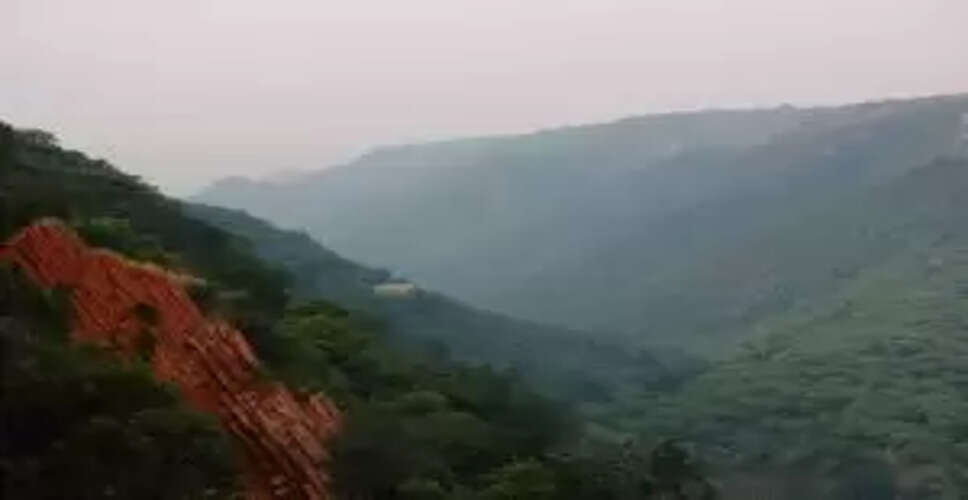
Government's Assurance on Aravalli Protection
New Delhi/Kolkata: The Central Government has firmly stated that 90% of the Aravalli region will remain safeguarded, dismissing allegations that the revised definition of the Aravalli range would facilitate extensive mining activities. They highlighted a Supreme Court mandate that halts new mining leases in the area.
According to the government, a framework approved by the Supreme Court enhances the protection of the mountain system and imposes a freeze on new mining leases until a detailed management plan is established.
Environment Minister Bhupender Yadav emphasized that the Supreme Court's definition will ensure that over 90% of the Aravalli region is classified as a protected area.
During a press briefing following a meeting about Project Elephant and the National Tiger Conservation Authority in West Bengal's Sundarbans, Yadav reiterated that no leniency has been granted concerning the protection of the Aravalli region, countering claims of misinformation.
He urged the public to cease spreading false information, particularly in light of accusations from the Congress party and others that the new measures would jeopardize the Aravallis.
Out of the total 1.44 lakh square kilometers of the Aravalli, only 0.19% is eligible for mining, with the remainder being preserved and protected, according to Yadav, who serves as the Union Minister for Environment, Forest, and Climate Change.
On November 20, 2025, the Supreme Court accepted recommendations from a committee under the Ministry of Environment, Forests, and Climate Change regarding the definition of the Aravalli Hills and Ranges.
The new definition states that an Aravalli Hill is any landform in designated Aravalli districts that rises at least 100 meters above local relief, while an Aravalli Range consists of two or more such hills located within 500 meters of each other.
The government clarified that it is misleading to assume that all landforms below 100 meters are available for mining.
In response to the controversy surrounding the 100-meter criterion, the government clarified that mining is not permitted in areas below this elevation and that the restrictions apply to entire hill systems and their surrounding landforms, not just the peaks or slopes.
The Supreme Court directed a standardized definition of the Aravalli hills and ranges across states to eliminate ambiguity and prevent misuse, particularly practices that allowed mining too close to hill bases.
Sources from the Environment Ministry indicated that the Supreme Court, while addressing long-standing illegal mining cases in the Aravallis, formed a committee in May 2024 to propose a uniform definition, as various states had been applying inconsistent criteria for mining permissions.
The committee, led by the Secretary of the Environment Ministry and including representatives from Rajasthan, Haryana, Gujarat, and Delhi, found that only Rajasthan had a formal definition in place since 2006.
This definition categorizes landforms that rise 100 meters or more above local relief as hills and prohibits mining within the lowest bounding contour surrounding these hills, regardless of the height or slope of the landforms within that contour.
Yadav noted that there has been confusion regarding mining below the 100-meter elevation in hills, asserting that the lower areas will be protected. Furthermore, if there is a gap of 500 meters between two hills, that area will also be considered part of the range. Following this definition, over 90% of the area will be safeguarded.
The minister affirmed that the government has initiated several measures, including the 'Green Aravalli' movement, to preserve the mountain range and is dedicated to its protection, claiming that misinformation is being spread regarding the definition.
Sources revealed that all four states agreed to adopt the long-standing Rajasthan definition, along with additional safeguards to ensure objectivity and transparency.
These safeguards include treating hills within 500 meters of each other as a single range, mandatory mapping of hills and ranges on Survey of India maps prior to any mining decisions, and clear identification of core and inviolate areas where mining is strictly prohibited.
The government stated that the Supreme Court has accepted the committee's recommendations to ban mining in core and inviolate areas, including protected zones, eco-sensitive regions, tiger reserves, wetlands, and areas adjacent to such sites, while allowing limited exemptions only for critical, strategic, and deep-seated minerals in the national interest.
As per the Supreme Court's directives, no new mining leases will be issued in the Aravalli region until a Management Plan for Sustainable Mining is developed for the entire landscape by the Indian Council of Forestry Research and Education.
Existing mines may continue operations only if they adhere strictly to the sustainable mining norms established by the committee.
The government reported that district-level assessments across Rajasthan, Haryana, and Gujarat indicate that legally sanctioned mining currently occupies only a minuscule portion of the Aravalli region, approximately 0.19% of the total geographical area of 37 Aravalli districts.
In Delhi, which encompasses five Aravalli districts, no mining activities are permitted.
The government identified illegal and unregulated mining as the primary threat to the Aravallis and stated that the committee has recommended enhanced monitoring, enforcement, and the use of technology such as drones and surveillance to tackle this issue.