
Is Iran's New Supreme Leader in Hiding? U.S. Defense Secretary Raises Alarming Claims
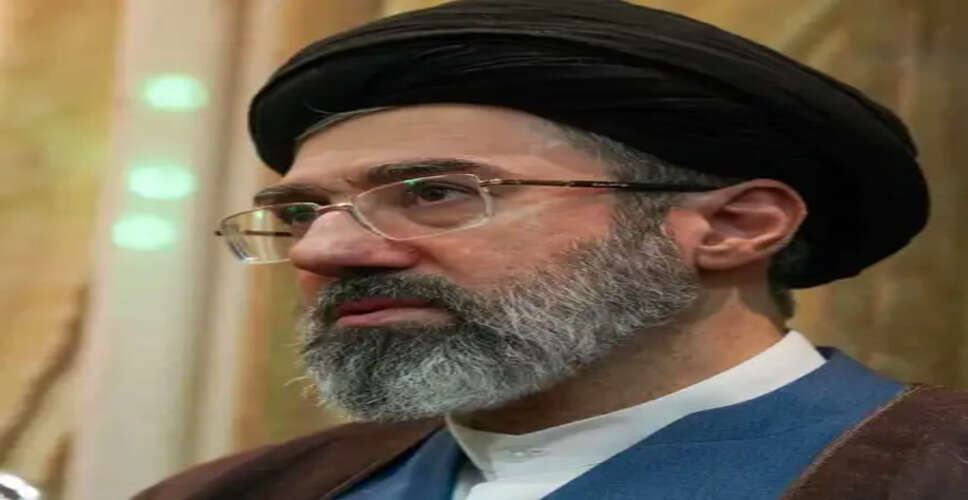
U.S. Defense Secretary's Shocking Statements
Washington: On Friday, U.S. Defense Secretary Pete Hegseth made a startling announcement regarding Iran's newly appointed supreme leader, Mojtaba Khamenei, claiming he has been injured and is now in hiding due to the ongoing military operations led by the United States.
During a briefing at the Pentagon, Hegseth noted that the Iranian leadership is facing increasing pressure as the military actions persist.
"The situation for Iran's leadership is dire; they are desperate and in hiding," he stated.
Hegseth mentioned that Khamenei had released a written appeal for unity but had not made any public appearances. "We are aware that this so-called Supreme Leader is wounded and possibly disfigured," he remarked.
"He issued a statement yesterday, but it lacked a voice or video component; it was merely written."
The Defense Secretary expressed skepticism about why Khamenei had not addressed the nation directly, despite having access to various communication tools.
"Iran has an abundance of cameras and recording devices. Why resort to a written statement? The answer is clear," he asserted.
"He is frightened, injured, and on the run, lacking any legitimacy."
Hegseth further indicated that the leadership structure in Iran appears increasingly unstable as the conflict escalates.
"Who is truly in charge? Iran may not even have clarity on this as time progresses," he added.
These comments came as U.S. officials reported that American forces had targeted thousands of locations throughout Iran during the military campaign.
Hegseth contended that these strikes have significantly weakened Iran's military capabilities and disrupted its command structure.
"The military strength of their regime is deteriorating," he stated.
"They are struggling to communicate, let alone coordinate effectively."
He also noted that Iranian leaders are now taking refuge underground and trying to evade attacks.
"Iran's leaders are hiding in bunkers and relocating to civilian areas," he explained.
The Pentagon has consistently stated that the objective of the military campaign is to dismantle Iran's missile capabilities, diminish its naval power, and prevent Tehran from developing nuclear weapons.
Iran has yet to publicly acknowledge the claims made by the U.S. Defense Secretary regarding the state of its leadership.