
Is Iran's Missile Capability a Global Threat? Netanyahu Raises Alarms
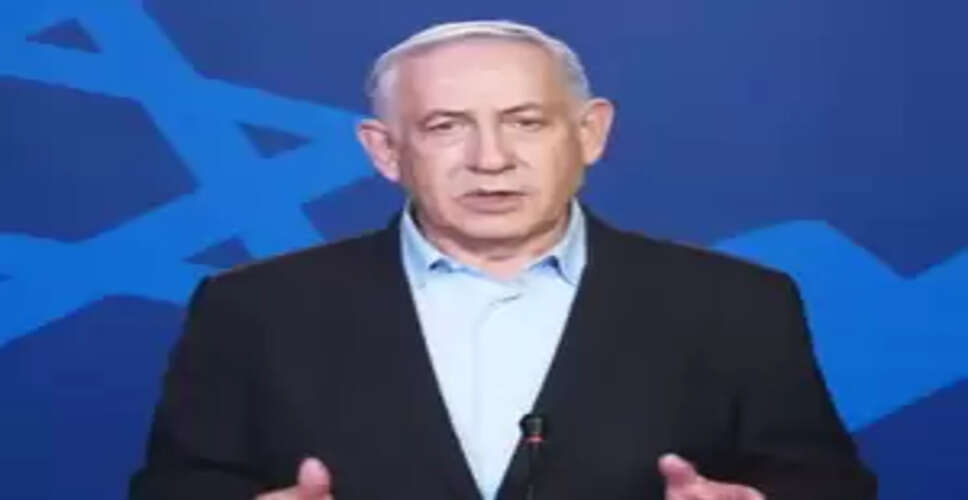
Netanyahu's Warning on Iran's Missile Threat
Jerusalem: On Sunday, Israeli Prime Minister Benjamin Netanyahu expressed grave concerns regarding Iran's missile capabilities, particularly following recent missile strikes on Diego Garcia, indicating that Iran can now threaten Europe and poses a risk to global security.
During his visit to Arad, a city in southern Israel that experienced missile attacks from Iran, Netanyahu emphasized the collaborative efforts of Israel and the United States in addressing this threat.
"The last 48 hours have demonstrated Iran's capacity to endanger the world. They targeted a civilian area, using missiles as instruments of mass murder," he stated.
Fortunately, there were no casualties, but Netanyahu attributed this to luck rather than any restraint on Iran's part, asserting that their intent is to harm civilians.
He highlighted that Iran's intercontinental ballistic missile, which reached Diego Garcia, is a clear indication of their ability to strike deep into Europe, having already targeted nations like Cyprus.
For over twenty years, Israel has warned about the dangers posed by Iran's ballistic missile program, which could potentially carry nuclear warheads, threatening not just Israel but also Europe.
The missile attack on the UK-US air base at Diego Garcia occurred on Saturday, further escalating tensions.
Netanyahu also pointed out that Iran's recent missile strikes have come alarmingly close to Jerusalem's sacred sites, including the Western Wall, the Church of the Holy Sepulchre, and the Al Aqsa Mosque, miraculously resulting in no injuries.
A missile fragment landed near the Al Aqsa Mosque and the Western Wall, marking a second attack during this period of heightened conflict.
In a previous incident, debris from an intercepted missile fell near the Church of the Holy Sepulchre, damaging nearby structures.
Netanyahu accused Iran of disrupting international maritime routes and attempting to blackmail the global community.
"What further evidence is needed to demonstrate that this regime must be stopped? Israel and the United States are united in this fight for global security," he asserted.
He urged the international community to unite against Iran, acknowledging some nations are beginning to take action but insisting that more is required.
Netanyahu echoed President Trump's call for a global response to confront what he termed a terrorist regime, emphasizing that this is crucial for the security of not just America and Israel, but the entire world.
In response to inquiries from the press, Netanyahu confirmed that Israel is retaliating against these attacks with significant force while avoiding civilian targets in Iran.
"We have two primary objectives: to dismantle their nuclear and missile programs and to create conditions for the Iranian populace to overthrow their oppressive regime," he stated.
The missile strike in Arad resulted in 115 injuries, with nine individuals reported in serious condition, according to rescue services.