
Is Iran Becoming the New Gatekeeper of the Strait of Hormuz? Insights on Their Control Over Oil Shipments
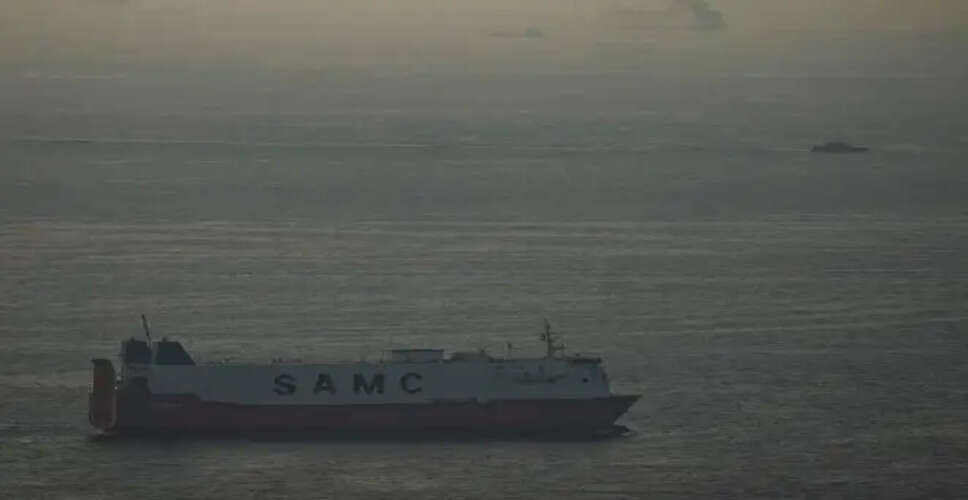
Iran's Strategic Move in the Strait of Hormuz
Frankfurt: Iran is positioning itself as a crucial player in controlling the Strait of Hormuz, a vital route for global oil transportation. This strategy could solidify Tehran's influence over this key waterway and ensure its oil exports to China continue uninterrupted.
Recent communications from Iran to the United Nations maritime authority, along with reports from vessels navigating the strait, indicate the establishment of a system resembling a 'toll booth.' Ships entering Iranian waters are now subject to inspection by the Islamic Revolutionary Guards Corps (IRGC), with at least two vessels reportedly paying for their passage.
Since the onset of the Iran conflict, traffic through the strait has plummeted by 90%, leading to soaring global oil prices and significant shortages for Asian countries reliant on oil from the Persian Gulf.
According to Lloyd's List Intelligence, only around 150 vessels, including tankers and cargo ships, have passed through since March 1, a stark contrast to the typical daily traffic before the conflict. Iran's Kharg Island terminal managed to load 1.6 million barrels in March, maintaining pre-war loading levels, primarily serving small private refineries in China that are less concerned about U.S. sanctions.
In recent weeks, most vessels that successfully navigated the strait headed eastward, with Iranian-affiliated ships making up 24% of transits, followed by Greece at 18% and China at 10%. However, a closer look reveals that Iranian-linked vessels constituted 60% of transits during the early days of the conflict, rising to 90% in recent days.
Approximately half of the ships have disabled their radio identification systems before passing through, only to reappear in the Gulf of Oman. This caution is warranted, as at least 18 ships have been attacked, resulting in the deaths of seven crew members, according to the U.N.'s International Maritime Organization, which monitors maritime security.
Lloyd's List Reports on Toll Payments in Yuan
Lloyd's List Intelligence has indicated that the IRGC has effectively established a toll regime in the Strait of Hormuz.
Typically, vessels navigate a two-lane channel in the strait, but many are now opting for a northern route around Larak Island, which places them within Iranian territorial waters and closer to the coast.
To ensure safe passage, ship operators must provide their details to what Lloyd's List refers to as 'approved intermediaries' of the Revolutionary Guard, including information about cargo, ownership, destination, and crew. Approved vessels receive a code and are escorted by an IRGC ship, with oil shipments prioritized and subjected to 'geopolitical vetting.'
While not all vessels are paying a direct toll, at least two have done so, with payments made in yuan, the currency of China.
Some ships have reportedly been allowed passage due to diplomatic interventions, including two Indian vessels carrying liquid petroleum gas.
Iran's Plans for a Permanent System
The International Maritime Organization received a letter from Iran stating that it has implemented precautionary measures to enhance maritime safety and security, claiming compliance with international law.
Reports indicate that Iran's parliament is considering legislation to formalize fees for certain vessels in the Strait of Hormuz, with local media citing lawmaker Mohammadreza Rezaei Kouchi, who mentioned that parliament aims to codify Iran's sovereignty and oversight over the strait while generating revenue through fee collection.
The IMO has condemned attacks on vessels and called for a coordinated international effort to secure safe passage through the strait, emphasizing the importance of freedom of navigation.
Economic Terrorism or Strategic Control?
Sultan al-Jaber, an Emirati oil executive, described Iran's actions as economic terrorism, highlighting the broader implications as the conflict approaches its one-month mark.
He stated, 'Weaponizing the Strait of Hormuz is not just an act against one nation; it is economic terrorism affecting every consumer reliant on affordable energy and food. When Iran holds Hormuz hostage, every nation pays the price at the gas pump and grocery store.'
Potential Violations of International Law
Article 19 of the UN's Law of the Sea Treaty mandates that countries must allow 'innocent passage' for peaceful vessels in their territorial waters.
Sal Mercogliano, a maritime historian at Campbell University, remarked, 'There is no provision in international law that permits establishing a toll booth and extorting shipping. This is Iran leveraging its control over the Strait of Hormuz.'
Jasem Mohamed al-Budaiwi, secretary general of the Gulf Cooperation Council, condemned Iran's fee collection as an aggression and a violation of the United Nations maritime law.
Such tolls may also conflict with American and European sanctions targeting the IRGC, a significant power center in Iran that oversees its ballistic missile program and played a role in quelling protests earlier this year.