
Iran's Threat to Undersea Internet Cables Raises Global Connectivity Concerns
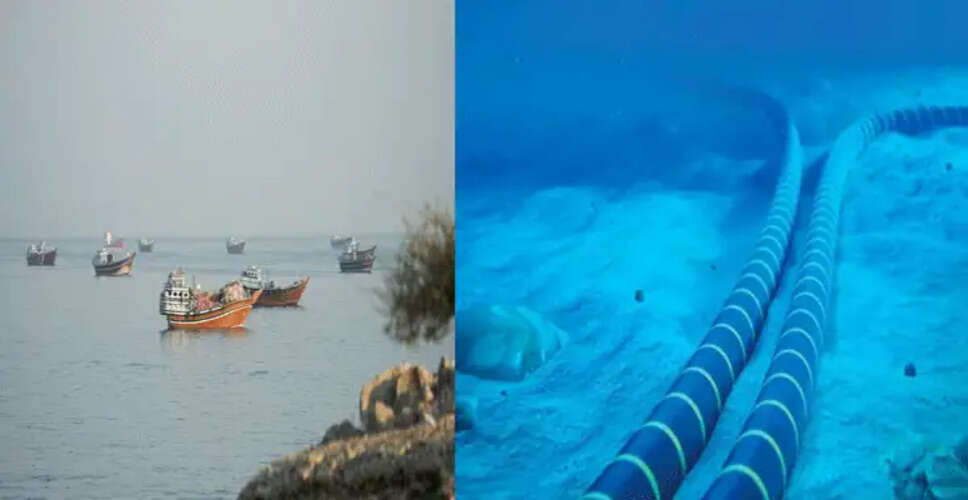

Concerns Over Iran's Potential Targeting of Undersea Internet Cables
Iran's alleged plan to target undersea internet cables in the Persian Gulf has sparked worries about global digital connectivity. According to reports, two senior Iranian security officials have stated that Tehran is preparing to strike these underwater cable networks if the U.S. and Israel launch further attacks against Iran. While damage to these cables is unlikely to disrupt the internet worldwide, it could significantly impact internet access, online payments, and cloud services in the Gulf region for several weeks.
The Importance of Undersea Internet Cables
Currently, nearly 99% of international data traffic flows through undersea fiber-optic cables. These cables connect various countries, facilitating the transfer of data for websites, videos, digital payments, e-commerce, and cloud services.
Inside these cables are glass fibers thinner than a human hair, which transmit data as light signals. Hundreds of such cables are laid across the globe.
Impact of Cable Damage
However, the severing of cables in the Persian Gulf would not completely halt global internet access. According to TeleGeography, the international bandwidth passing through the Strait of Hormuz accounts for less than 1% of the global total.
Key Cables in the Strait of Hormuz
The Strait of Hormuz lies between Iran and Oman, connecting the Persian Gulf to the Gulf of Oman and the Arabian Sea. Several critical fiber-optic cables run beneath its seabed, including:
- Asia-Africa-Europe 1 (AAE-1): This cable links Southeast Asia to Europe via Egypt, with landing points in the UAE, Oman, Qatar, and Saudi Arabia.
- FALCON: This network connects India and Sri Lanka to Gulf countries, Sudan, and Egypt.
- Gulf Bridge International: This network connects various Gulf nations, including Iran.
These networks are vital for maintaining internet connectivity and international data transfer in the Gulf region.
Consequences of Cable Disruption
If an undersea cable is damaged, internet operators can typically reroute data through other available networks and alternative paths. This is why users often do not notice significant disruptions when a single cable fails.
However, if multiple cables are cut simultaneously, the situation could become critical. In such cases, internet speeds in Gulf countries may slow down, and digital services could face increased strain.
Potential impacts include:
- Reduced internet connectivity and data transfer speeds.
- Delays or interruptions in online banking and digital payments.
- Effects on e-commerce and international trade services.
- Disruptions in cloud computing and data center services.
- Challenges in online operations and communications for businesses.
The extent of the damage will depend on how quickly operators can redirect traffic and the availability of additional capacity in alternative routes.
Impact on India's Internet Connectivity
Undersea internet cables are crucial for India. According to the Telecom Regulatory Authority of India (TRAI) data from 2022, India is connected by approximately 17 submarine cables at 14 landing stations, with the highest concentration in Mumbai and Chennai.
If multiple cables in the Hormuz region are damaged, data traffic between India and Gulf countries could be affected. However, the impact will depend on how Indian network operators manage to reroute data through alternative paths.
Networks passing through the Red Sea are also significant for data transfer between Asia, Europe, and East Africa. TeleGeography reports that about 3% of global international bandwidth demand is linked to routes through the Red Sea.
Experts have noted that disruptions in the Red Sea could have a more extensive impact, although Iran has not publicly announced plans to target those cable networks.
Challenges in Repairing Undersea Cables
Repairing a damaged undersea internet cable is not a straightforward technical task. It requires specialized ships, trained engineers, and permission to operate in marine areas.
The repair process begins with engineers sending light signals through the fiber to locate the fault. A specialized repair ship then raises the cable from the seabed, removes the damaged section, and splices in a new cable before lowering it back into the ocean.
According to Rear Admiral Mike Brooks of the U.S. Navy, repairs in waters less than 1,500 meters deep typically take one to three days once the ship arrives. However, the overall timeline can be extended due to ship availability, weather conditions, and the need for permits to operate in marine areas.
In 2024, the average repair time for cables was reported to be 51 days.
Difficulties of Repair During Wartime
Even under normal circumstances, repairing undersea cables presents various challenges. However, these issues can become more severe during wartime.
- Increased risks from military activities and mines in the sea.
- Higher insurance costs for repair ships.
- Delays in obtaining permission to operate in other countries' maritime areas.
- Limited availability of ships for repairing damaged cables.
- Post-war surveys of the seabed may be necessary.
This means that if multiple cables are damaged simultaneously, it could take weeks or longer for networks to be fully restored.
Can Satellite Internet Serve as an Alternative?
Satellite communication can provide alternative connectivity in certain situations, but it cannot fully replace undersea cables.
Submarine cables can transfer vast amounts of data, while satellite networks have limited capacity and higher costs per unit of data transferred. Additionally, satellite services require ground-based networks and other infrastructure.
Thus, while satellite services may offer some assistance during large-scale cable disruptions, they would struggle to handle the entirety of international internet traffic.
International Law on Undersea Cable Protection
There are international legal provisions in place to protect undersea communication cables.
An international agreement on the protection of submarine telegraph cables was signed in Paris in 1884, making it a punishable offense to intentionally or negligently damage cables in marine areas.
The United Nations Convention on the Law of the Sea (UNCLOS), adopted in 1982, further advanced rules regarding damage to undersea cables.
According to Article 113 of UNCLOS, countries must make it a punishable offense to intentionally or grossly negligently damage cables laid in the open sea by their flagged vessels or persons under their jurisdiction. Article 58 extends these rules to the exclusive economic zone (EEZ).
However, the interpretation and practical effect of these provisions during wartime may depend on the circumstances, necessitating a determination of the legality of specific actions based on relevant international law and events.
The Global Internet Threat Level
Iran's alleged plan to target undersea internet cables in the Gulf region raises serious concerns for regional digital connectivity. Nevertheless, the severing of cables in the Strait of Hormuz is unlikely to halt the internet globally, as there are numerous alternative routes for international data traffic.
The greatest threat would arise if multiple critical cables were damaged simultaneously, leading to prolonged delays in repairs due to wartime conditions. Such a scenario could significantly impact internet access, digital payments, cloud services, and international trade in the Gulf region.
Currently, the information regarding Iran's alleged plans is based on statements from officials and media reports. The actual impact will depend on future actions and how global network operators utilize alternative connectivity.