
Iran's Strategic Closure of the Strait of Hormuz: Implications for Global Oil Supply
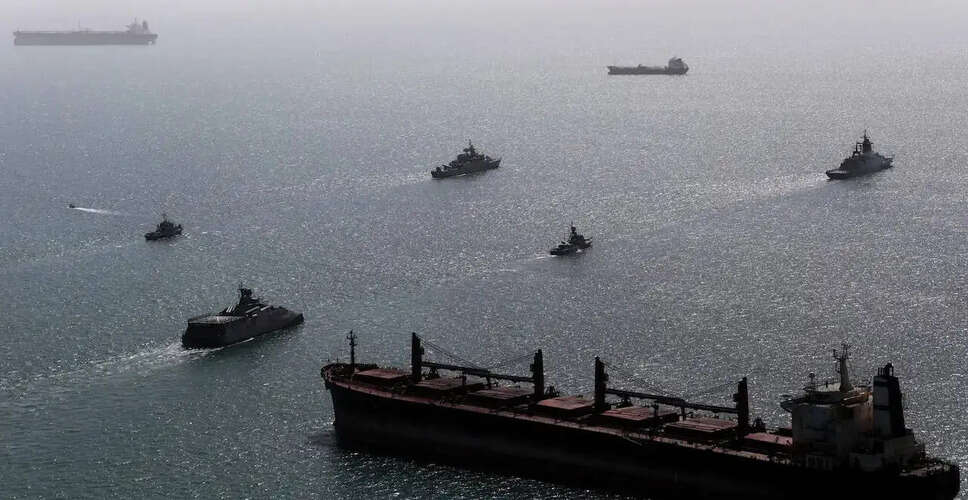
Iran Blocks Key Maritime Passage
In a significant move, Iran has shut down the Strait of Hormuz, a vital maritime corridor for oil and gas shipments, as a response to recent attacks by the US and Israel. This strait, measuring approximately 21 miles (33 km) at its narrowest point, is crucial for around 20% of the global oil and natural gas trade. Following the joint military action by the US and Israel, the Islamic Revolutionary Guard Corps (IRGC) declared the closure of this strategic route, leveraging it as a means to exert pressure internationally. Iran has warned that any unauthorized passage by tankers will provoke military responses. Despite not being a military superpower, Iran has effectively restricted access to the Hormuz, especially considering its proximity to Saudi Arabia. Understanding Iran's capability to enforce this blockade reveals a combination of military prowess, legal claims, and geographical advantages.
Military and Asymmetric Tactics
Naval Mines
Iran possesses a substantial stockpile of naval mines, estimated between 5,000 to 6,000, which can be swiftly deployed via speedboats to obstruct oil and gas tankers in the Strait of Hormuz.
Fast Attack Boats
In addition to naval mines, Iran operates fast attack boats capable of reaching speeds of up to 150 km/h. These vessels, often referred to as 'Mosquito Boats', are equipped with short and medium-range missiles, allowing them to launch coordinated attacks on tankers.
Missiles and Drones
Iran also utilizes Shahed-136 drones, which have a range of 700-1000 km, along with anti-ship ballistic missiles to target vessels from both land and offshore platforms.
Monitoring Ship Movements
Iran employs advanced radar systems to track the movements of ships and can jam GPS signals to disrupt navigation, enhancing its control over maritime traffic.
Permission for Passage
Iran mandates that all foreign vessels, including warships and submarines, must obtain prior permission to navigate through the Strait of Hormuz, a claim that has been disputed by the US.
Global Trade Routes and Historical Significance
Shipping Routes from the Strait
From the Strait of Hormuz, ships can access various global destinations. While Iran and Oman have territorial claims in the strait, it is generally recognized as an international waterway. The United Arab Emirates, particularly the city of Dubai, is also located nearby.
Historical Importance of the Strait
The Strait of Hormuz has historically been a critical trade route, facilitating the movement of goods such as ceramics, ivory, and textiles from China. In contemporary times, it serves as the main passage for supertankers transporting oil and gas from several Gulf nations, including Saudi Arabia, Kuwait, and Iraq, primarily to Asian markets, with China being Iran's last significant oil buyer. Although some pipelines exist to bypass the strait, the US Energy Information Administration indicates that most shipments still rely on this route for exit from the region. Past threats to this passage have led to spikes in global energy prices, notably during the Israel-Iran conflict in June.