
Iran's President Asserts Missile Program Excluded from US Negotiations

Iran's Stance on Ballistic Missiles
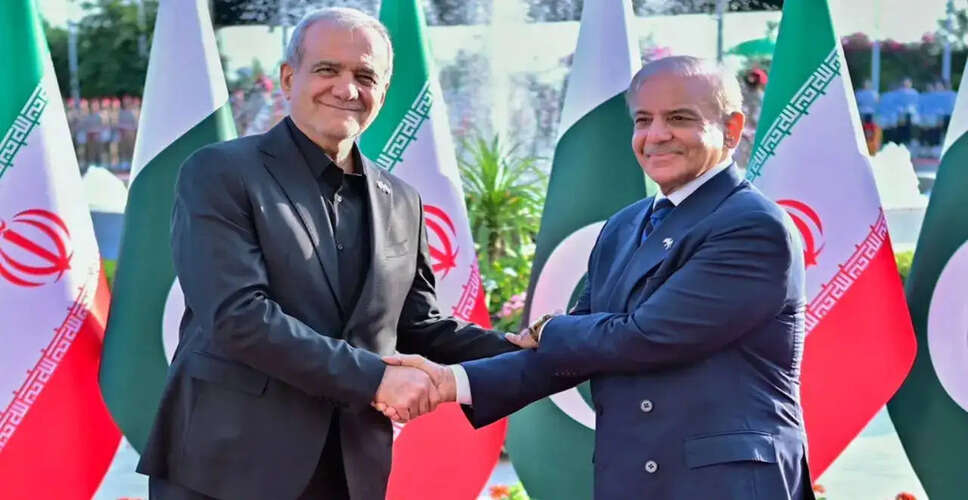
During a visit to Islamabad, Iranian President Masoud Pezeshkian declared that Tehran's ballistic missile program was not part of the preliminary agreement that concluded the recent conflict and will "never" be included in future discussions with the United States. He emphasized Iran's readiness for dialogue despite the prevailing distrust towards Washington, stating, "We do not trust America because it attacked us twice during the negotiations, but we are still ready for dialogue and peace." Pezeshkian further asserted, "We are holding on to our strengths in the upcoming negotiations, and no negotiations have taken place regarding ballistic missiles, nor will they."
He defended Iran's missile capabilities, labeling them as vital for national security. "Without our missiles, which serve for self-defense, Israel and America would have overrun Iran just as they did in Gaza," he remarked. At a joint press conference, Pakistan's Prime Minister Shehbaz Sharif confirmed that ballistic missiles were not discussed during the negotiations that resulted in the memorandum of understanding (MoU) between Tehran and Washington. "There is no mention of ballistic missiles in the MoU because it was never on the table," Sharif stated, criticizing perceived double standards that allow other nations to maintain missile capabilities while Iran faces restrictions.
پزشکیان: هیچوقت و هیچگاه برای توان دفاعی ایران با هیچکس گفتوگو نخواهیم کرد. https://t.co/PSGXOlwLZl pic.twitter.com/5iQLvWFKg1
— خبرگزاری فارس (@FarsNews_Agency) June 23, 2026
Sharif commended Iran's leadership for facilitating both the ceasefire and the agreement with the United States. He expressed his warm regards to Supreme Leader Ayatollah Mojtaba Khamenei, crediting his leadership for achieving the MoU and a dignified ceasefire. The Pakistani Prime Minister reiterated Islamabad's commitment to mediating until a lasting peace is established and thanked Iran for its cooperation in promoting regional stability through diplomacy.
These developments follow President Trump's comments suggesting that Iran's conventional missile capabilities may not be a significant concern. At the G7 summit in Évian-les-Bains, France, Trump remarked, "If other countries have them, it's a little bit unfair for them not to have some." He questioned the logic of allowing Saudi Arabia to possess missiles while denying the same to Iran, stating, "It doesn't work that way." Trump also indicated that missiles were not the primary focus of negotiations, asserting, "Missiles aren't the problem. They hurt a little location, but they don't blow up the planet." He noted that Gulf nations would address non-nuclear issues, including ballistic missiles and terrorist proxies.