
Iran's Parliament Moves to Close the Strait of Hormuz Amid Rising Tensions
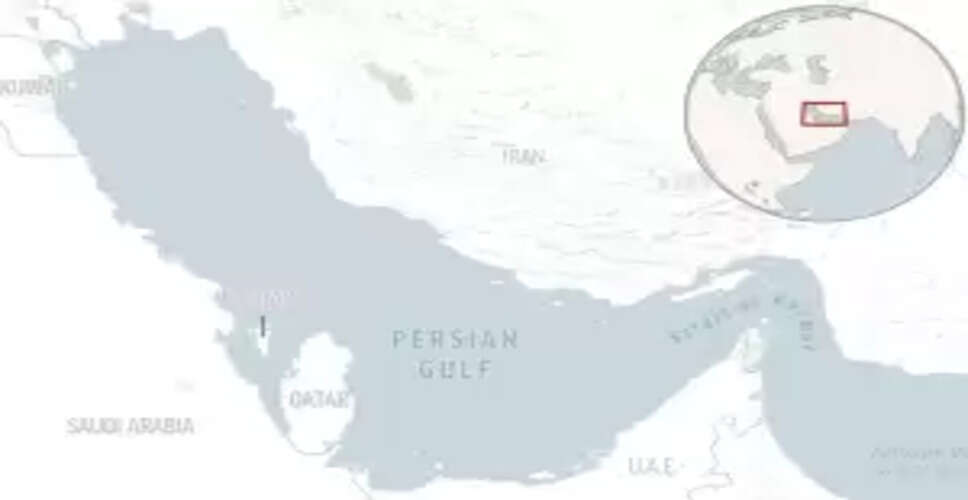
Iran Considers Closing Key Oil Transit Route
Tehran: In a significant move, the Iranian Parliament has voted to support the potential closure of the Strait of Hormuz, a vital passage for global oil shipments, following recent U.S. airstrikes on Iranian nuclear facilities, as reported by various media outlets.
The ultimate decision regarding any retaliatory actions will be made by the Supreme National Security Council and Iran's leader, Ayatollah Ali Khamenei.
This parliamentary vote serves merely as a recommendation for the leader to consider.
The U.S. military's strikes, known as 'Operation Midnight Hammer,' targeted three Iranian nuclear sites in Isfahan, Fordow, and Natanz, marking a notable escalation in U.S. involvement in the ongoing tensions between Iran and Israel.
This military action has faced criticism, particularly regarding the absence of Congressional authorization.
Iran has long maintained that it could close the Strait of Hormuz, a measure it views as a last resort for escalation.
To 'close' the Strait would entail making navigation impossible, potentially involving the Iranian Navy laying mines or launching missiles to deter vessels.
Revolutionary Guards Commander Ismail Kowsari, a member of the National Security Commission, stated, 'The Parliament has concluded that the Strait of Hormuz should be closed, but the final decision rests with the Supreme National Security Council.'
The parliamentary vote occurred after 'Operation Midnight Hammer,' during which seven B-2 stealth bombers executed strikes on two nuclear sites, including Fordow, deploying 14 Massive Ordinance Penetrator (MOP) bombs.
Additionally, a third site was targeted using Tomahawk cruise missiles launched from submarines.
President Donald Trump claimed that the U.S. operation had effectively destroyed the targeted sites, which involved a total of 125 aircraft and was completed in just 25 minutes.
However, General Dan Caine, Chairman of the Joint Chiefs of Staff, indicated that it would take time to fully evaluate the damage inflicted on the sites.
The MOP bombs utilized in these strikes had not been previously deployed in combat.
Khamenei's approval will be necessary for any definitive action regarding the closure of the Strait, which could be enacted as soon as Sunday following the Parliament's endorsement.
The Strait of Hormuz is a narrow channel linking the Persian Gulf to the Gulf of Oman and the Arabian Sea, measuring approximately 21 miles at its narrowest point, with two shipping lanes each two miles wide.
An estimated 20% of the world's oil trade transits through this strait.
Experts warn that if Iran were to block access to the Strait, oil prices could surge by 30 to 50 percent almost immediately, with gasoline prices potentially rising by up to $5 per gallon.
During the Iran-Iraq War in the 1980s, Iran targeted oil tankers and loading facilities, which, while not completely obstructing the Strait, led to significant increases in shipping insurance costs and delays in maritime traffic.