
Iran's Oil Exports Continue Amid US Naval Blockade

Iran's Oil Loading Operations Persist
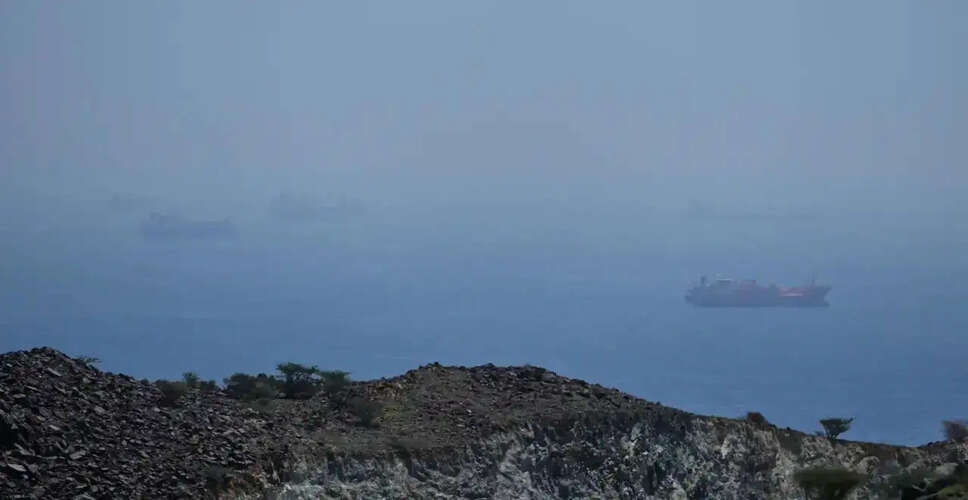
Despite the tightening of the US naval blockade around Iran, recent satellite imagery indicates that Tehran is still actively loading supertankers with oil at its primary export terminal. This strategy appears to be a way for Iran to buy time before the full impact of the blockade is felt. A report from Bloomberg highlights that images taken on Monday by the European Union's Sentinel 1 satellite revealed a very large crude carrier, capable of transporting approximately 2 million barrels of oil, docked at the jetty on Kharg Island, which serves as Iran's main oil export hub. Notably, an image from Saturday showed no vessels at the terminal.
Additionally, Monday's imagery displayed 13 vessels, primarily large crude carriers, anchored to the east of the island. In contrast, a similar image taken just before the blockade commenced on April 13 showed only about half that number. This increase suggests that Iran has ramped up its loading activities since the blockade was implemented.
Currently, there is no substantial evidence indicating that large quantities of oil are successfully circumventing the US blockade. Analysts suggest that the crude being loaded is merely filling the available tankers in proximity to Iran.
Expansion of the US Blockade
The US Blockade Is Spreading
The US Navy has reported that its maritime barrier in the Sea of Oman has intercepted nearly three dozen Iranian vessels since the blockade's initiation. A growing number of oil tankers and other ships have been observed congregating near the Iranian port of Chabahar, close to the Pakistani border, unable to proceed further.
CENTCOM
2047674616580030961
Moreover, the blockade's reach extends beyond the Gulf of Oman. Recently, US forces boarded a tanker named Majestic X, which was carrying Iranian oil in the Indian Ocean, just days after intercepting another vessel, Tifani, located between Sri Lanka and the Strait of Malacca. Both ships are under US sanctions, indicating Washington's readiness to enforce its blockade well beyond the immediate waters surrounding Iran.
Iran's Oil Production Outlook
How Long Can Iran Hold Out?
Iran possesses approximately 90 million barrels of storage capacity. Even if the US blockade halts all exports, analysts from FGE NexantECA estimate that the country could maintain its current production rate of around 3.5 million barrels per day for an additional two months before needing to reduce output. The tankers currently being loaded are contributing to this buffer. Miad Maleki, a former US Treasury official involved in sanctions policy during Trump's administration, noted, "They're getting tankers filled up, that does give them additional time," providing relief from the risk of running out of storage.
JPMorgan analysts, including Natasha Kaneva, indicated in a note dated April 21 that if the blockade remains in effect, it would "constrain volumes mechanically, not just financially, leaving far less room for workaround trade, and, over time, forcing Iran to curtail production."
Challenges in Tracking Oil Shipments
The Tracking Problem
One challenge in determining the exact volume of oil being exported is that many tankers transporting Iranian oil often operate with their automatic position signals turned off. This practice has been in place long before the current conflict. Ships associated with Iran typically cease broadcasting their locations upon entering the Strait of Hormuz, only resuming signals well into the Strait of Malacca, which is about 13 days of sailing from Kharg Island. Any tanker attempting to evade the US Navy would likely employ the same strategy, meaning that a vessel that successfully navigates the blockade might not appear on tracking systems for a week or more.