
Iran's Missile Strike on Haifa: A Strategic Escalation in the Middle East
Iran Targets Israeli Oil Refineries
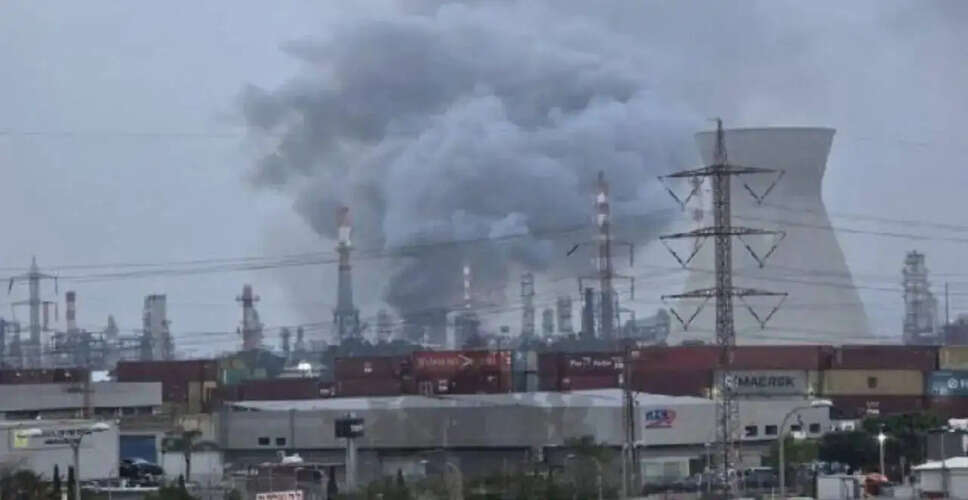
On March 19, 2026, at approximately 8:30 PM IST, Iran launched an attack on Israel's oil refineries located in Haifa, shortly after Israeli airstrikes targeted the South Pars gas field in Asaluyeh. This strike on Haifa aligns with Iran's strategic military doctrine. Israeli Energy Minister Eli Cohen reported a temporary power disruption, but most affected areas had their electricity restored quickly. He noted, "The damage to the northern power grid is localized and not significant," adding that there was no major impact on Israeli infrastructure. The Islamic Revolutionary Guard Corps of Iran claimed responsibility for targeting refineries in Haifa, Israel's third-largest city, and Ashdod, asserting that various military and security sites of the Israeli regime were hit with precision missiles.
🚨 BREAKING: Footage shows smoke billowing from oil refineries in Haifa following Iran’s latest ballistic missile strike. pic.twitter.com/2AednsPV2u
— Breaking911 (@Breaking911) March 19, 2026
Significance of Haifa in the Conflict
The Importance of Haifa
Iran views Haifa as a crucial target among Israeli cities, labeling it the "most critical business center of Israel" and the "economic heart of the Israeli regime." The city is densely packed with strategic infrastructure, and Iran has closely monitored it for years. The Bazan oil refinery, a key target, spans 526 acres in Haifa Bay and is vital for Israel's energy supply, providing 65% of diesel, 59% of gasoline, and 52% of kerosene. An attack on Bazan not only damages industrial capabilities but also disrupts military logistics and civilian fuel supplies. Previous Iranian missile strikes on the Bazan complex in June 2025 resulted in fatalities and injuries, highlighting the refinery's significance. Beyond Bazan, Iran's targets in Haifa include the port, a petrochemical facility, an electricity company, the Matam Hi-Tech Business Park, and a railway network, making it a practical target due to its proximity to Lebanon.
Escalation Timeline
A Timeline to Understand the Escalation
The Iranian strikes on Haifa were a direct response to Israeli attacks on Iranian facilities at the South Pars gas field, marking a significant escalation in hostilities. South Pars, part of the world's largest natural gas reserves, is shared between Iran and Qatar. The gas field is estimated to contain 1,800 trillion cubic feet of usable gas, sufficient to meet global needs for 13 years. Iran's retaliation included attacks on the Ras Laffan refinery in Qatar and two refineries in Riyadh, Saudi Arabia. Following these events, Saudi Arabia asserted its right to take military action against Iran if necessary. Additionally, Saudi defense officials reported intercepting an Iranian missile aimed at the port of Yanbu, a crucial alternative for Saudi oil exports amid the Strait of Hormuz blockade. Iranian officials have warned of "zero restraint" in response to further attacks on their infrastructure.