
Iran's Judiciary Issues Stark Warning Amid Escalating Protests: What’s Behind the Unrest?
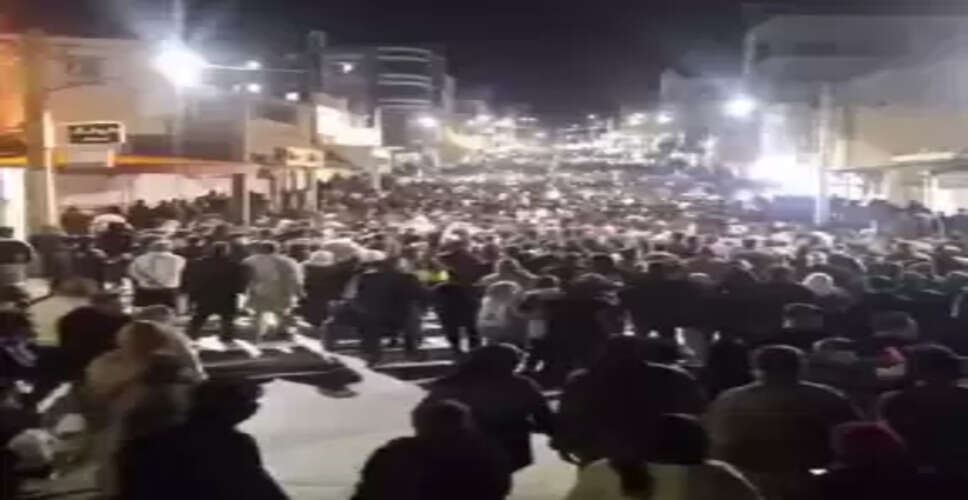
Intensifying Protests in Iran
Tehran: Gholamhossein Mohseni Ejei, the head of Iran's judiciary, has issued a stern warning indicating that there will be no tolerance for individuals accused of supporting what he termed the 'enemy of the Islamic Republic' as protests surge nationwide.
Ejei accused the United States and Israel of instigating disorder and turmoil within Iran.
He stated, 'In light of statements from Israel and the US President, those who take to the streets for riots and unrest have no justification.'
Ejei emphasized, 'From this point forward, anyone who aids the enemy against the Islamic Republic and disrupts public peace will face consequences.'
This warning follows comments from US President Donald Trump, who indicated that the US would take action if Tehran resorted to violence against peaceful demonstrators.
Trump remarked that the United States is 'locked and loaded and ready to go.' Israeli Prime Minister Benjamin Netanyahu also expressed support for the protesters, suggesting that Iranians are 'taking their fate into their own hands.'
Currently, Iran is experiencing its most significant protests in three years, which began in the historic Grand Bazaar of Tehran, where shopkeepers protested the steep decline of the rial currency.
The demonstrations have since spread throughout the nation, driven by public frustration over deteriorating economic conditions, Western sanctions, alleged governmental mismanagement, and limitations on political and social freedoms.
In response to Ejei's statements, Iranian Army Chief Major-General Amir Hatami issued a strong warning, threatening pre-emptive military action against what he described as hostile rhetoric aimed at Iran.
Hatami declared that Tehran would 'cut off the hand of any aggressor,' asserting that Iran's military capabilities have significantly improved since the war. He warned that any mistake by the enemy would result in a decisive retaliation.
Since the onset of the protests, over 30 individuals have reportedly lost their lives, with thousands arrested. While Iranian authorities have not disclosed an official death toll for the demonstrators, they have confirmed the deaths of at least two security personnel and injuries to more than a dozen others.
Meanwhile, social media platforms are inundated with videos from the protests, showcasing demonstrators tearing down and destroying flags of the Islamic Republic across various locations.