
Iran's Foreign Minister Heads to Pakistan Amid Ceasefire Negotiations
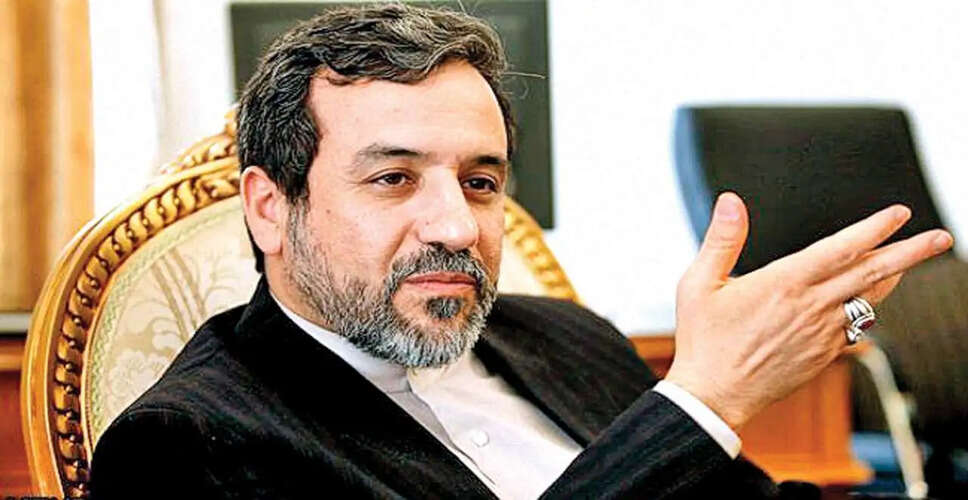

Diplomatic Mission to Pakistan
On Friday, Iran's Foreign Minister Abbas Araghchi embarked on a journey to Pakistan, where officials are working to facilitate a second round of ceasefire discussions between the United States and Iran.
The Iranian state news agency confirmed that Araghchi's visit is aimed at engaging in 'bilateral consultations' and addressing regional issues. His itinerary also includes stops in Oman and Russia.
This diplomatic effort comes at a time when global tensions are high due to a conflict that has disrupted vital energy exports through the Strait of Hormuz, impacted the world economy, and resulted in significant casualties across the Middle East.
Two Pakistani officials, who requested anonymity due to the sensitive nature of the discussions, informed that Araghchi is traveling with a small delegation.
The White House has yet to comment on Araghchi's visit or whether a U.S. delegation will also participate.
Pakistan is actively trying to revive negotiations between Iran and the U.S., which were expected to resume this week but did not take place.
Extension of the Jones Act Waiver
In a related development, President Donald Trump announced a 90-day extension of the Jones Act waiver, facilitating the transport of oil and natural gas by non-American vessels amid the ongoing conflict.
Initially, a 60-day waiver was introduced in mid-March to help stabilize energy prices and allow more ships to reach U.S. ports following the effective closure of the Strait of Hormuz. A White House press aide noted that new data indicated a significant increase in supply reaching U.S. ports more quickly since the waiver was implemented.
Following this announcement, Brent crude oil prices fell to approximately USD 104 per barrel, down from over USD 107, which was nearly 50% higher than the price on February 28, when the U.S. and Israel initiated military action against Iran.
During his diplomatic discussions earlier on Friday, Araghchi and Pakistani officials reviewed the ceasefire details in the ongoing conflict involving the U.S. and Israel, as Islamabad seeks to encourage Iran to send a delegation for renewed negotiations with Washington.
Pakistan has been striving to bring U.S. and Iranian officials back to the negotiating table after Trump declared an indefinite extension of the ceasefire, responding to Islamabad's request for additional time for diplomatic efforts.
Despite these efforts, tensions in the Strait remain high, as it is a crucial route for the transportation of one-fifth of the world's oil and natural gas during peacetime.
Iran has maintained control over traffic in the strait, having attacked three vessels earlier this week, while the U.S. continues its blockade of Iranian ports and has ordered military action against small boats suspected of laying mines.
Currently, the U.S. has three aircraft carriers deployed in the region, with the USS George HW Bush arriving in the Indian Ocean this week, while the USS Abraham Lincoln is stationed in the Arabian Sea and the USS Gerald R. Ford is in the Red Sea.
This marks the first instance since 2003 that three American carriers have been simultaneously active in the area, comprising 200 aircraft and 15,000 sailors and Marines, according to U.S. Central Command.
Continued Diplomatic Engagement
In their discussions on Friday, Araghchi, along with his Pakistani counterpart Ishaq Dar and Pakistan's army chief Field Marshal Asim Munir, addressed 'regional developments and ceasefire-related issues,' as stated by Araghchi. Further details were not disclosed.
Pakistan's Foreign Ministry later reported that both parties exchanged insights on regional matters, the ceasefire, and ongoing diplomatic initiatives by Islamabad concerning U.S.-Iran relations.
Dar emphasized the necessity of ongoing dialogue and engagement to resolve outstanding issues and promote regional peace and stability as soon as possible.
Since the onset of the conflict, at least 3,375 individuals have lost their lives in Iran, while over 2,290 fatalities have been reported in Lebanon, where renewed clashes between Israel and the Iran-backed militant group Hezbollah erupted shortly after the war began, according to official sources.
Additionally, 23 people have died in Israel, and more than a dozen in Gulf Arab nations. The conflict has also claimed the lives of 15 Israeli soldiers in Lebanon and 13 U.S. service members across the region.