
Iran's Control Over Strait of Hormuz: Navigating New Maritime Challenges

Iran's Maritime System in the Strait of Hormuz
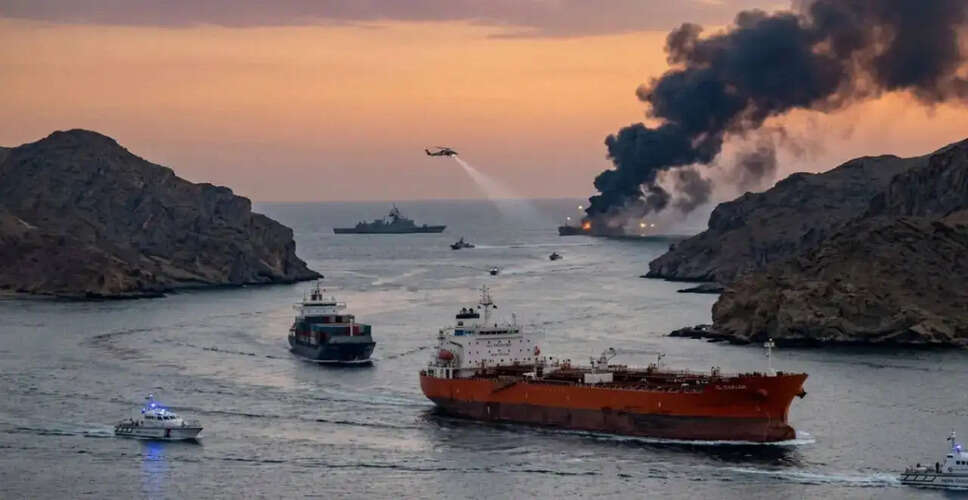
Iran has established a sophisticated and layered approach for managing ship traffic through the Strait of Hormuz, employing island checkpoints, intergovernmental agreements, and in certain instances, direct payments. This strategy has effectively granted Tehran significant control over a crucial global energy passage. Insights from over 20 interviews with shipping executives, Iranian and Iraqi officials, along with an analysis of maritime movements and documentation, shed light on the operational dynamics of this system, despite US warnings against adhering to Iranian stipulations.
Operational Mechanism of Iran's System
The Islamic Revolutionary Guard Corps (IRGC) is pivotal in this process. Vessels wishing to navigate these waters often need to provide comprehensive details, including cargo value, flag, origin, destination, crew nationalities, and ownership, for scrutiny by Iranian authorities, particularly the IRGC.
For nations with strong ties to Iran, such as Russia, China, India, and Pakistan, passage can be facilitated through high-level connections. In other instances, ships depend on bilateral agreements. A notable case is the Greek-operated tanker Agios Fanourios I, which was transporting Iraqi crude oil to Vietnam. After being stranded in the Gulf for weeks, it received clearance through a direct arrangement involving Iraq’s then-Prime Minister Mohammed Shia al-Sudani. The vessel navigated close to the Iranian coastline, passed through several checkpoints, and was briefly halted by IRGC speedboats near Hormuz Island for inspection before being permitted to proceed. What typically would be a five-hour journey extended to two days. The ship's management, Eastern Mediterranean Shipping, stated that no payments were made, and the passage was facilitated through diplomatic pressure from Iraq and Vietnam.
Financial Implications and Risks
Shipping industry sources indicated that some vessels not covered by governmental agreements are paying Iranian authorities fees that can exceed $150,000 for safe passage. Iranian officials acknowledged that 'security and navigation fees' are sometimes imposed, although they noted that not all nations are affected by these charges.
Such transactions would breach US sanctions and could jeopardize insurance coverage, according to maritime experts. The US Treasury has explicitly warned against making payments to Iran for passage, highlighting the risk of secondary sanctions. Additionally, the US Navy has redirected numerous vessels as part of its blockade on Iranian-affiliated shipping.
The Evolving Maritime Landscape
Danny Citrinowicz, a former Israeli intelligence officer now affiliated with the Institute for National Security Studies, remarked that Iran's influence has altered the navigation landscape. 'Some vessels will succeed due to political alliances, others will need to pay, while some will be turned away. This is the new reality,' he stated.
The ongoing disruptions have left thousands of seafarers and hundreds of vessels stranded in the Gulf, exacerbating what the head of the International Energy Agency has termed the worst energy crisis in history. As the conflict persists, the Strait of Hormuz, through which approximately one-fifth of the global oil supply once flowed, has transformed into a high-stakes environment where shippers must carefully consider safety, sanctions risks, and economic pressures.