
Iran's Consulate Responds to Trump's Claims on Leadership and Ceasefire
Iran's Sharp Response to Trump's Remarks
The Iranian Consulate in Mumbai issued a pointed rebuttal on Tuesday to comments made by U.S. President Donald Trump regarding Iran's leadership, labeling his statements as incorrect. In a post on X, the consulate quipped, “On April Fools’ Day, it’s almost poetic that Donald #Trump still manages to outdo the jokes; talking about a ‘new’ #Iran #president when Dr. #Pezeshkian has been in office all along.” They further emphasized, “Reality check: presidents aren’t replaced by tweets… that’s what elections are for.”
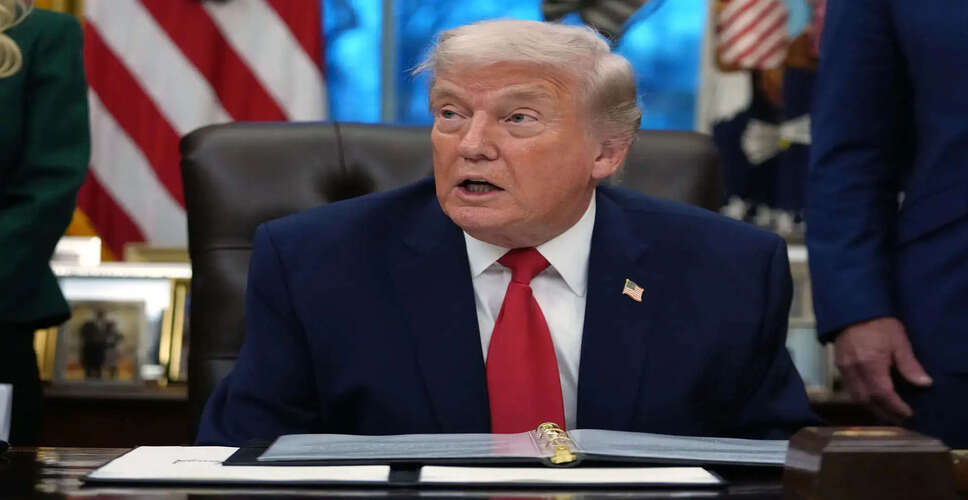
This reaction followed Trump's assertion on social media that Iran had a ‘new regime president’ who was seeking a ceasefire. Trump stated, “Iran’s New Regime President, much less Radicalized and far more intelligent than his predecessors, has just asked the United States of America for a CEASEFIRE! We will consider when Hormuz Strait is open, free, and clear. Until then, we are blasting Iran into oblivion or, as they say, back to the Stone Ages!!! President DJT.”
It remains unclear who Trump was referencing, as Iran's presidential office has not changed. Tehran has yet to officially address his comments.
Previously, Trump indicated he could conclude the conflict within two to three weeks if he was assured that Iran would not pursue nuclear weapons, even without a formal ceasefire. His statements have conveyed mixed messages, oscillating between optimism about a swift resolution and threats to escalate military actions.
Currently, thousands of additional U.S. troops are being deployed to the Middle East, raising questions about their intended role. Just days ago, Trump warned of potential attacks on Iran's power facilities if the strait was not reopened by April 6. He has also threatened strikes on Iran's Kharg Island oil export terminal and desalination plants. However, on Tuesday, he stated that the U.S. would not be responsible for the security of vessels navigating through the Hormuz Strait.
These comments come amid rising tensions in the region, with Iran targeting shipping and energy infrastructure, including an oil tanker near Qatar. Iran has indicated its readiness to continue its military efforts. Foreign Minister Abbas Araghchi remarked to Al Jazeera, “You cannot speak to the people of Iran in the language of threats and deadlines. We do not set any deadline for defending ourselves.”
The U.S. has proposed a 15-point plan aimed at achieving a ceasefire, which includes demands for reopening the strait and curtailing Iran's nuclear program, which Iran maintains is for peaceful purposes. Iran's response includes a commitment to maintaining sovereignty over the strait.
In his interview with Al Jazeera, Araghchi confirmed receiving direct messages from U.S. Middle East envoy Steve Witkoff but insisted that no direct negotiations were taking place. He expressed skepticism about the potential for fruitful discussions with the U.S., stating, “the trust level is at zero.” He cautioned against any U.S. ground offensive, asserting, “we are waiting for them.”