
Iranian Bahá'í Faces Death Penalty Amid Torture Allegations
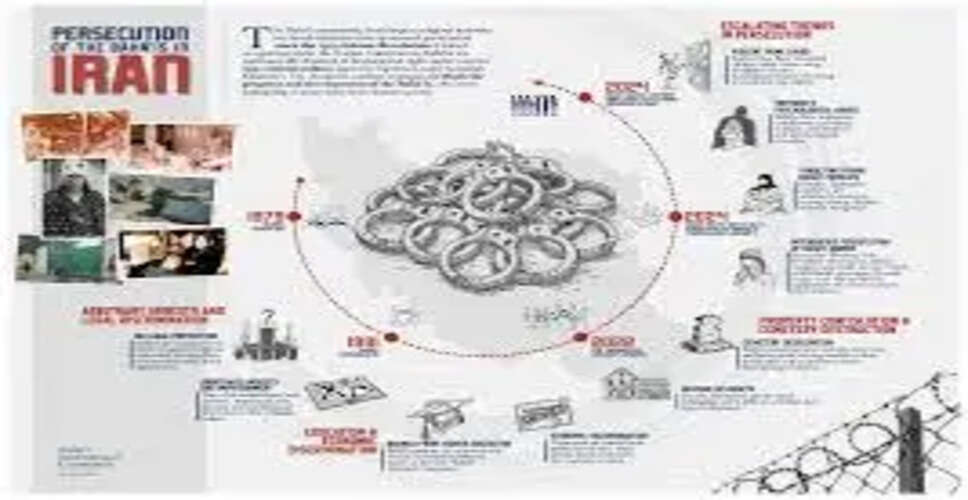
Severe Human Rights Violations in Iran
Geneva—March 24, 2026—Peyvand Naeemi, a young Bahá'í imprisoned in Kerman, Iran, is currently facing the looming threat of execution following mock hangings, prolonged torture, and intense interrogation. Iranian authorities are reportedly pressuring Naeemi to confess to crimes he did not commit. Mock executions are considered a severe form of psychological torture and are prohibited under international law. Naeemi was arrested on January 8 during protests and taken to a detention center operated by the Islamic Revolutionary Guard Corps (IRGC), notorious for its abusive treatment of detainees. Under extreme duress, he was coerced into admitting participation in the protests, a confession broadcasted on state television on February 1 before he was transferred to Kerman prison. To date, no trial has been held, nor has any evidence been presented to substantiate the false charges against him. Despite the release of several political prisoners in recent weeks due to the ongoing crisis, Naeemi remains incarcerated alongside other Bahá'ís targeted for their faith.
Since the establishment of the Islamic Republic in 1979, the Iranian government has systematically scapegoated Bahá'ís during national crises through false accusations and orchestrated media campaigns of hatred. Naeemi is enduring a similar fate. On February 28, authorities accused him of involvement in the murder of three Basij security personnel during the January protests, despite him being in custody at the time of the alleged attack. He was also falsely accused of celebrating the death of former Supreme Leader Ali Khamenei, despite having no access to communication as a prisoner. His family fears that these fabricated charges could be used to justify his execution. From mid-March for ten consecutive days, Naeemi endured severe torture, was deprived of food and water, and subjected to physical abuse while being interrogated. He was restrained for 48 hours and repeatedly beaten while bound to a wall. Even after this, he faced further violence and humiliation, with agents mocking his religious beliefs as a Bahá'í and subjecting him to mock executions in an attempt to extract false confessions. A relative of Naeemi living outside Iran reported that these abuses have severely impacted his physical and mental health.
“The relative stated that ‘Peyvand was subjected to mock hangings on two separate occasions.’ They also mentioned that during brief conversations with family members, Naeemi broke down in tears due to the immense psychological pressure he is under,”
The relative recounted that after the first mock hanging, Naeemi informed his family that he had refused to confess to any wrongdoing. When describing the second incident, where the stool was pulled from under him, he appeared ‘clearly in shock and distressed.’ Nevertheless, he remains steadfast in his innocence. Human rights organizations have consistently documented Iran's use of torture, coercion, and mock executions to extract false confessions. Simin Fahandej, a representative of the Bahá'í International Community at the United Nations in Geneva, stated, “Naeemi is being tortured and even threatened with execution for crimes he did not commit. The Islamic Republic has no evidence to support these allegations. If it did, it would not resort to torture for false confessions. The only reason for this cruel treatment is that Peyvand is a Bahá'í. This is why the Iranian government has subjected an entire innocent community to oppression and discrimination for nearly five decades.”
Currently, Naeemi is held in solitary confinement at Kerman prison, suffering from involuntary eye twitching and digestive issues. Despite this, prison officials have denied him medical care. Fahandej emphasized, “The brutal treatment of an innocent young man like Peyvand illustrates the Iranian government's limitless scapegoating of the Bahá'í community. For the past five decades, it has shown unimaginable cruelty to force them to abandon their beliefs. The international community must act immediately and pressure Iran to cease its targeting of Bahá'ís.”
Background Information:
● On February 28, while exercising in the Kerman prison complex where he was transferred, Naeemi was taken back to the IRGC detention center and placed in solitary confinement. He was later returned to Kerman prison, where the mock hangings occurred.
● Agents claimed Naeemi was celebrating the death of former Supreme Leader Ali Khamenei on the same day, but as a prisoner without access to communication, he was unaware of this event. His family was later informed that he was being punished based on this accusation.
● Subsequently, IRGC agents accused Naeemi of involvement in a violent attack on Basij (paramilitary) forces on the evening of January 8, one of the nights of violent government crackdowns during the protests, which resulted in the deaths of three Basij security officers.
● Naeemi was arrested on the morning of January 8, before the Basij officers were killed, indicating he could not have been involved in the alleged attack or committed the crimes he is accused of.
● On March 7, Naeemi was briefly allowed to speak with his family over the phone, during which he mentioned that new false charges had been leveled against him and that he was being pressured to confess, but this time he would not be forced into making a false confession.