
Iran Responds to US Strikes Amid Ongoing Negotiations: What’s Next?
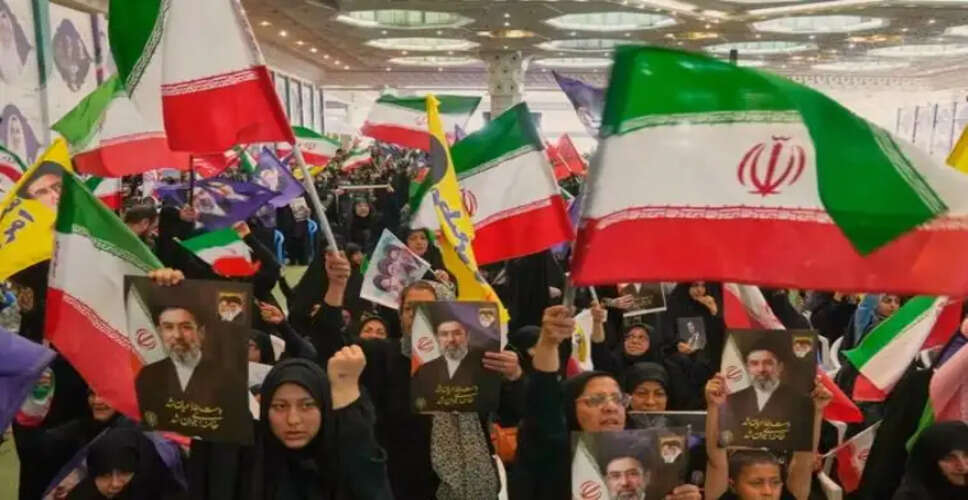

Iran's Reaction to US Military Actions
Dubai: On Tuesday, Iran condemned the latest US airstrikes, labeling them as indicative of 'bad faith and unreliability' amidst ongoing negotiations aimed at resolving the conflict. Concurrently, the Islamic Republic began to restore internet services following one of the longest nationwide shutdowns in its history.
The US military described the strikes conducted on Monday in southern Iran as defensive, targeting missile launch sites and minelaying vessels, asserting that they acted with 'restraint' given the ongoing ceasefire.
Iran's foreign ministry characterized these strikes as a breach of the ceasefire, cautioning that the US would be accountable for 'all consequences' without providing further details.
'The Islamic Republic of Iran will respond to any act of aggression,' the ministry stated.
According to Iran's Revolutionary Guard, they successfully shot down at least one drone and deterred another drone along with a fighter jet that entered their airspace, as reported by the official Mizan news agency, although the timing of these incidents was not specified.
In a statement regarding the annual Hajj pilgrimage, Iran's supreme leader, Mojtaba Khamenei, addressed the nation's stance against the US and Israel, asserting that other Middle Eastern countries 'will no longer act as a shield' for US military installations. Iran has previously expressed grievances regarding US military presence in the region and has targeted these facilities.
The implications of these developments for ongoing negotiations remain uncertain.
Iranian state television indicated that Iranian Parliament Speaker Mohammad Bagher Qalibaf and Foreign Minister Abbas Araghchi departed from Qatar, where discussions were taking place, without detailing any future steps.
US Secretary of State Marco Rubio suggested that discussions regarding the extension of the ceasefire and the reopening of the vital Strait of Hormuz would 'take a few days'.
Gradual Restoration of Internet Access
In the meantime, Iranian officials have begun to lift a prolonged internet blackout, which they justified as a wartime necessity, despite it costing the economy an estimated USD 30 million to USD 40 million daily. Users reported a gradual restoration of internet access in various regions, with state media announcing that fixed broadband services were back online, though the timeline for widespread mobile internet restoration remains unclear.
Historically, Iran has enforced strict content filters on platforms like YouTube and Instagram. However, prior to the conflict, many Iranians circumvented these restrictions using affordable virtual private networks (VPNs) and other methods.
The internet was initially cut off in January during significant anti-government protests, with restrictions being eased before a complete blackout was imposed following US and Israeli attacks on February 28.
This outage severely impacted communication for Iranians abroad trying to connect with family and devastated the country's relatively thriving online businesses, further straining an already struggling economy.
Recent Executions and Global Concerns
In other news, Iran executed a man convicted of espionage for Israel, marking the latest in a series of over two dozen executions related to espionage and security since the war intensified the crackdown on dissent.
The Iranian judiciary's news outlet, Mizanonline, identified the individual as Gholamreza Khani Shakarab, labeling him a 'ringleader' for operations linked to Israel's Mossad and accusing him of recruiting individuals both domestically and abroad to undermine national security. He was reportedly involved in sports and traveled to neighboring countries.
Activists and human rights organizations have criticized Iran for conducting closed trials where defendants often cannot contest the charges and are frequently coerced into confessions.
The official judiciary stated that the Supreme Court upheld Shakarab's death sentence.
The recent US strikes represent another escalation in the fragile ceasefire that commenced on April 7 and has largely been maintained.
Negotiations are partly focused on the Strait of Hormuz, a crucial waterway off southern Iran through which a significant portion of the world's crude oil and natural gas flows. Following the onset of hostilities, Tehran retaliated by effectively closing the strait, stranding numerous vessels and causing disruptions in global energy markets and fertilizer supplies.
Iran has allowed a limited number of vessels to pass through and has imposed tolls. The Revolutionary Guard navy reported that 25 commercial vessels, including oil tankers, were permitted to transit in the last 24 hours, whereas prior to the conflict, over 100 ships navigated the strait daily.
The full impact of the fertilizer shortage may not be evident until harvests occur months from now. Qu Dongyu, Director-General of the UN Food and Agriculture Organization, expressed concern at an event in Rome, stating that 'the decisions we make now will determine whether this remains a manageable shock or evolves into a deeper global food security crisis in 2026 and 2027 and beyond.'
The strait has become a significant bargaining chip for Tehran in negotiations, alongside the longstanding issues surrounding Iran's nuclear program and its enriched uranium. Iran is seeking the lifting of the US military blockade on its ports, which began on April 17.
Additionally, an explosion was reported on Tuesday aboard a tanker in the nearby Gulf of Oman, according to the UK Maritime Trade Operations Centre.