
Iran Launches Missile Strikes on Israel, Causing Significant Damage
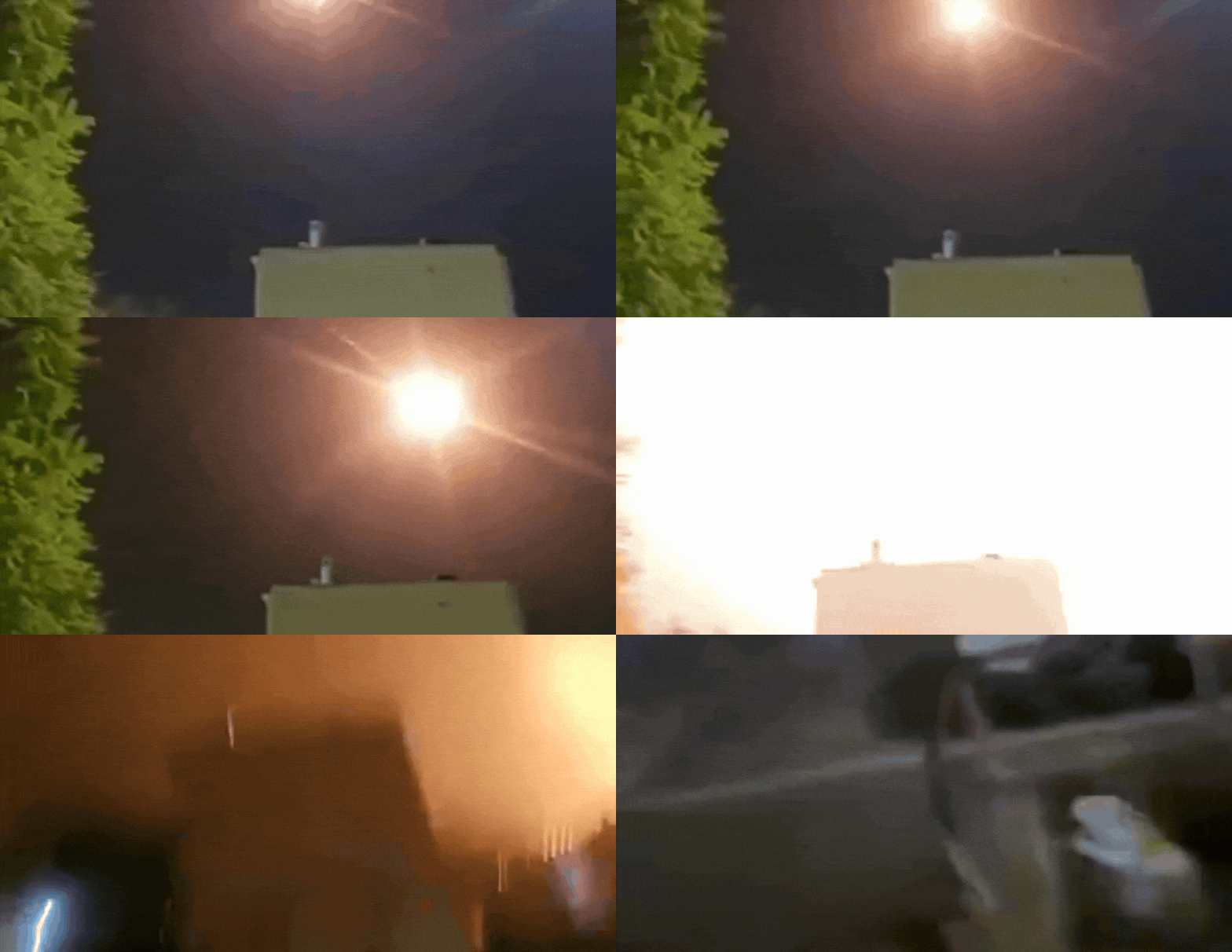
Missile Strikes Hit Southern Israel
Footage has emerged showing a large fireball soaring through the sky before crashing into the southern Israeli cities of Dimona and Arad. This attack was part of Iran's missile retaliation for the assault on its Natanz nuclear enrichment facility. The missile strikes, which occurred on Saturday night, resulted in extensive damage, leaving numerous buildings in ruins. The significance of these attacks is heightened by Dimona's proximity, just 20 kilometers from Israel's main nuclear research center.
Unverified videos shared on social media depicted residents experiencing the impact, with doors and window frames shattered and personal belongings scattered due to the blasts' intensity.
כדור אש יורד מהשמיים: תיעוד הפגיעה בדימונה@Itsik_zuarets pic.twitter.com/8R1G7lmDVW
— כאן חדשות (@kann_news) March 21, 2026
According to reports, 84 individuals were injured in Arad, with 10 in critical condition, while 33 others were hurt in Dimona. Among the injured in Dimona was a 10-year-old boy who suffered severe shrapnel wounds, along with a 40-year-old woman.
Israeli Prime Minister Benjamin Netanyahu announced that more emergency teams would be sent to the impacted regions and pledged to continue military actions against Iran, describing the night as “very difficult.”
In response, Iran's Parliament Speaker, Mohammad Bagher Ghalibaf, remarked on social media that if Israel could not intercept missiles in the heavily fortified Dimona area, it indicated a new phase in the conflict.
The International Atomic Energy Agency (IAEA) reported no damage to Israel's critical nuclear facilities and noted that regional information indicated no unusual radiation levels following the attacks.
Dimona, located in the Negev desert, has been home to Israel's primary nuclear research facility since 1958. While it is widely believed that Israel possesses nuclear weapons, the country has neither confirmed nor denied this. The Natanz facility in Iran, which contains underground centrifuges for uranium enrichment, reportedly suffered damage during the conflict in June 2025.
Additionally, Iran's Islamic Revolutionary Guard Corps (IRGC) stated that its forces targeted other southern Israeli towns, as well as military installations in Kuwait and the United Arab Emirates.