
Iran Implements New Shipping Routes Amid Tensions in the Strait of Hormuz
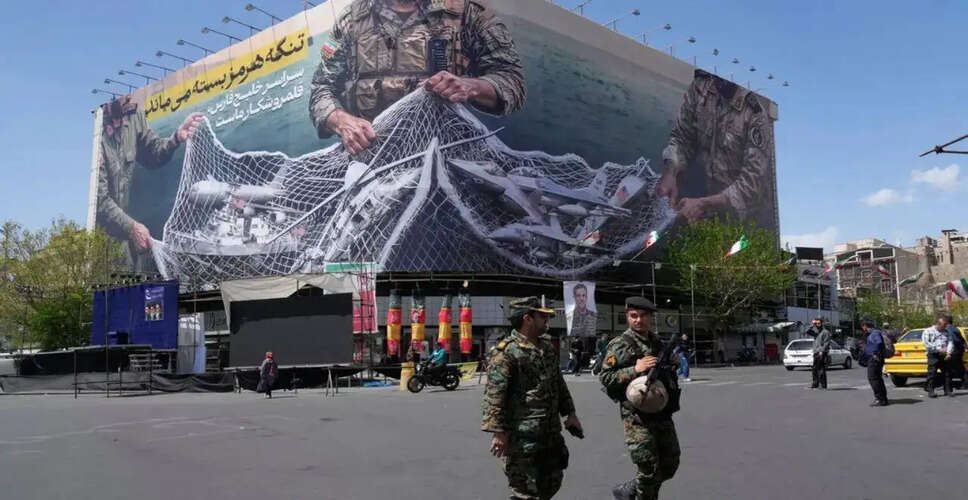

Iran's New Maritime Guidelines
Iran has introduced alternative maritime routes in the Strait of Hormuz, urging vessels to coordinate with its naval forces to steer clear of potential sea mines, as reported by state media. The Islamic Revolutionary Guard Corps Navy has instructed ships navigating the strait to adhere to specified entry and exit paths. This announcement follows Iran's decision to close the Strait of Hormuz just a day after a two-week ceasefire was declared by Donald Trump with Tehran.
The Iranian Students News Agency, referenced by various media outlets, detailed the new routes as follows:
- Entry: From the Sea of Oman to the north of Larak Island, proceeding towards the Gulf.
- Exit: From the Gulf, passing south of Larak Island, and then continuing to the Sea of Oman.
Earlier reports from the state-run Fars News Agency indicated that tanker traffic would face a "complete stop," attributing this to what Iran termed ceasefire violations by Israel related to its strikes on Hezbollah targets in Lebanon. The White House has urged Iran to promptly reopen the waterway.
Before the closure, two vessels were permitted to transit before restrictions were reinstated. A significant point of contention remains whether the ceasefire extends beyond Iran. Iran asserts that hostilities should cease on all fronts, including Israeli actions against Hezbollah, while Israel disputes this interpretation, claiming that Lebanon is not included in the truce.
Israeli Prime Minister Benjamin Netanyahu stated that operations against Hezbollah would persist, while Pakistan's Prime Minister Shehbaz Sharif previously suggested that Lebanon should be part of the agreement. An Iranian lawmaker, Ebrahim Rezaei, called for the strait's closure in retaliation for what he described as "savage Zionist aggression against Lebanon." He emphasized, "In response to the savage Zionist aggression against Lebanon, the passage of ships in the Strait of Hormuz must be halted right now... Ceasefire either on all fronts or on no fronts," he posted on X.
The Strait of Hormuz is a crucial maritime corridor, facilitating nearly one-fifth of the world's oil and liquefied natural gas supplies. This narrow passage connects the Persian Gulf with the Arabian Sea and is situated between Iran and Oman, as well as the United Arab Emirates. A senior Iranian official hinted that restrictions might be relaxed by Thursday or Friday ahead of scheduled discussions in Islamabad, although vessels may still need Iranian authorization to navigate through.
These developments occur as Israel escalates its military operations in Lebanon, executing what it describes as its most extensive coordinated strikes of the conflict. According to Lebanese health officials, at least 254 individuals have died and over 800 have been injured. Explosions have been reported throughout Beirut, including in central areas where no prior warnings were issued, while other strikes followed earlier evacuation alerts. The Israeli military claims to have targeted more than 100 Hezbollah command centers and military installations across Beirut, the Bekaa Valley, and southern Lebanon. Despite the ceasefire between the United States and Iran, the ongoing violence in Lebanon highlights the precarious nature of the broader agreement.