
Iran Faces Unprecedented Protests Amid Calls for Regime Change
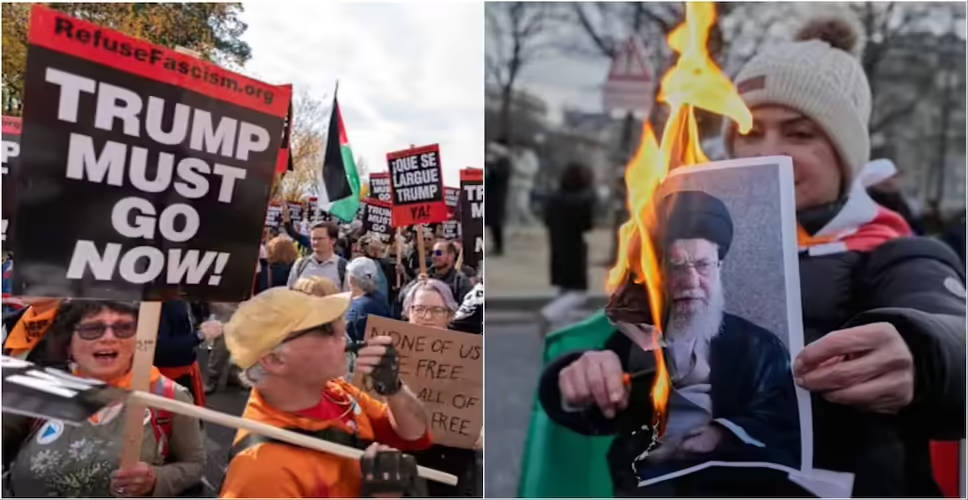
Overview of the Ongoing Protests
Iran is currently engulfed in significant protests that began in late December 2025 and have since spread across the nation into January 2026. Initially sparked by economic hardships, soaring inflation, a drastic decline in the rial, and cuts to essential services like electricity and water, the movement has now escalated into demands for a revolution against the Supreme Leader of the Islamic Republic, Ayatollah Ali Khamenei.
Key Developments and Current Situation
Where are the Protests Taking Place? Demonstrations have erupted in all 31 provinces, including Tehran. Thousands of individuals have taken to the streets, chanting slogans such as 'Death to Khamenei', 'Death to the Dictator', 'Mullahs Go Home', and 'This Year We Will Overthrow Seyyed Ali (Khamenei)'.
Violence and Casualties: According to human rights organizations like HRANA, over 500 individuals have lost their lives (490+ protesters and 48+ security personnel). Some reports estimate casualties could reach up to 2,000, particularly during internet blackouts. Thousands have been injured, and more than 10,000 have been arrested. Security forces have employed live ammunition, pellet guns, and other forms of force. Hospitals are overwhelmed, with reports of bodies piling up in various locations.
Government Response: Khamenei has labeled the protesters as 'vandals', 'saboteurs', and agents of the U.S. and Israel. Internet access and international calls have been completely cut off, and crackdowns have intensified. State media is showcasing support rallies, yet public discontent continues to rise.
International Perspective: U.S. President Donald Trump has repeatedly warned that the U.S. may intervene if violence against protesters escalates. Exiled Crown Prince Reza Pahlavi has urged demonstrators to remain united and seize control of cities. In some areas, the Lion and Sun flag, a symbol of the former monarchy, has been raised.
Is This a Full-Scale Revolution?
This appears to be the largest and most widespread movement since the 1979 Islamic Revolution. Citizens are calling for regime change, democracy, or a return to monarchy. However, the complete picture remains elusive due to internet blackouts and severe repression. The situation is precarious—the regime appears weakened, yet the IRGC and security forces remain loyal. Continued repression could lead to further bloodshed, or if a large-scale uprising occurs, significant change may be possible.