
Iran Faces Leadership Crisis Following Khamenei's Death Amid Ongoing Conflict

Iran's Leadership Crisis After Khamenei's Passing
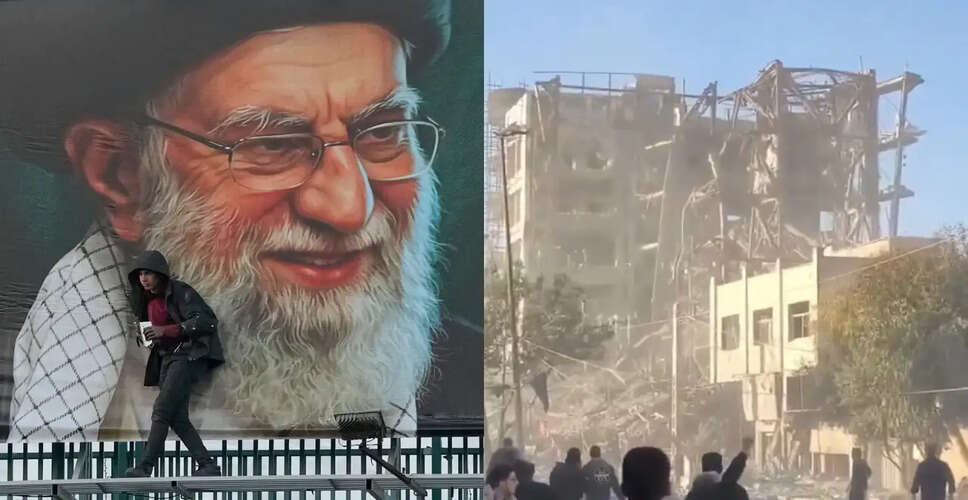
The recent death of Supreme Leader Ayatollah Ali Khamenei on February 28, 2026, due to Israeli airstrikes on his residence in Tehran has plunged Iran into a significant leadership crisis. As the nation is embroiled in conflict, the constitutional procedure for selecting his successor has been initiated, placing emphasis on the influential Assembly of Experts, which is responsible for appointing the next supreme leader. The urgency of this succession process has intensified following additional airstrikes. Iranian state media reported that Israeli forces targeted a building in Qom, which houses the Assembly of Experts' offices. Fortunately, the offices were evacuated prior to the attack, resulting in no reported injuries. This building is situated approximately 80 miles south of Tehran.
Understanding Iran's Assembly of Experts
What Is Iran's Assembly Of Experts And Who Are Its Members?
According to the Islamic Republic's constitution, the Assembly of Experts, consisting of 88 senior Shia clerics, possesses the authority to appoint a new supreme leader. Following Khamenei's death, the Assembly has convened to elect his successor. Iranian officials have confirmed that the Assembly is conducting a vote to select the next leader. To mitigate the risk of airstrikes disrupting the process, remote voting is being utilized.
In the interim, governance has been temporarily assigned to a three-member council, which includes President Masoud Pezeshkian, Judiciary Chief Gholam-Hossein Mohseni-Ejei, and Ayatollah Alireza Arafi. This marks only the second instance of the constitutional succession mechanism being activated, the first being in 1989 after Ruhollah Khomeini's death, which saw Khamenei ascend to power in a relatively peaceful transition, unlike the current wartime scenario. The Assembly has faced scrutiny for its perceived lack of independence, as candidates are vetted by the Guardian Council, whose members were appointed by Khamenei, thus limiting opposition representation.
Potential Successors to Khamenei
Who Are The Potential Successors to Khamenei?
Several notable figures are being considered as potential successors to Khamenei. Gholam-Hossein Mohseni-Ejei, who was appointed judiciary chief by Khamenei in July 2021, is viewed as a hardliner with a history in intelligence and prosecutorial roles during protests. Amid economic turmoil, he declared in January that there would be “no leniency” towards what he referred to as “rioters.” Ayatollah Alireza Arafi, deputy chairman of the Assembly of Experts and head of Iranian religious seminaries, is also mentioned as a candidate. He is recognized as a prominent hardline cleric and a staunch supporter of the Islamic Republic’s core ideology, having gained international attention after meeting Pope Francis in May 2022. Other names in circulation include Khamenei’s son, Mojtaba Khamenei, and Hassan Khomeini, the grandson of the Islamic Republic’s founder. Assembly members have indicated that despite the ongoing conflict and recent attacks, the selection of a new leader is expected to occur swiftly.