
Iran Considers Unconventional Tactics Amid US Blockade in Strait of Hormuz

Iran's Strategic Shift in Response to US Blockade
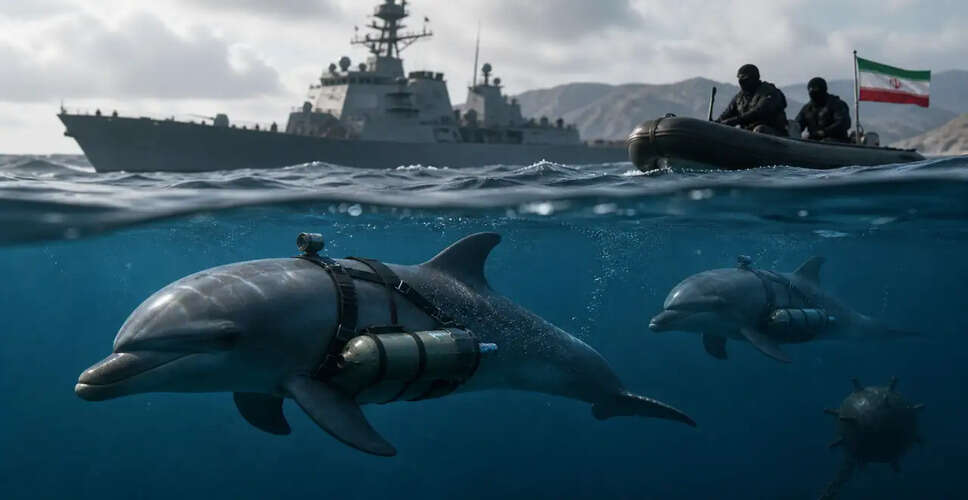
In light of the ongoing US blockade in the Strait of Hormuz, Iran is reportedly contemplating an unconventional strategy to counteract it. Recent reports suggest that Tehran is exploring the deployment of dolphins trained to carry explosives as a means to target US naval vessels in the area. This tactic is part of a broader strategy to consider unconventional weaponry as the economic situation worsens. Hamidreza Azizi, a Middle East expert at a Berlin-based research institute, noted that Tehran is beginning to perceive the blockade not merely as a form of warfare but as a different kind of conflict altogether. Consequently, Iranian leaders may soon view renewed military action as a less burdensome option than enduring a prolonged blockade.
Historical Context of Military-Training Dolphins
This is not the first instance of Iran investigating the use of military-trained dolphins. The country reportedly acquired these animals from the Soviet navy in 2000, with the intention of training them to attack targets using harpoons and to execute missions involving explosives, including potential suicide attacks on enemy ships. In addition to utilizing dolphins, Iran may also consider deploying submarines in the strategic waterway. For shipping companies weighing the risks of navigating the Strait of Hormuz, the threat of surface attacks remains a more significant concern than underwater mines.
US Response: Mine-Sweeping Operations
Washington has issued mixed messages regarding the threat posed by mines in the Strait. While military officials express concern over Iran's capability to mine this vital waterway, they have characterized the mines as more of a nuisance than a serious threat to maritime traffic. Previously, US President Donald Trump had instructed the Navy to "shoot and kill" any Iranian vessels laying mines in the strait. Analysts emphasize that clearing these mines is essential for vessels to safely navigate the central route through the strait, avoiding slower and more congested Iranian alternatives.
The US Navy possesses a variety of tools for detecting and neutralizing naval mines, including helicopters, littoral combat ships, unmanned sea drones, and even trained dolphins as part of its marine mammal program. These resources are aimed at identifying and safely removing underwater threats in high-risk areas. Concurrently, defense contractors and navies, particularly in the US, are increasingly adopting unmanned systems and artificial intelligence to improve minesweeping efforts. However, many of these advanced technologies are still limited in their deployment and have not been extensively tested in actual combat situations. The blockade has reportedly cost Iran approximately $4.8 billion in oil revenue, according to Pentagon evaluations.