
Iran Appoints New Supreme Leader Amid Ongoing Regional Turmoil
In a historic move, Iran has appointed Mojtaba Khamenei as the new Supreme Leader, succeeding his father, Ali Khamenei. This transition occurs amidst ongoing turmoil in West Asia, raising questions about the future direction of Iran's policies. Mojtaba, who has been a low-profile yet influential figure in Iran's political and religious landscape, faces significant challenges, including economic issues and regional tensions. His leadership will be pivotal in determining whether Iran pursues a path of confrontation or stability in these turbulent times.
| Mar 9, 2026, 10:37 IST
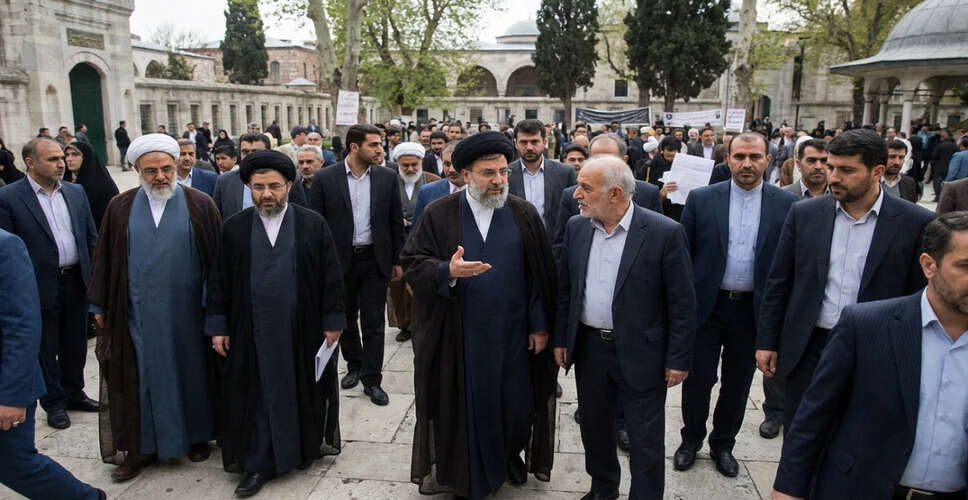
Significant Leadership Transition in Iran
In the midst of ongoing conflict and instability in West Asia, Iran has made a pivotal announcement. The country's state media, along with the influential Assembly of Experts, has officially appointed Ayatollah Seyyed Mojtaba Khamenei, the second son of the late Ayatollah Ali Khamenei, as the new Supreme Leader of the Islamic Republic. This declaration by the state broadcaster marks a historic shift in Iran's leadership, transferring power from father to son.
Official Announcement and Historical Context
According to Iranian state media, the powerful Assembly of Experts has designated Ayatollah Seyyed Mojtaba Khamenei as the new Supreme Leader. The announcement, made via the state broadcaster on social media platform X, signifies a controversial and historic leadership transition in the nation.
Who is Mojtaba Khamenei?
Mojtaba Khamenei's Background
Born on September 8, 1969, in the northeastern Iranian city of Mashhad, Mojtaba is the second of six children in the Khamenei family. He completed his secondary education at the Alavi School in Tehran. At the age of 17, he briefly served in the military during the Iran-Iraq War, an eight-year conflict that significantly altered Iran's security perspective and deepened distrust towards the U.S. and Western nations.
Educational Pursuits and Religious Standing
In 1999, Mojtaba moved to Qom to pursue advanced Islamic studies. Notably, he began wearing clerical attire around this time, a somewhat unusual choice as many clerics enter seminaries at a younger age. Despite years of study, he has often been regarded as a mid-ranking cleric, with some analysts viewing this as a potential barrier to his rise as the country's top official.
Political Involvement and Controversies
Mojtaba's Entry into Politics
Mojtaba first garnered significant attention during Iran's 2005 presidential election, which saw hardline politician Mahmoud Ahmadinejad come to power. Reformist candidate Mehdi Karroubi accused Mojtaba of influencing the election through networks linked to the Islamic Revolutionary Guard Corps and Basij militia, allegations that resurfaced during the disputed 2009 elections, sparking widespread protests known as the Green Movement.
Challenges Ahead for the New Supreme Leader
As Mojtaba Khamenei steps into the top leadership role, he is expected to uphold the hardline policies associated with his father's regime. However, he faces immediate challenges in stabilizing the Islamic Republic amid economic difficulties, political unrest, and escalating regional tensions.
Security risks are also heightened under his leadership. Recently, Israel's defense minister warned that whoever succeeds Ali Khamenei will become a 'certain target,' reflecting the unstable environment surrounding Iran's new Supreme Leader.
Mojtaba Khamenei's rise is seen as a victory for hardliners within Iran's internal politics. As the Middle East continues to grapple with conflict, his leadership will determine whether Iran opts for confrontation or seeks stability.