
Iran Acquires Chinese Spy Satellite Amid Escalating Middle East Tensions

Iran's New Surveillance Capabilities
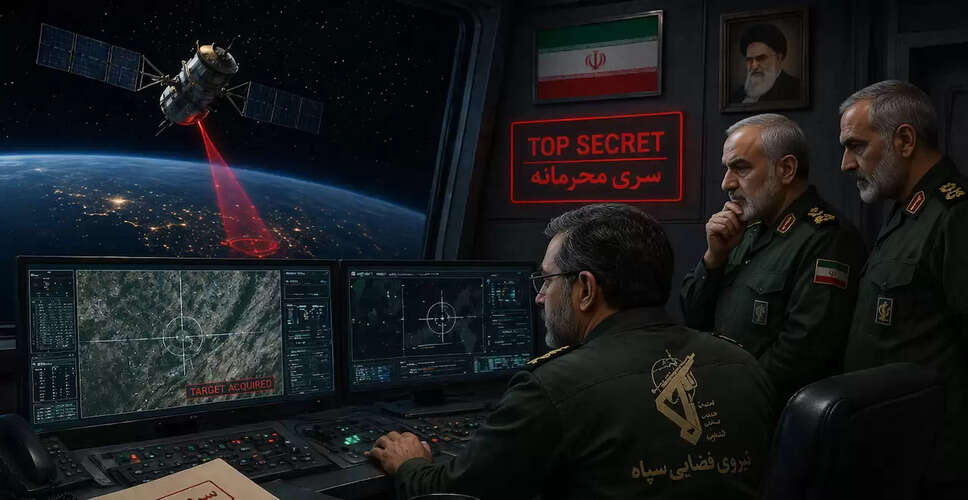
As the conflict in the Middle East intensifies due to a coalition war involving the United States and Israel against Iran, reports indicate that Tehran has obtained a spy satellite from China. This satellite is reportedly being utilized to monitor and target US military installations in the region. The situation remains tense in the Gulf and Middle East, despite ongoing indirect diplomatic discussions between the US and Iran following unsuccessful talks in Islamabad aimed at achieving a long-term ceasefire.
A recent article by a prominent financial publication revealed that Iran has been employing a Chinese-made satellite for surveillance purposes, specifically to track US bases. This information was derived from leaked Iranian military documents and satellite imagery. It is reported that Iran's Islamic Revolutionary Guard Corps Aerospace Force secretly acquired the TEE-01B satellite from China in 2024, which was launched and delivered through an in-orbit transfer method.
The leaked documents included time-stamped logs, images, and orbital data, indicating that Iranian forces have utilized this intelligence to monitor and target US military resources in Gulf countries amidst the ongoing conflict. The war escalated when the US and Israel launched a joint attack on Iran on February 28, deploying over 30 bombs that resulted in the death of Supreme Leader Ayatollah Ali Khamenei, along with several key aides and family members. In retaliation, Iran began targeting US military assets across Gulf nations, including the UAE, Saudi Arabia, Kuwait, Qatar, and Bahrain, in addition to Israel.
To exert further pressure on the United States, Iran has also blocked the Strait of Hormuz, a vital maritime route essential for energy trade between Asia and Europe. This blockade has disrupted global oil and gas supplies, heightening concerns among nations not directly involved in the conflict and exacerbating the situation.
China's Response to Military Support Allegations
In response to claims that it has provided military assistance to Iran, China has categorically denied these allegations, labeling them as unfounded. Lin Jian, a spokesperson for the Chinese foreign affairs ministry, stated on social media platform X, formerly known as Twitter, that "Media reports accusing China of providing military support to Iran are purely fabricated. Should the US impose tariff increases on China based on these claims, China will take countermeasures."