
Iran Accuses Adversaries of Using Fake Drones for Attacks
Iran's Military Claims Adversaries Misuse Drones
Dubai, Mar 15: On Sunday, Iran's joint military command alleged that its rivals are employing imitation Iranian drones to execute strikes in neighboring nations and subsequently blame Tehran, as reported by state media.
The command stated that replicas of Iran's Shahed-136 drone, dubbed 'LUCAS', have been utilized to target locations in countries such as Turkey, Iraq, and Kuwait, although no evidence was provided to support this assertion.
Tehran frequently refers to the United States and Israel as 'the enemy'.
The military emphasized that Iran clearly states its targets, which it identifies as interests of the US and Israel, urging neighboring nations to foster trust and collaboration with Tehran.
This statement emerged amid escalating tensions in the Middle East, with several Gulf nations reporting new missile and drone threats as the conflict entered its third week.
Bahrain, Saudi Arabia, and the United Arab Emirates have alerted their citizens that air defense systems are operational to intercept incoming threats.
These warnings followed Iran's recent call for the evacuation of three significant UAE ports, marking a notable threat to assets of a neighboring country not associated with US facilities.
Iran has also accused the United States of utilizing 'ports, docks, and hideouts' in the UAE to launch attacks on Kharg Island, which serves as Iran's primary oil export terminal.
The UAE and other Gulf nations hosting US military bases have denied permitting their territory or airspace for assaults on Iran.
Since the onset of the conflict, Iranian missile and drone strikes have resulted in the deaths of at least a dozen civilians in Gulf states, predominantly migrant workers.
In a separate announcement reported by the state-run IRNA news agency, Iran's Islamic Revolutionary Guard Corps (IRGC) declared its intent to pursue Israeli Prime Minister Benjamin Netanyahu.
'If the criminal Zionist prime minister is still alive, we will continue to pursue and kill him with full force,' stated the IRGC.
According to Iran's Health Ministry, US and Israeli strikes since February 28 have resulted in the deaths of 223 women and 202 children, as reported by the judiciary's news agency Mizan. The Iranian Red Crescent has indicated that the overall death toll has surpassed 1,300.
Additionally, Iranian media reported that a US-Israeli strike early Sunday targeted a residential area in Shiraz, destroying several homes belonging to workers and families reliant on welfare, with injuries reported but no fatalities.
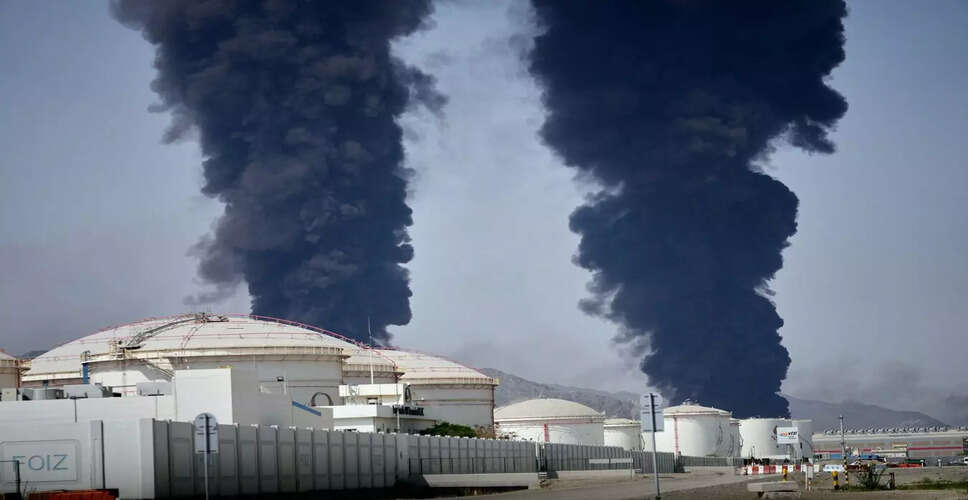
Health officials have raised alarms about the dangers of 'black rain' observed in Tehran following airstrikes on Iranian oil facilities, which released thick smoke into the atmosphere. Residents have reported burning eyes and respiratory issues due to the dark, oily rain falling near the capital.
Experts have warned that rain can carry harmful chemicals from the air to the ground, advising the public to take precautions to mitigate potential health risks.