
Investment Insights: Ramdev Agrawal Predicts Strong Returns Amid Market Decline
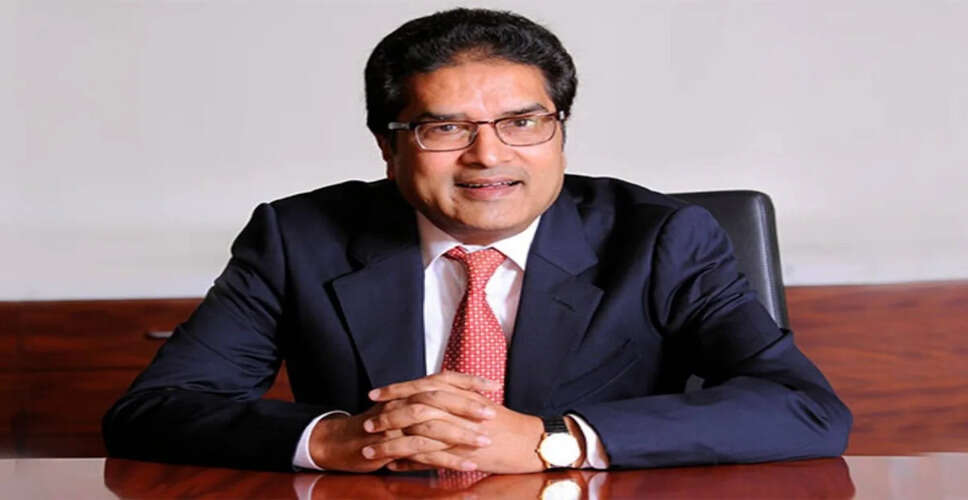
Market Outlook from Ramdev Agrawal
In light of the recent downturn in the Indian stock market, Ramdev Agrawal, a prominent investor and director at Motilal Oswal Financial Services, has shared an optimistic perspective. Speaking at the Moneycontrol Global Wealth Summit 2026, he indicated that if the market were to decline by an additional 10%, there is a strong likelihood of achieving an annual compound return (CAGR) of 17-18% over the next five years. This statement comes as a relief to investors who have been anxious about the market's recent performance and are contemplating whether to buy now or wait.
Key Remarks from Ramdev Agrawal
During the summit, Agrawal emphasized, "The market has already undergone significant corrections at current valuations. Should Nifty and Sensex experience an additional drop of 8-10%, it would present a golden opportunity for investors. Historical data shows that at similar valuation levels over the past 20-25 years, the average rolling return over five years has exceeded 17-18%. This is not a time to panic but rather to invest systematically in quality stocks."
Current Market Conditions
As of March 15, 2026, Nifty 50 is trading around 21,800-22,000, which is approximately 16-17% below its all-time high of 26,277. Similarly, Sensex has dipped below 72,000. Over the past six to eight months, foreign institutional investors (FIIs) have withdrawn around ₹2.5 lakh crore from the Indian market, contributing to the decline. However, domestic institutional investors (DIIs) and retail investors have seized this opportunity to buy, preventing a complete market crash.
Reasons for Potential 17-18% Returns
Agrawal outlined several key points supporting his prediction of potential returns:
- Low Valuations: The Nifty PE ratio is currently around 19-20, which is below the long-term average.
- Economic Growth: India's GDP growth is expected to remain between 6.5-7%, supporting equity returns.
- Corporate Earnings Growth: Companies may see earnings growth of 12-15% CAGR over the next five years.
- Historical Patterns: Following declines in 2008, 2011, and 2020, returns of 18-25% were observed over five years.
Investor Reactions
Following Agrawal's remarks, discussions erupted on social media and investment forums. Many retail investors expressed their sentiments:
- "If it drops another 10%, I will invest fully!"
- "I trust Ramdev Ji's words; I've increased my SIP."
- "I'm feeling anxious, but with a five-year horizon, it seems like an opportunity."
Conversely, some experts caution that no one can accurately predict the exact level of decline, emphasizing that timing the market is less important than being invested in it.
Conclusion
Agrawal's statement serves as a significant message for investors who are apprehensive about the market's downturn. If the market falls by another 10%, it could not only present a buying opportunity but also enhance the potential for substantial returns over the next five years. Experts advise against panic and encourage continued systematic investment in quality companies. While the current market decline may be unsettling, Agrawal believes it represents a prime opportunity for long-term wealth creation.